
TL;DR. Local SEO optimizes a business's visibility for searches tied to a specific place, a city, a neighborhood, or near me, spanning Google Business Profile, citations, reviews, and location-specific content. Google Business Profile signals alone account for roughly 32 percent of Local Pack ranking weight, more than any other factor group, and 75 percent of small businesses report local SEO generates more leads than paid advertising.
What is local SEO?
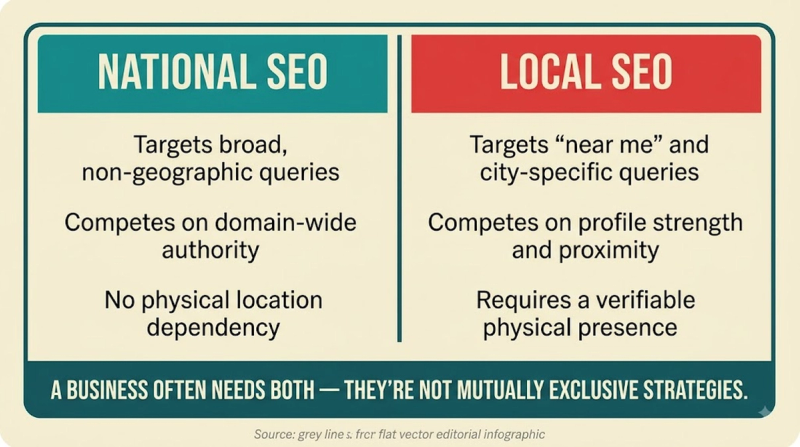
Local SEO is the set of practices that make a business discoverable for location-anchored searches, plumber near me, best coffee downtown Austin, dentist open now, rather than for generic national queries. It differs from general SEO mainly in what Google weighs most heavily: physical proximity, business profile completeness, and review signals matter far more here than they do for a purely informational search.
Key highlights
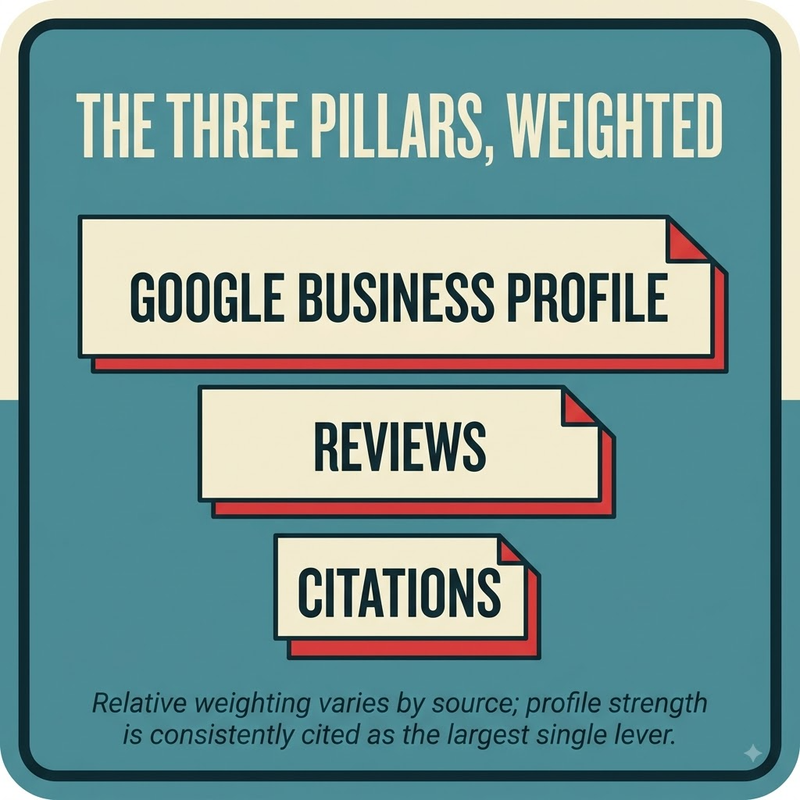
- BizIQ's 2026 local SEO statistics report breaks Local Pack ranking weight into six groups: Google Business Profile signals at 32 percent, on-page signals at 19 percent, review signals at 16 percent, link signals at 15 percent, behavioral signals at 8 percent, and citation signals at 7 percent.
- Only 35 percent of small and medium businesses have claimed a Google Business Profile at all, and roughly 56 percent of the ones that have are only partially optimized, which leaves most of the local search landscape wide open.
- 75 percent of small businesses report local SEO generates more leads than paid advertising, a gap that widens further once ongoing ad spend is factored against a mostly one-time local optimization cost.
- Review signals alone, quantity, rating, recency, and response rate combined, carry 16 percent of ranking weight, roughly the same as link signals, which surprises many businesses used to thinking of reviews as a trust factor rather than a ranking one.
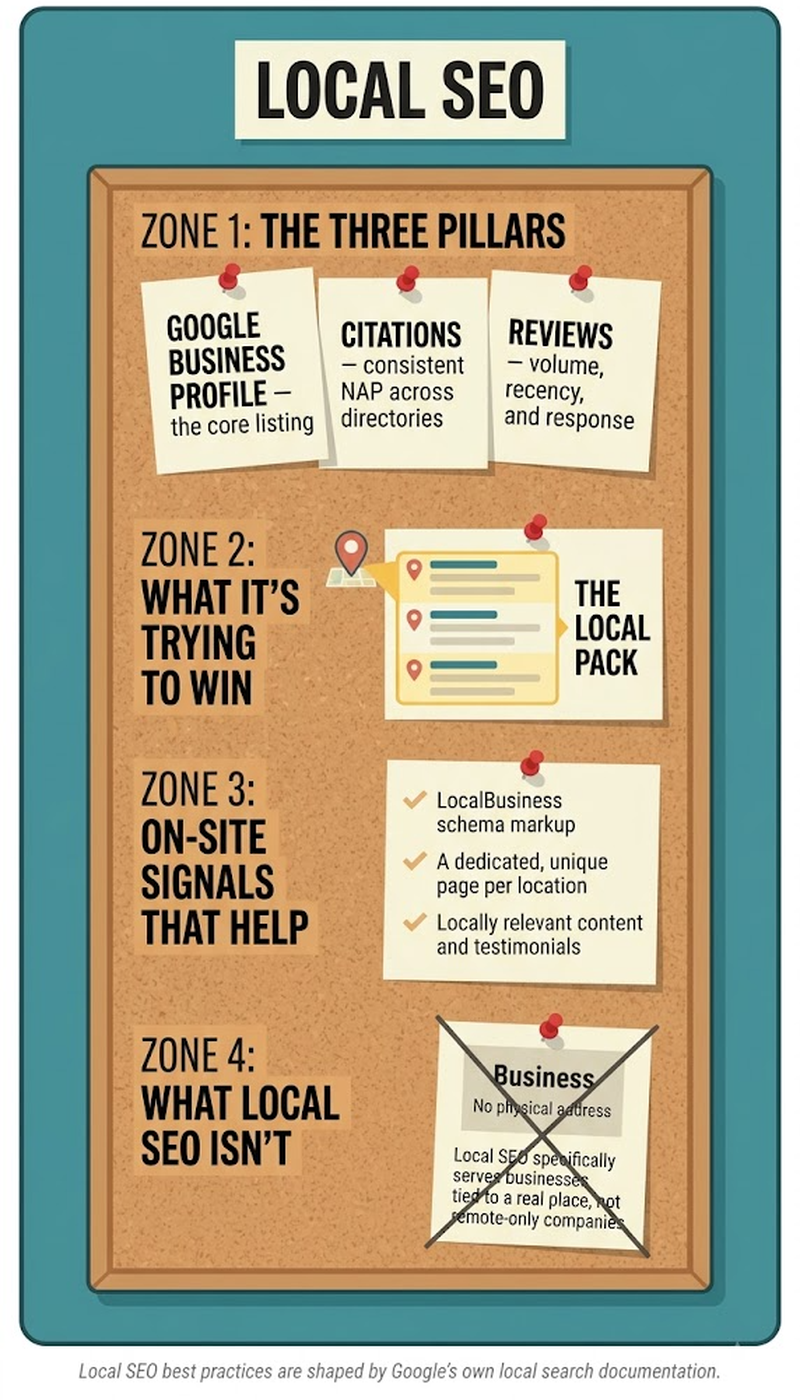
The core building blocks
A Google Business Profile forms the foundation, since it is what actually populates the Local Pack and Maps listings. Consistent NAP data across directories and local citations reinforce Google's confidence in a business's location. Location-specific on-page content, city or neighborhood pages that actually say something useful rather than swapping a city name into a template, rounds out the on-page layer.
Why so many businesses leave this untouched
Local SEO gets treated as an afterthought partly because its biggest lever, a fully completed Google Business Profile, is free and doesn't feel like real marketing work the way a paid campaign does. That perception gap is exactly why the 35 percent claim rate persists even though the category delivers the highest self-reported lead quality of any channel small businesses track.
Frequently asked questions
What is local SEO?
Local SEO is the practice of optimizing a business's Google Business Profile, citations, reviews, and location-specific content so it ranks for searches tied to a physical location.
Does local SEO only matter for brick-and-mortar businesses?
No. Service-area businesses without a public storefront, plumbers, electricians, mobile groomers, benefit just as much, since Google Business Profile supports a defined service area instead of a single visible address.
What's the single highest-leverage local SEO action?
Fully completing the Google Business Profile. It alone carries roughly a third of ranking weight, and businesses with 100 percent complete profiles get seven times more clicks than incomplete ones.


