
TL;DR. Schema markup labels page content using the schema.org vocabulary, a shared library of types such as Product, Recipe, Event, and FAQPage that search engines parse to build rich results. Pages carrying accurate schema markup see click-through rate gains commonly cited in the 20 to 40 percent range over unmarked listings, though Google's March 2026 core update pulled that advantage back sharply for FAQ, Review, and How-To markup placed on pages where it didn't reflect genuine content.
What is schema markup?
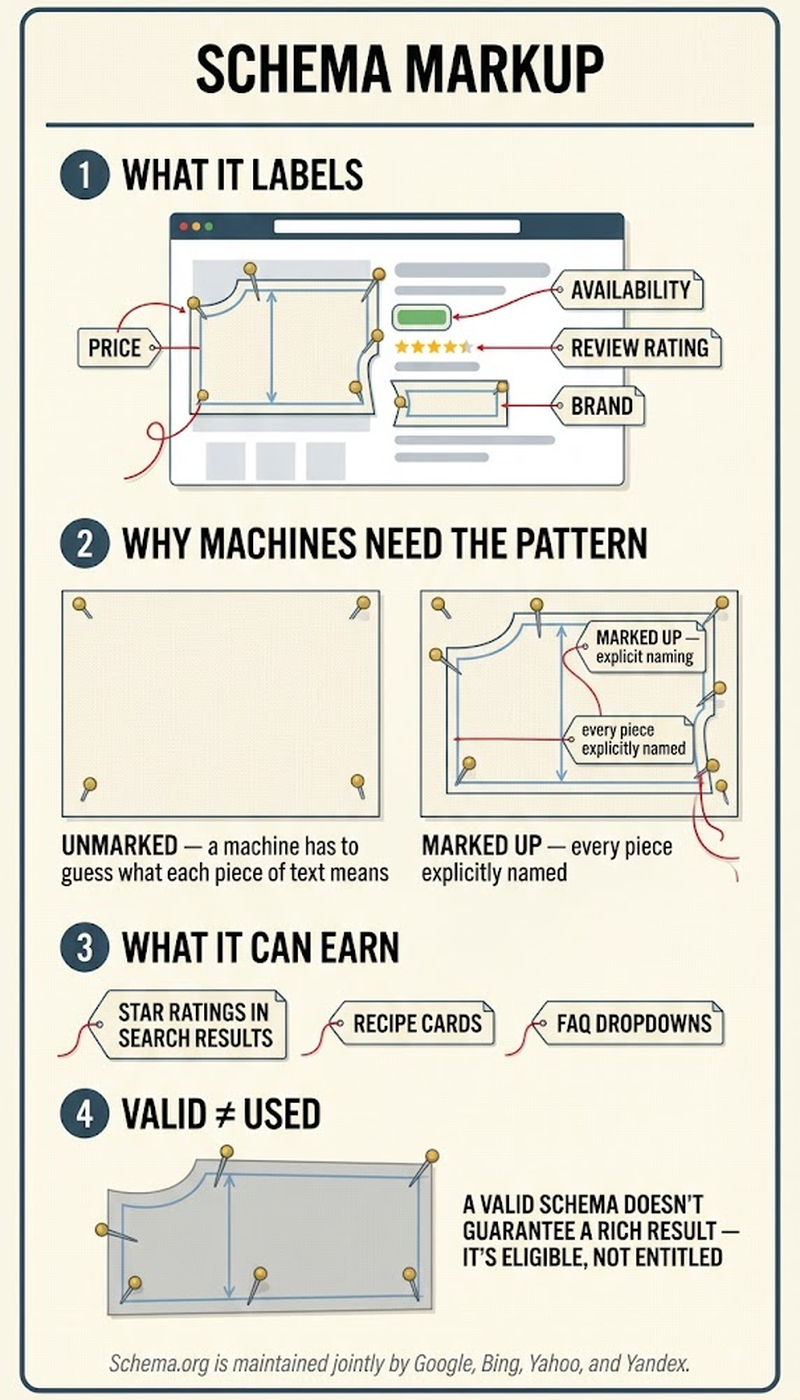
Schema markup is the specific practice of tagging page content with vocabulary from schema.org, a taxonomy jointly maintained by Google, Microsoft, Yahoo, and Yandex. Each schema.org type defines a set of expected properties: a Recipe expects prepTime and recipeIngredient, a LocalBusiness expects address and openingHours. Using the correct type and filling in the properties it expects is what actually makes the markup usable to a search engine.
Key highlights
- Rich results built from schema markup commonly show a 20 to 40 percent click-through rate lift over standard blue-link listings, largely because they occupy more visual space in a crowded results page.
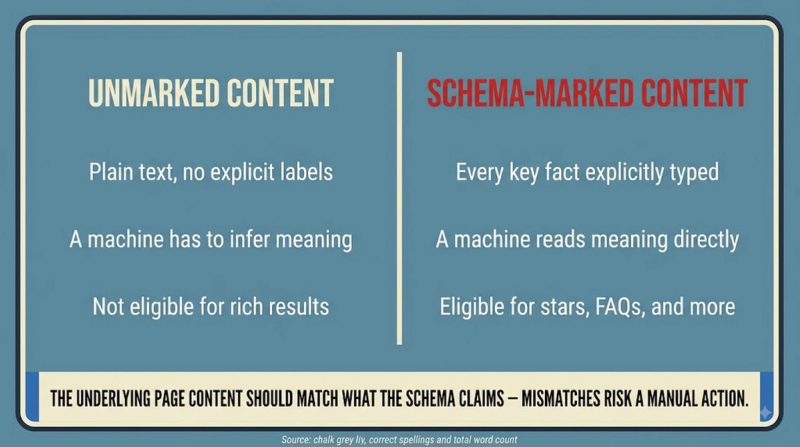
- Google's March 2026 core update specifically reduced rich result eligibility for FAQ, Review, and How-To schema on pages where that markup didn't match the page's actual primary content, a direct response to years of markup added purely to manipulate SERP appearance.
- Sites that had applied schema aligned with genuine content, a real FAQ section rather than a bolted-on one, kept or improved their rich result rates through the same update, which is the clearest evidence the eligibility rules track authenticity rather than markup quantity.
- Product markup can display price, availability, and star rating directly inside the search result, which is why e-commerce schema tends to show the largest CTR gains of any single schema type.
The types that matter most in practice
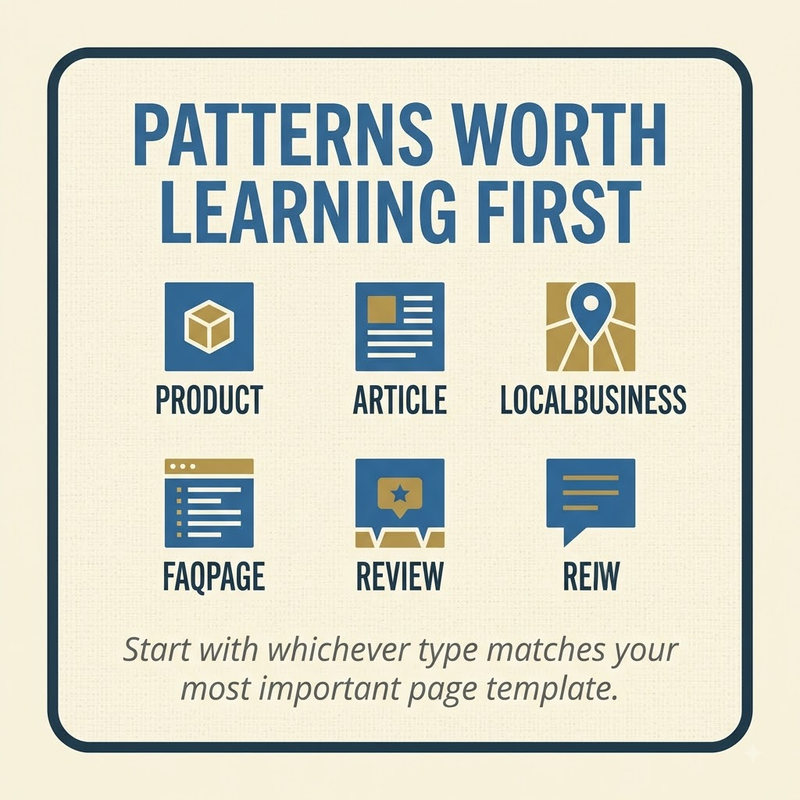
A handful of schema.org types cover most real-world use cases: Product for e-commerce, Recipe for food content, Article and NewsArticle for publishing, LocalBusiness for location-based businesses, Event for time-bound listings, and FAQPage for genuine question-and-answer content. Choosing a type that doesn't match the actual page content is the single most common schema mistake, and it is precisely what the March 2026 update started penalizing.
Why authenticity now outweighs coverage
Marking up a page with FAQPage schema used to guarantee rich result eligibility almost regardless of whether the page contained a real FAQ section, which is exactly the loophole heavily abused for years. The corrected approach treats schema as a description of content that already exists, not a request for a visual upgrade, so the FAQ needs to be genuinely present and genuinely answering the questions it claims to before the markup carries any weight.
Implementing schema markup correctly
- Identify the schema.org type that genuinely matches the page's primary content, not the type most likely to trigger a rich result.
- Write it as JSON-LD, the format Google recommends and the easiest to validate independently of page templates.
- Fill in every property the type expects, since partial markup often fails eligibility even when the required fields technically validate.
- Test the markup with Google's Rich Results Test before publishing, and recheck it after any template change.
Frequently asked questions
What is schema markup?
Schema markup is structured data written specifically in the schema.org vocabulary, used to label content in a way search engines can parse into rich results and AI systems can cite with confidence.
Is schema markup a direct ranking factor?
Not directly. Its measurable benefit is click-through rate through rich results, not a position boost in the ranking algorithm itself, though a higher CTR can indirectly support rankings over time.
Did the March 2026 update remove schema markup's benefits entirely?
No, it narrowed eligibility rather than removing it. Genuine, content-matched schema kept working; markup added purely to game rich result appearance on FAQ, Review, and How-To types lost its footing.
Can a page have more than one schema type?
Yes, as long as each type genuinely describes something present on the page; a recipe article can carry both Recipe and Article schema without conflict, since they describe different, real aspects of the same content.


