
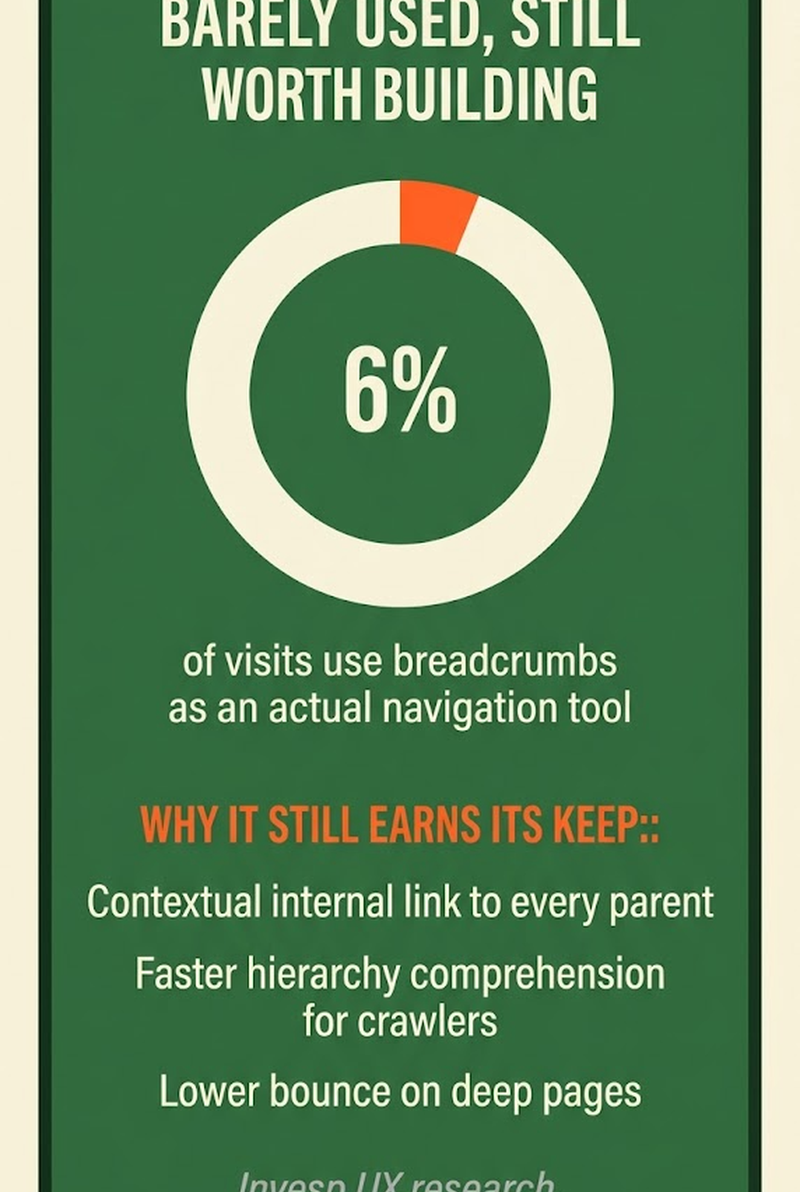
TL;DR. Breadcrumb navigation earns its keep in a strange way: Invesp's UX research found visitors use it as an actual navigation tool only 6% of the time, yet where it sits on the page decides almost all of that usage, trails placed right near the title captured 82% of clicks against just 18% for trails parked at the very top. Google confirmed in 2025 that it dropped breadcrumbs from mobile search results entirely, though the schema behind the trail and its internal-linking value keep working regardless of whether Google ever displays it.
What is breadcrumb navigation?
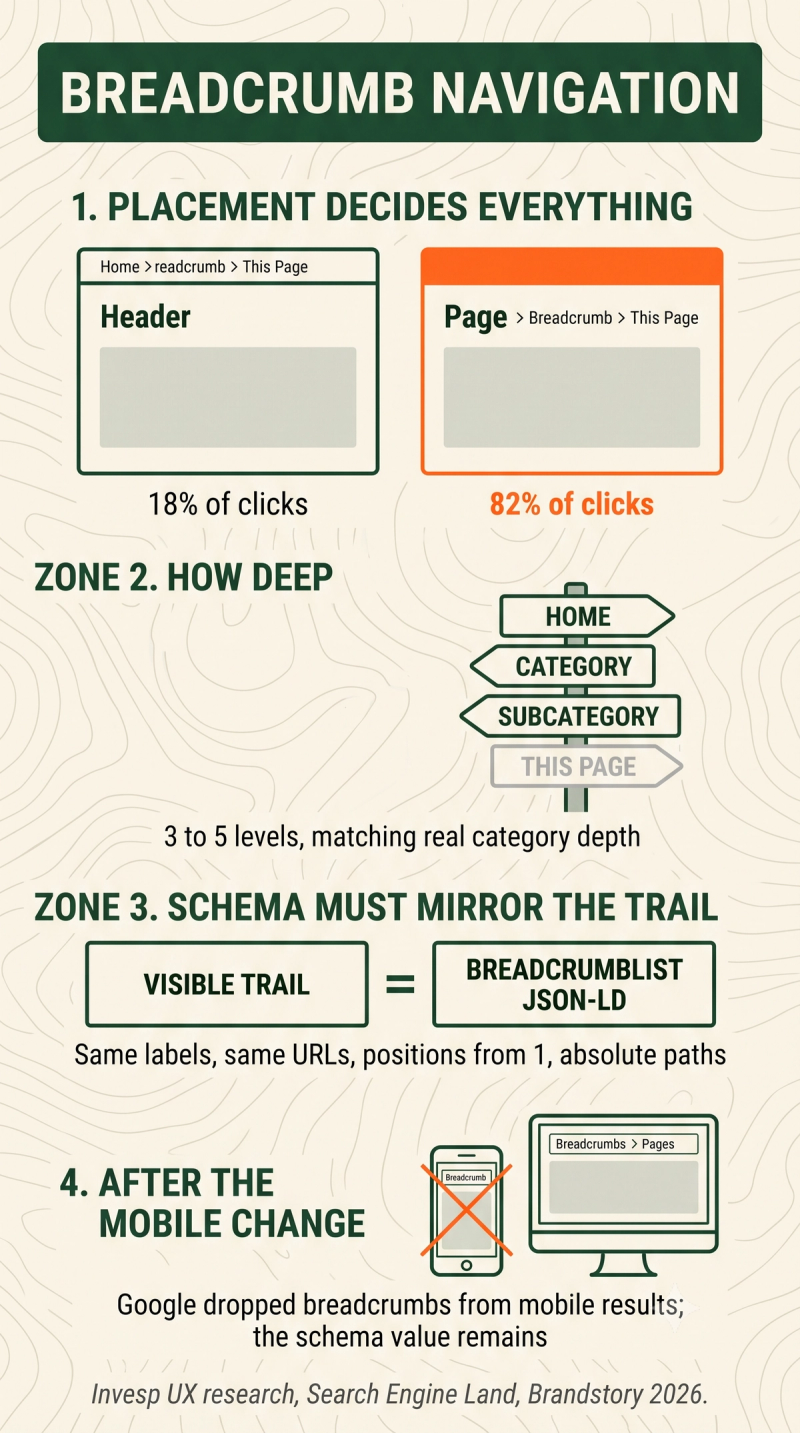
Breadcrumb navigation is a secondary trail, usually sitting near a page's title, tracing the path from a site's homepage down to wherever a visitor currently is, each step along the way a clickable link back up one level. Two audiences read that same trail differently: a visitor uses the visible links to jump back a level without hammering the browser's back button, while the BreadcrumbList schema behind the scenes gives search engines a machine-readable map of how the page slots into the site's overall structure.
Key highlights
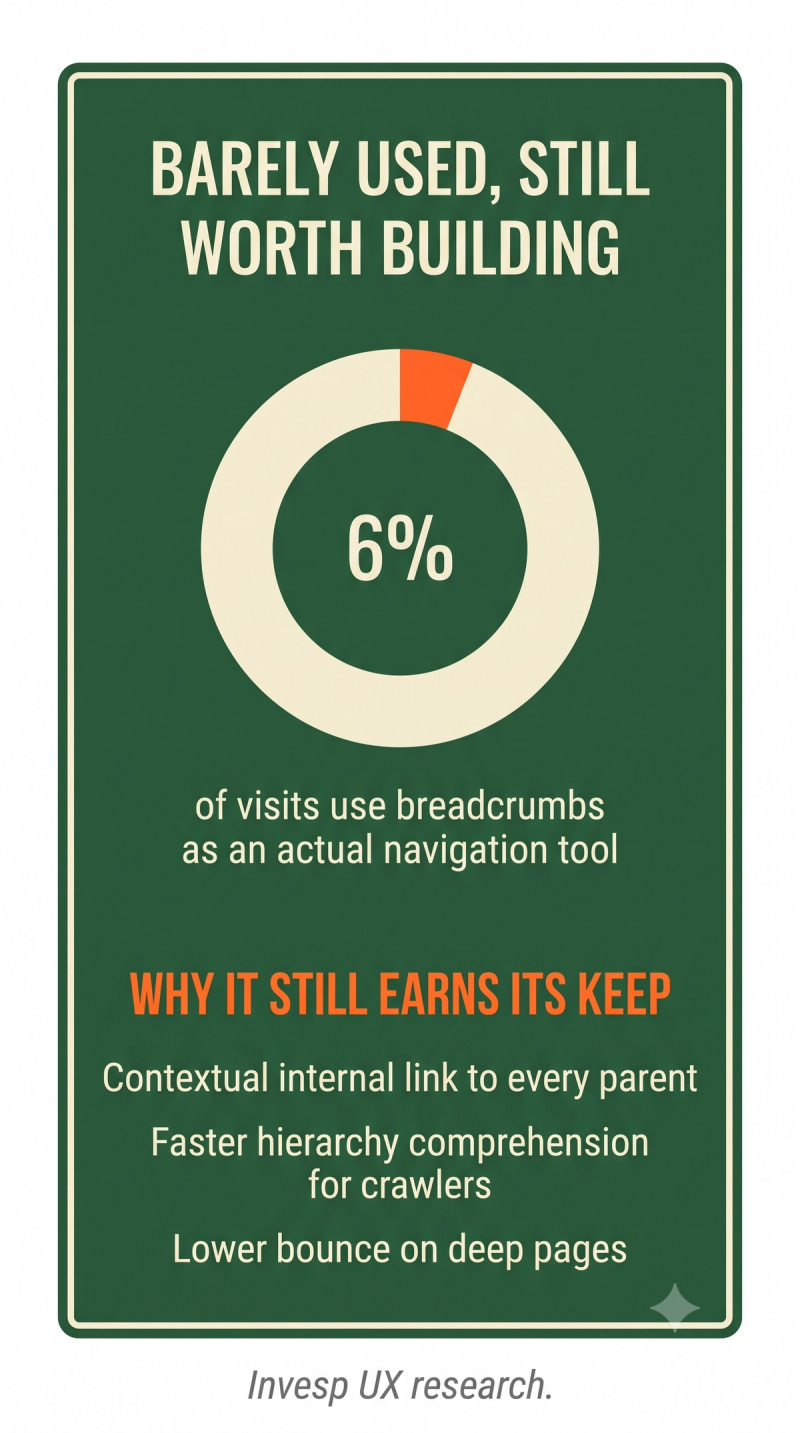
- Invesp's UX research found breadcrumbs get used as an actual navigation tool only 6% of the time, though placement accounts for nearly all of that variance.
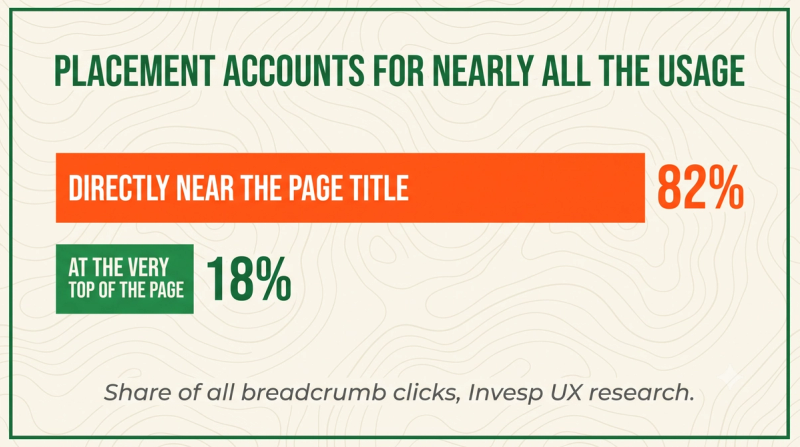
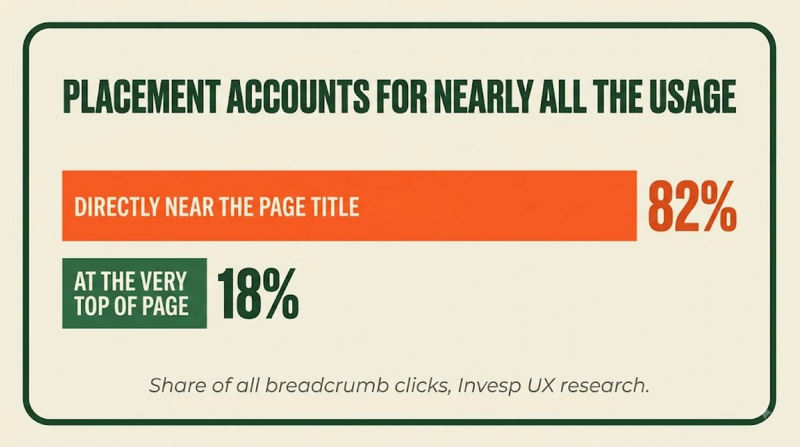
- Placement decides almost everything here. Breadcrumbs sitting directly near the page title captured 82% of all breadcrumb clicks in the same Invesp research, against just 18% for trails placed at the very top of the page.
- Google confirmed breadcrumbs stopped displaying in mobile search results as part of its 2025 to 2026 update, per Search Engine Land's SEO breadcrumbs guide, though desktop display and the underlying schema value both remain intact.
- Brandstory's breadcrumb schema guide recommends keeping a trail 3 to 5 levels deep, enough hierarchical context to orient a visitor without turning the trail into a cluttered scroll of links.
BreadcrumbList schema, and why it has to match the visible trail exactly
BreadcrumbList schema is the JSON-LD markup encoding a breadcrumb trail for search engines, and it needs to mirror the visible breadcrumb precisely, same text, same URLs, position numbers starting at 1, every URL written as a full absolute address rather than a relative path. Rendering the trail in the page's initial server-side HTML matters here too, a trail that only appears after JavaScript finishes executing risks getting missed entirely by crawlers that skip script rendering.
The click-through case for breadcrumbs, even after the mobile SERP change
Breadcrumbs strengthen a site's internal linking by adding a contextual link to every parent category from every page underneath it, which helps search engines crawl and understand the hierarchy faster. On the visitor side, sites with a visible, well-placed breadcrumb trail tend to see lower bounce rates on deep pages, since a lost visitor gets an immediate, low-effort path back up the structure instead of just leaving.
Implementing a breadcrumb trail correctly
- Place the trail directly above or beside the page title, not at the very top of the page, since that position captures the large majority of actual clicks.
- Keep the trail to 3 to 5 levels, matching the site's real category depth without inventing artificial intermediate steps.
- Mark up the trail with BreadcrumbList JSON-LD, mirroring the visible text and URLs exactly.
- Render the trail in the initial server-side HTML rather than injecting it purely through client-side JavaScript.
- Leave the current page as the final, unlinked item in the trail, since it marks where the visitor already stands.
Frequently asked questions
What is breadcrumb navigation?
Breadcrumb navigation is a trail of links, typically sitting near a page's title, showing where a visitor stands within a site's hierarchy from the homepage down. A matching BreadcrumbList schema gives search engines the same hierarchy in machine-readable form.
If Google dropped breadcrumbs from mobile search, is the schema still worth adding?
Adding BreadcrumbList schema still pays off even after Google's mobile change, since the markup does more than decorate a search snippet. Search engines use the schema to understand site structure and pass internal-linking signal regardless of whether the trail ever shows up visually in a result.
Where should breadcrumbs actually sit on the page?
Breadcrumbs perform best placed directly near the page title rather than at the very top of the page. Invesp's data found that placement alone accounted for 82% of all breadcrumb clicks, against 18% for trails sitting above the header.
How deep should a breadcrumb trail go?
Breadcrumb trails generally work best at 3 to 5 levels, per Brandstory's guidance, enough to orient a visitor within the site's real structure without stretching the trail into a cluttered list nobody actually scans.
Does the visible breadcrumb need to match the schema exactly?
Visible breadcrumbs and their schema markup need to match precisely, identical labels, identical URLs, position numbers starting at 1. A mismatch between the two gives search engines a reason to distrust or simply ignore the structured data.


