
TL;DR. Structured data is machine-readable code embedded in a page's HTML that explicitly states facts a human reader would otherwise have to infer, a product's price, a review's star rating, an event's start time. Adoption has climbed past half of all examined webpages as of the most recent large-scale crawl, and the format search engines now prefer for it, JSON-LD, keeps pulling further ahead of the alternatives.
What is structured data?
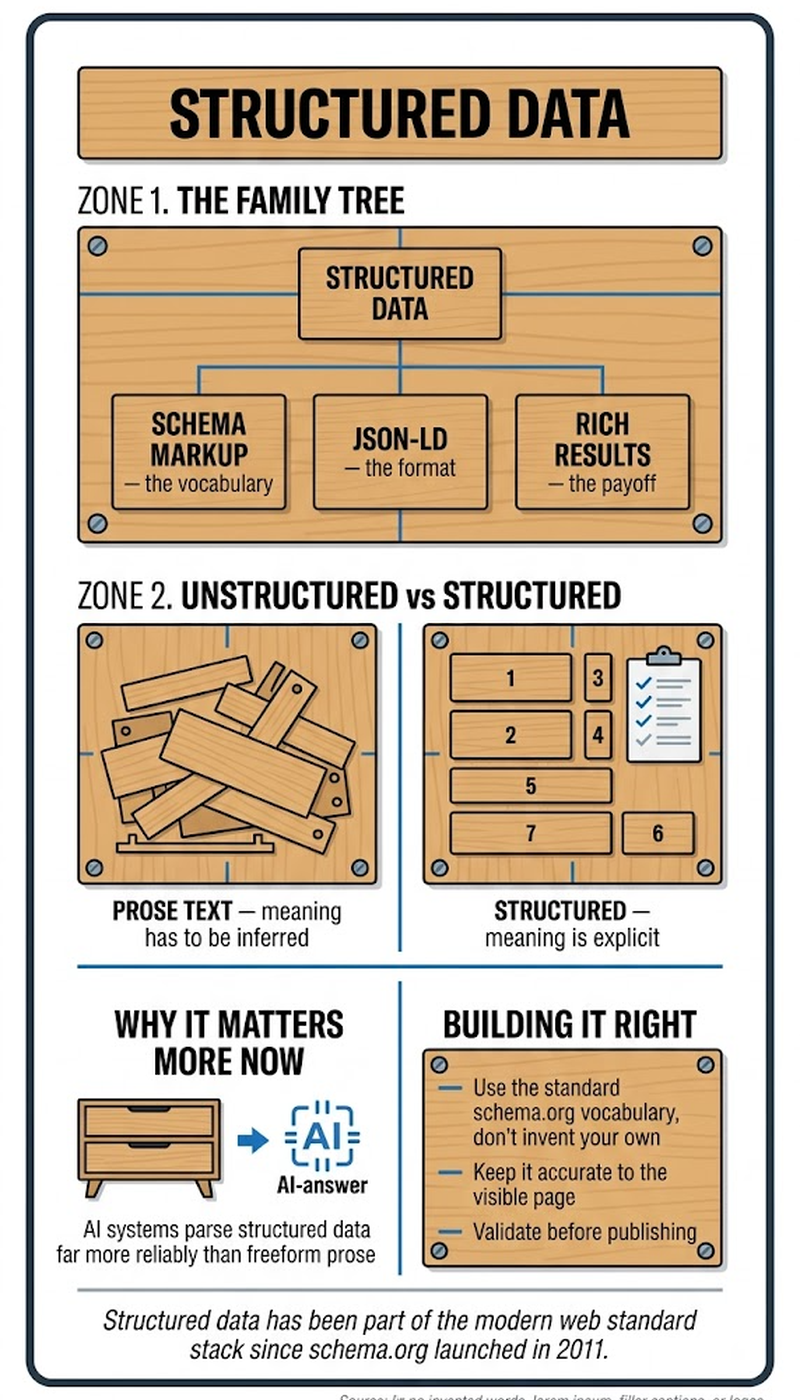
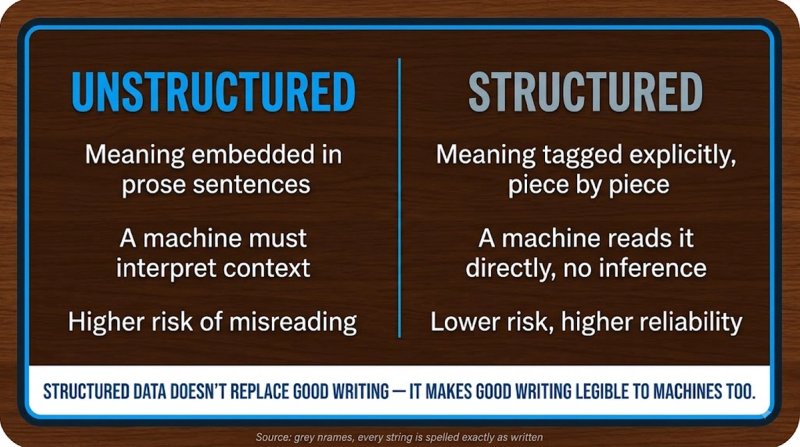
Structured data is a standardized vocabulary, almost always drawn from the schema.org taxonomy, used to tag specific facts on a webpage so a machine can read them with certainty instead of guessing from surrounding text. A paragraph might say a course runs for six weeks starting in March; structured data states the same fact in a fixed field a parser can extract without any interpretation.
Key highlights
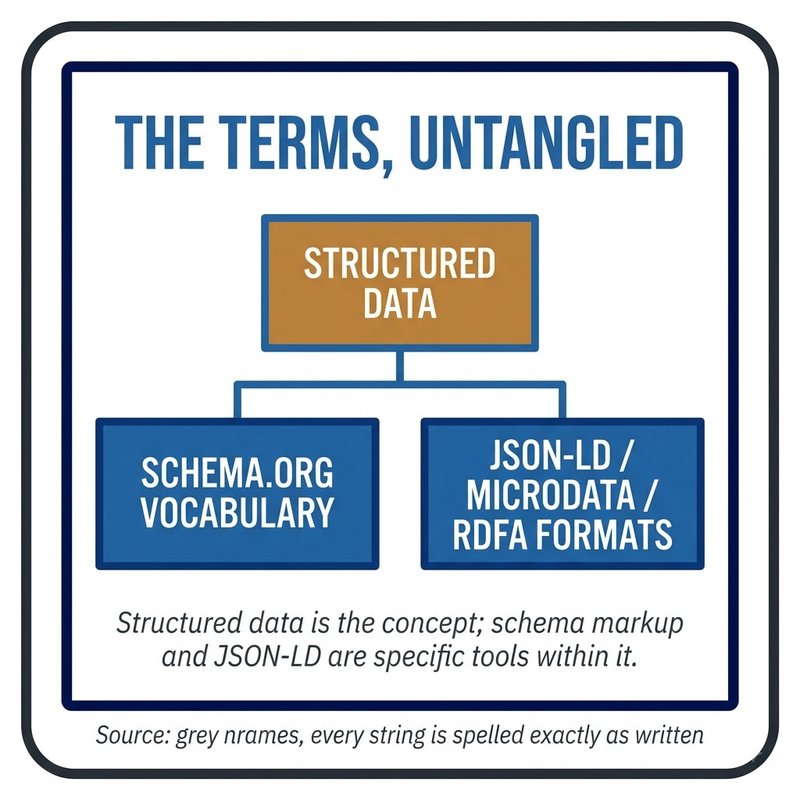
- Three competing formats exist for writing structured data: JSON-LD, Microdata, and RDFa. All three can express the same schema.org vocabulary; they differ only in syntax.
- Structured data adoption passed 51 percent of examined webpages as of the most recent large-scale web crawl, up from a much smaller share a decade earlier, and the growth curve has not flattened.
- Google explicitly recommends JSON-LD over the other two formats, and JSON-LD's adoption has grown steadily every year while Microdata's has stayed flat.
- AI answer engines lean on structured data even more heavily than classic search does, since a labeled fact removes the ambiguity a language model would otherwise have to resolve before it can quote something with confidence.
Why machines need labels a human reader doesn't
A person reading a product page effortlessly separates the price from the shipping estimate from the return policy, using layout, context, and common sense. A crawler has none of that intuition. Structured data closes the gap by assigning each fact to a named property, price, availability, aggregateRating, so a machine extracts the correct value every time instead of pattern-matching against page layout that changes from site to site.
The three formats, briefly
- JSON-LD sits in a single script tag, separate from the visible HTML, which makes it easy to generate dynamically and easy to validate in isolation.
- Microdata is written inline, as attributes on the same HTML tags already rendering the visible content, which ties markup and layout together in a way many teams find harder to maintain.
- RDFa is the least common of the three on the modern web, used mostly on legacy sites and in some publishing and government platforms with existing RDFa pipelines.
Structured data versus schema markup
Structured data is the broad category. Schema markup specifically means using the schema.org vocabulary to write it, which is by far the dominant convention, but not strictly the only one; some structured data uses other vocabularies like OpenGraph or Dublin Core for narrower purposes.
Frequently asked questions
What is structured data, in plain terms?
Structured data is code that states facts about a page's content in a fixed, machine-readable format, so a search engine or AI system doesn't have to guess at meaning from surrounding text.
Is structured data visible to site visitors?
No, not directly. It lives in the page's underlying code, invisible in the rendered layout, and only surfaces indirectly through rich results, knowledge panels, or AI citations built from it.
Which format should a new site use?
JSON-LD, in almost every case. It is Google's stated preference, it is easier to generate and validate than the alternatives, and it keeps markup logic separate from visible page templates.


