
TL;DR. Search volume answers a deceptively simple question with a deceptively imprecise number: how many times a keyword gets searched each month. Most SEO tools source their baseline data from Google Keyword Planner, which groups similar keywords together and reports ranges instead of exact figures for accounts without active ad spend, while clickstream-based third-party tools offer more granular numbers whose accuracy depends entirely on the size of the panel they sample from. No single source is definitively the most accurate.
What is search volume?
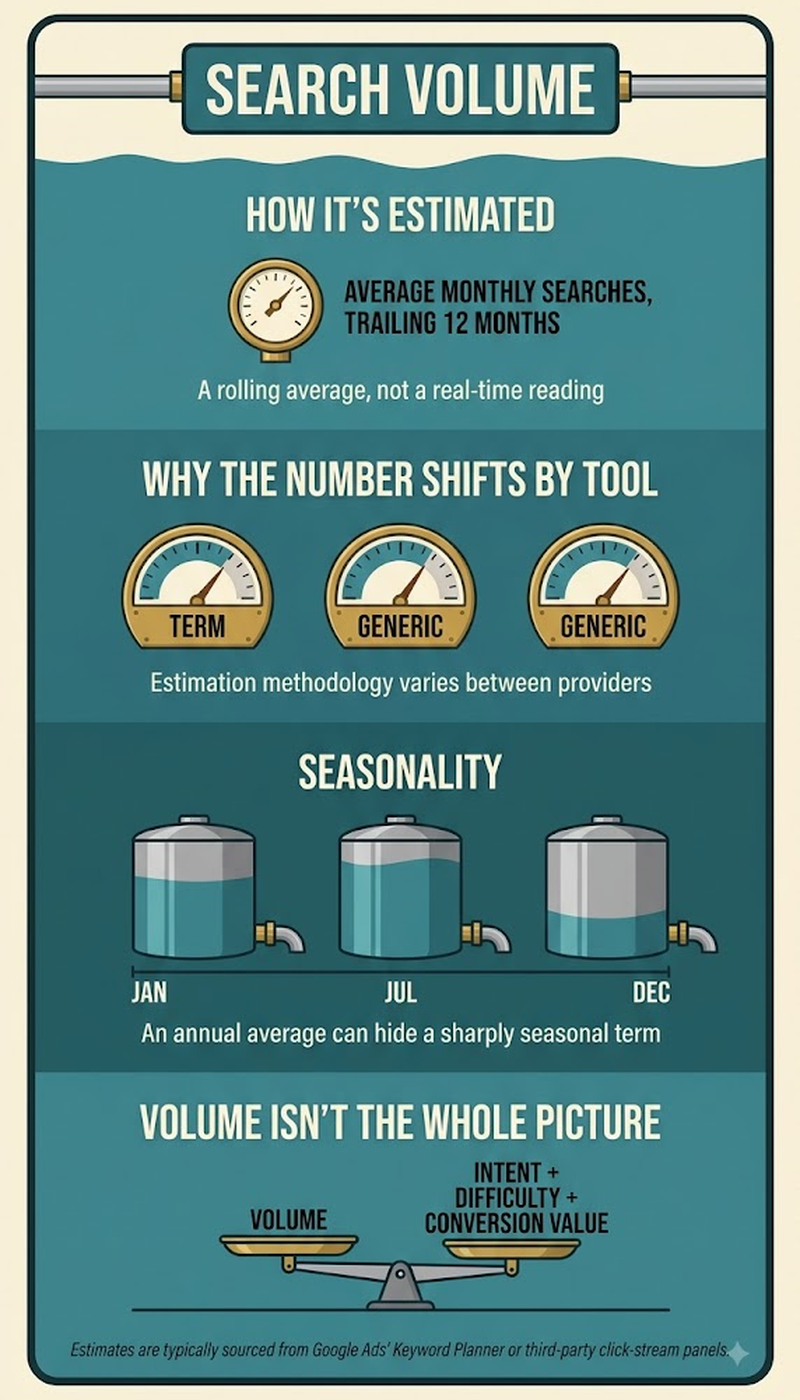
Search volume is the estimated number of times a specific keyword or phrase gets searched within a given period, most often reported as an average monthly figure calculated across the trailing 12 months. It is not a precise real-time count. It's a statistical estimate built from sampled or advertising data, rounded and smoothed in ways that make it useful for comparison but imprecise as an exact figure.
Key highlights
- Most SEO tools source their baseline search volume data from Google Keyword Planner, which pulls figures from Google's own advertising systems.
- Keyword Planner groups similar keywords together and reports volume as ranges rather than precise numbers for accounts without active ad campaigns, since it's built for advertisers rather than organic researchers, per TrySight's analysis.
- Clickstream-based third-party tools can offer more granular, keyword-specific figures, but accuracy depends on the size and representativeness of the panel sampled, and smaller panels produce noisier data for low-volume, niche terms.
- Neither Google Keyword Planner nor clickstream tools is definitively more accurate, per Analyze AI's research, and using both in parallel typically gives the clearest picture.
- Google rounds low-volume terms aggressively, so a keyword reporting a volume of 0 or 10 can still be a real, searched term with sporadic, low, or seasonal demand.
Where the numbers actually come from
Search volume figures generally trace to one of two sources. Google Keyword Planner data comes directly from Google's own advertising systems, giving it baseline credibility as a reflection of real Google search behavior, though it's built for advertisers, not SEOs. Clickstream data, used by many third-party tools, comes from browsing panels sampling a subset of real user activity and extrapolating volume from it, offering more differentiation between closely related terms but introducing sampling noise, especially for smaller or more specific keywords.
The seasonality trap
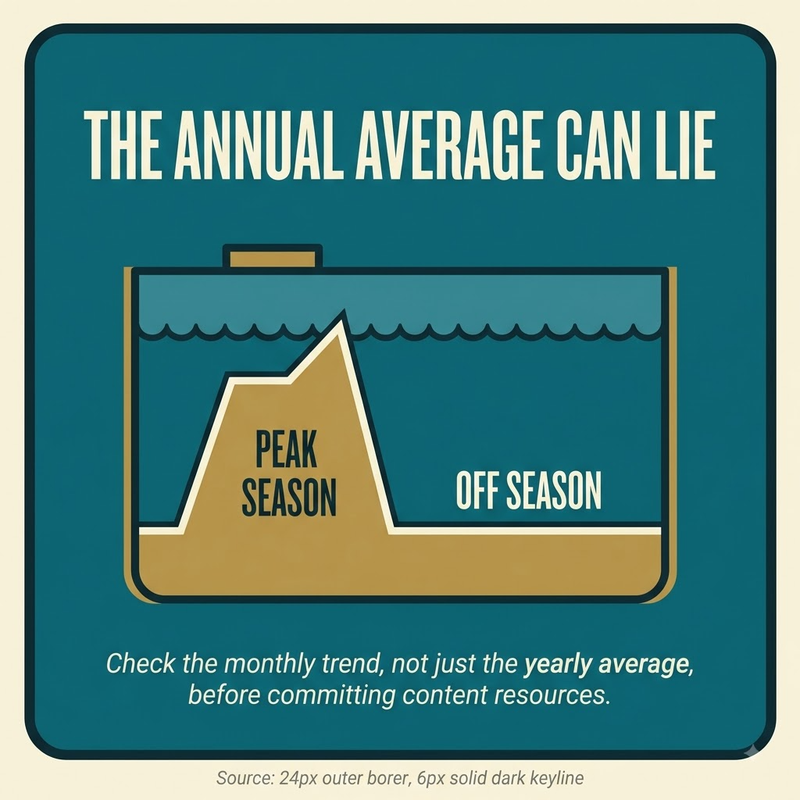
The most consequential limitation of search volume is that averaging across 12 months smooths out seasonal concentration entirely. A term like tax return deadline might show an average monthly volume of roughly 12,000 searches, but nearly all of that volume happens in March and April. Publishing content on that topic in September, based on the average figure alone, won't produce anything close to that traffic, since the 12-month average actively hides how concentrated the real demand actually is.
Reading search volume without getting fooled
- Check for a monthly breakdown, not just the 12-month average, whenever a keyword has any plausible seasonal pattern.
- Cross-reference figures from more than one source, since Google Keyword Planner and clickstream tools each have different blind spots.
- Treat a reported volume of 0 or single digits with skepticism for niche or highly specific terms, since Google's rounding can obscure real, if sporadic, demand.
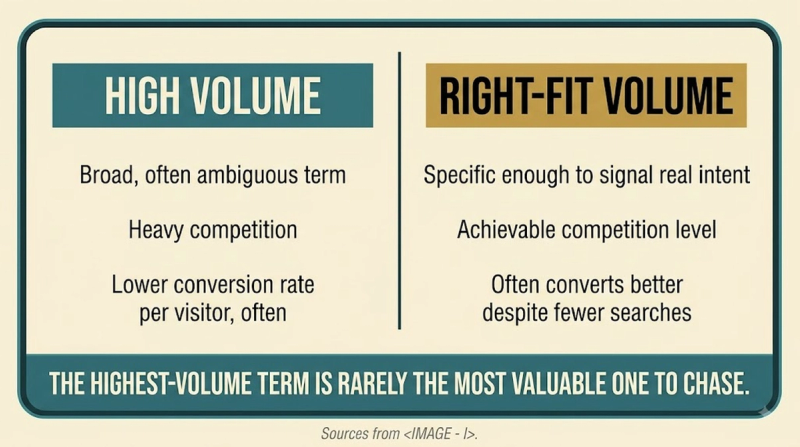
- Weigh search volume alongside intent and business value, not as the sole prioritization metric, since a lower-volume, higher-intent term can outperform a bigger vague one.
Frequently asked questions
What is search volume?
Search volume is an estimate of how many times a keyword is searched per month, typically reported as an average across the trailing 12 months rather than an exact, real-time count.
Where does search volume data actually come from?
Mainly from Google Keyword Planner, sourced from Google's own advertising systems, or from clickstream data collected by third-party tools sampling a panel of real user browsing activity.
Is Google Keyword Planner's volume data accurate?
It reflects real advertising data, but it groups similar keywords together and shows ranges instead of precise numbers for accounts without active ad spend, since it was built for advertisers rather than organic SEO researchers specifically.
Why does search volume mislead on seasonal terms?
Because the standard figure averages 12 months of data into one number, hiding when demand actually concentrates. Tax return deadline can show a steady-looking average while nearly all its real searches happen in just two months.
Why does a term that clearly gets searched sometimes show 0 volume?
Google rounds low-volume terms aggressively, so a real term with sporadic or seasonal searches can still round down to zero in a standard monthly average, which is a rounding artifact, not proof nobody searches it.


