
TL;DR. Search intent is the job behind the query, learn, navigate, compare, or buy, and Google sorts results by it before anything else. Pages matching the dominant intent are 3.5 times more likely to land in the top three, and mismatched content sees bounce rates above 70 percent.
What is search intent?
Search intent is the underlying goal a person has when they type a query, whether that is learning something, finding a specific website, comparing options, or buying something right now. Google's ranking system infers this goal from the query and rewards pages that match it, regardless of how well written the content otherwise is.
It is the filter that decides format before it decides quality. A brilliant article loses to a mediocre comparison table if the query actually wanted a table.
Key highlights
- Informational queries make up roughly 70 percent of all search volume, the largest of the four intent types by a wide margin.
- A Semrush analysis found pages matching the SERP's dominant intent were 3.5 times more likely to rank in the top three than pages with only partial intent alignment.
- BrightEdge research found search intent driving over 70 percent of content performance outcomes in competitive verticals, ahead of both content length and backlink count.
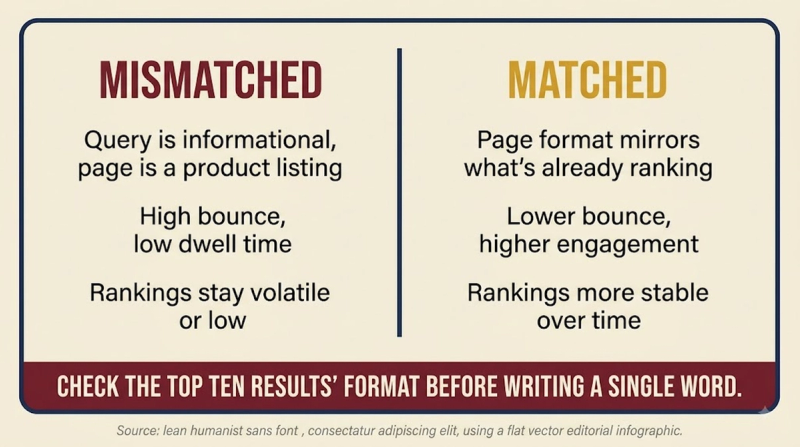
- Pages that mismatch the dominant intent see bounce rates above 70 percent, while intent-aligned pages keep users engaged three to four times longer.
The four types of search intent
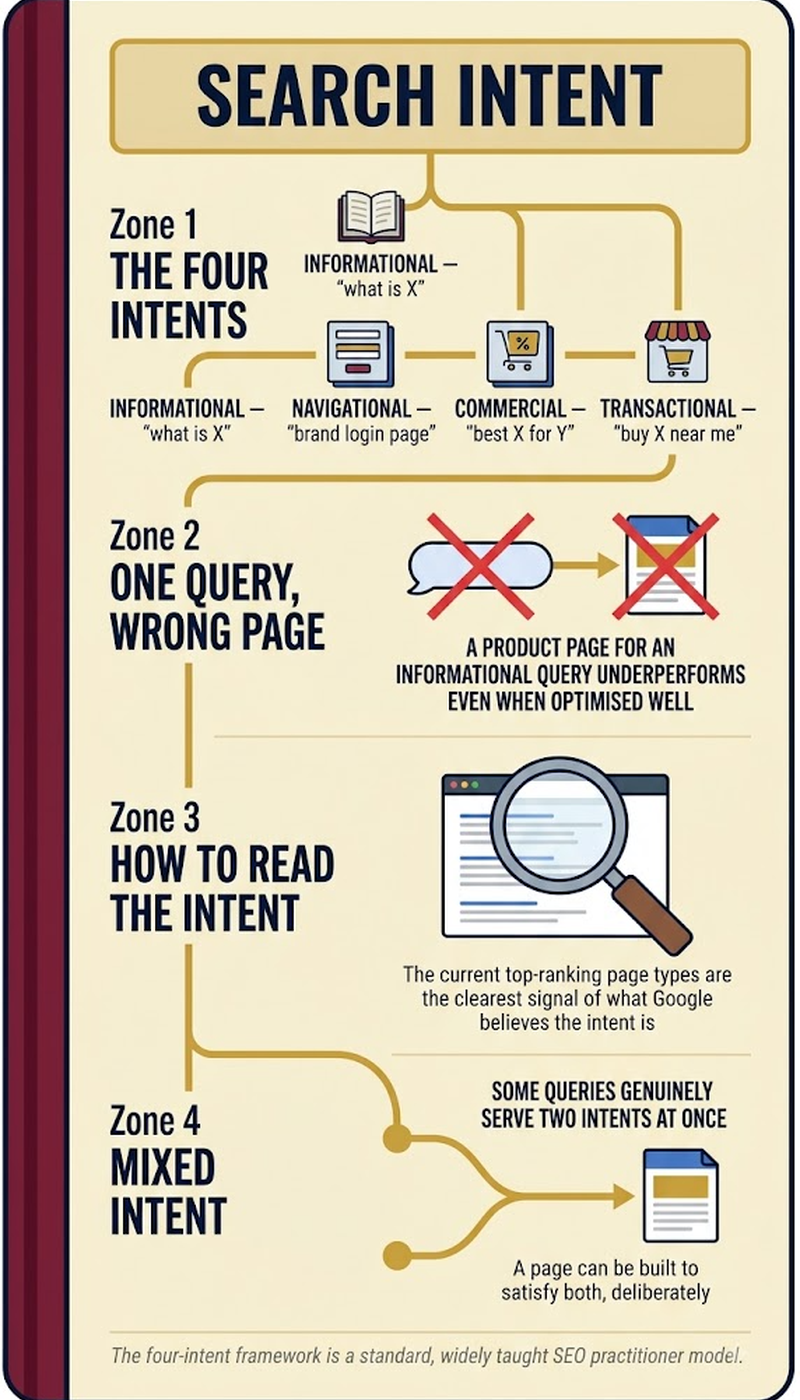
- Informational: the searcher wants to learn something; how, what, why, and when queries fall here, like how does SEO work.
- Navigational: the searcher wants a specific site or page, like Semrush login, typed into search instead of the address bar.
- Commercial: the searcher is comparing options before deciding, like best CRM for small business or Ahrefs vs Semrush.
- Transactional: the searcher is ready to act, signaled by words like buy, price, discount, or near me.
How to find the intent behind a keyword
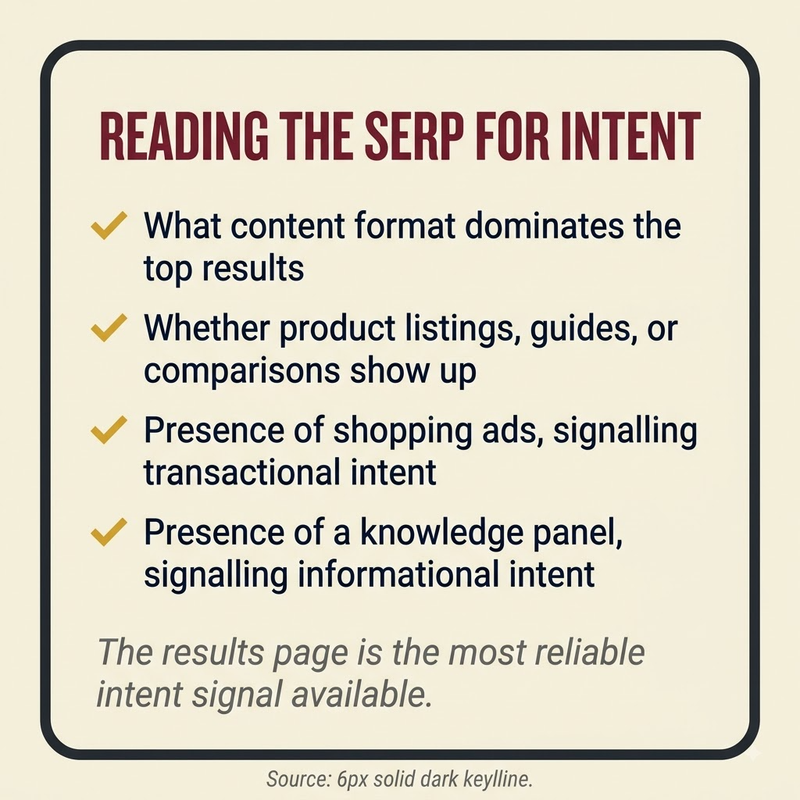
The fastest method is not guessing from the words in the query. Search the keyword yourself and read what Google already decided to rank.
- Search the keyword in an incognito window to avoid personalization skewing the results.
- Note the content type of the top three results: article, comparison table, product page, tool, video.
- Check the SERP features present; shopping results signal transactional intent, People Also Ask signals informational.
- Match your content format to what is already ranking, not what you assumed the query meant.
Intent is more than four boxes
Intent is not one decision but several overlapping ones. Beyond the broad category, Google also infers the expected depth of the answer, the assumed expertise of the audience, and the buying stage the searcher is in. Getting the category right but the depth or audience wrong still produces a mismatch.
Search intent and AI search
Intent matching matters even more in AI search, since generative engines use semantic search to interpret the goal behind a prompt before retrieving sources, so a page misaligned with intent is unlikely to be pulled into the answer at all.
Frequently asked questions
What is search intent?
Search intent is the underlying goal behind a search query, whether the person wants to learn, navigate to a site, compare options, or buy something. Google infers this goal and ranks pages that match the expected content format for that intent, regardless of how well written the page is otherwise.
What are the four types of search intent?
The four types are informational, wanting to learn something, navigational, wanting a specific site, commercial, comparing options before deciding, and transactional, ready to take action like buying. Informational queries make up roughly 70 percent of all search volume.
How do I identify the search intent of a keyword?
Search the keyword in an incognito window and study what Google already ranks. The content type of the top three results, article, comparison table, product page, or video, and any SERP features present reveal the intent Google has already decided the query deserves.
Why does search intent matter for SEO?
Search intent is one of the strongest ranking factors, with research showing intent-matched pages rank in the top three 3.5 times more often than mismatched ones. Content that gets the format right, even if less polished, regularly outranks better written content in the wrong format.
What is intent mismatch and how do I fix it?
Intent mismatch is when your content format does not match what the SERP already rewards for that query, such as publishing an educational article for a query Google treats as commercial. Fix it by studying the top ranking results and rebuilding your page in the format they use, tables, guides, or product pages, rather than the format you assumed fit.
Can a single keyword have more than one intent?
Yes, and these mixed intent SERPs are some of the trickiest to write for. A query like best running shoes can pull both commercial comparison pages and transactional retailer listings into the same results page, which usually means Google has not settled on one dominant intent yet. In that situation, look at which format holds more of the top three positions and lead with that, while still addressing the secondary intent further down the page.


