
TL;DR. Semantic search reads meaning, not words matched letter for letter, ranking results by concept through vector embeddings rather than exact keyword overlap. Google has used meaning based models since BERT arrived in 2019, and the vector database market powering this shift is forecast to grow from 2.58 billion dollars in 2025 to nearly 18 billion by 2034.
What is semantic search?
Semantic search is a technique that interprets the meaning and intent behind a query rather than matching its exact words. The system converts text into vectors, compares them for closeness in meaning, and returns results that fit the concept even when they share no words with the query at all.
A search for how to cool a room without AC surfaces fans, cross ventilation, and thermal curtains under semantic search, none of which repeat the words in the question. That is the whole point: matching the idea, not the string.
Key highlights
- Semantic search ranks by distance between vectors, using cosine similarity rather than exact word matches, so meaning close to a query counts even when the phrasing is completely different.
- Google has run on meaning based models since BERT in 2019; MUM, its successor, Google says is 1,000 times more powerful than BERT at understanding language.
- Sentence-BERT cut the time to find the closest match among 10,000 sentences from about 65 hours down to roughly 5 seconds, the kind of speed jump that made semantic search viable at scale.
- The infrastructure behind this, the vector database market, is projected to grow from 2.58 billion dollars in 2025 to about 17.91 billion by 2034.
- Meaning alone is not the ceiling. Enterprise testing found combining embeddings with a knowledge graph improved answer accuracy by about 33 percent over embeddings alone.
How semantic search actually works
Semantic search works by turning text into vector embeddings and matching them by distance rather than by word overlap. A model like BERT maps both the query and every candidate document into a high dimensional space, and the engine returns whichever documents sit closest to the query's position in that space.
Closeness gets measured with cosine similarity, so car and vehicle land near each other while car and banana sit far apart. Clean vector embeddings are what make this whole comparison possible in the first place.
Semantic search vs keyword search
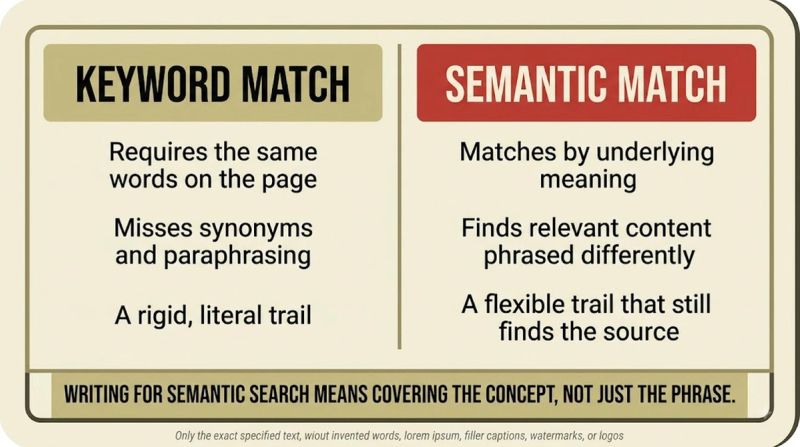
Keyword search matches exact or partial words through an inverted index, ranking by term frequency and placement on the page. Semantic search matches meaning instead, which lets it return the right answer without the exact words present and tell a shopper apart from a researcher typing the same phrase.
- Keyword search: exact word matching, fast, precise on terminology, blind to intent.
- Semantic search: meaning and intent matching, handles synonyms and context, needs vectors to work.
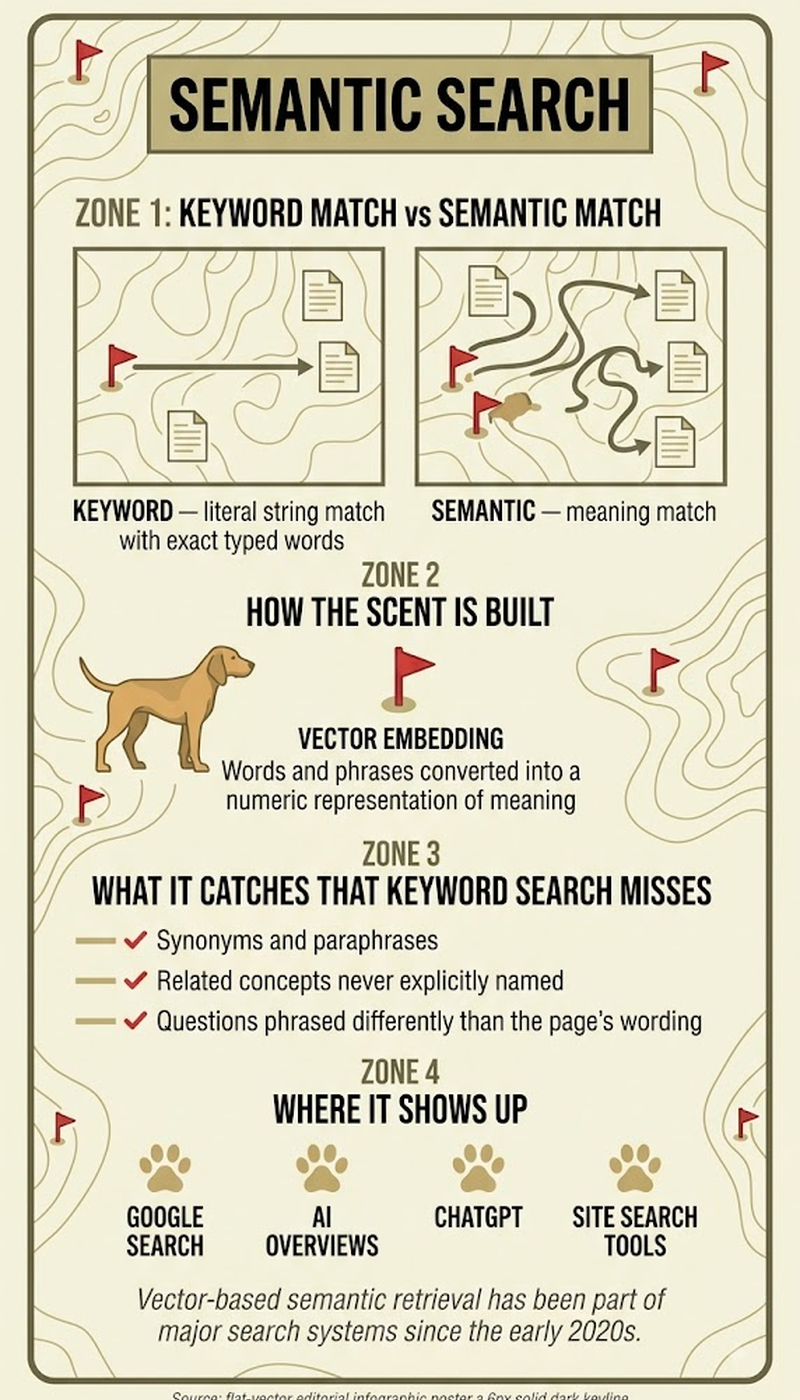
- Hybrid search: combines both, and it is the direction most modern engines have already taken.
Semantic search and SEO
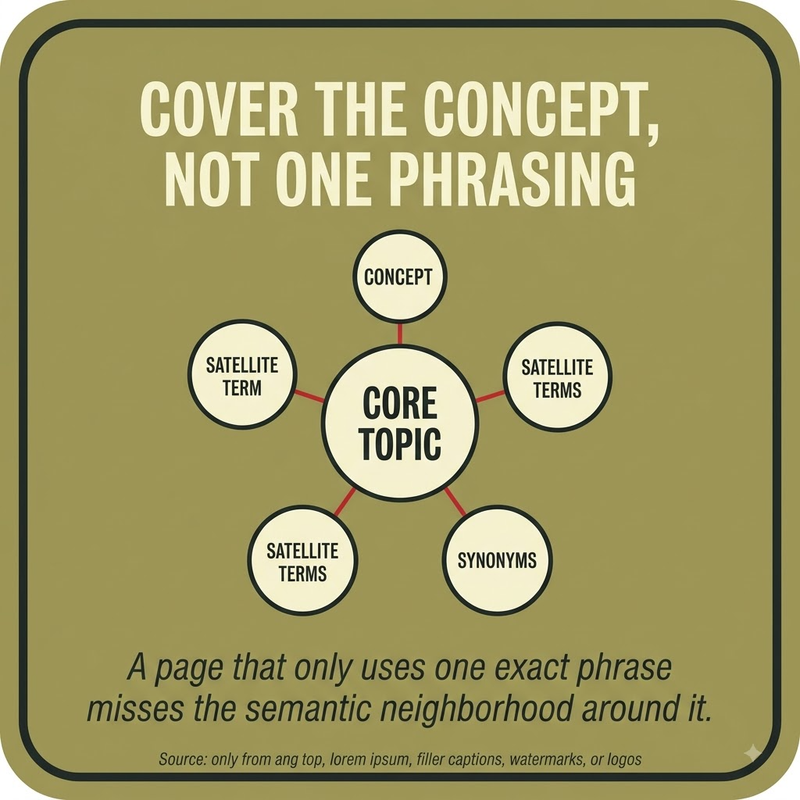
Semantic search is a big part of why keyword stuffing stopped working. Engines understand topics and entities now, so a page that covers a subject thoroughly and clearly outranks one that just repeats a phrase fifteen times.
Free Chrome extension
A free AI citation checker for ChatGPT and Gemini
CitoSkeleton passively captures fan-out queries, cited and fetched sources, and brand mentions behind an AI answer — then tracks your GEO visibility against named competitors. 100% local, no account, no server.
Two habits matter here. Match search intent rather than a keyword string, and build entity SEO so engines connect your page to the right concepts in the first place.
How to optimize for semantic search
- Write for the topic and the underlying question, not a single keyword; cover the subtopics a reader actually needs answered.
- Use natural language and synonyms freely, since the engine understands meaning rather than rewarding repetition.
- Structure content clearly, with headings that mirror the real questions people ask, not just target phrases.
- Add structured data so entities and relationships are explicit rather than implied.
- Answer intent directly; semantic engines reward whichever result actually satisfies the goal behind the query.
Frequently asked questions
What is semantic search?
Semantic search interprets what a query means rather than what it literally says, converting text to vectors and ranking by conceptual closeness. That is what lets a page rank for a question it never phrases the same way the searcher did.
How is semantic search different from keyword search in practice?
In practice, keyword search finds documents containing your words; semantic search finds documents about your topic. A page titled device won't power up can outrank a page titled laptop troubleshooting for a keyword query, but semantic search flips that, matching the underlying problem instead of the label.
Why did Google move to semantic models like BERT and MUM?
Because keyword matching kept missing obvious intent. A few small words, prepositions, negations, can flip the entire meaning of a sentence, and pure keyword systems could not reliably tell flights to Paris from flights from Paris. BERT understood word order and context well enough to fix that whole class of error.
Does semantic search replace keyword research?
No, it changes what keyword research is for. Keywords still tell you what people search and how often, but they stop being something you write into copy verbatim. Use them to find topics and intent, then write naturally around the concept they represent.
How does semantic search connect to AI search and RAG?
Semantic search is the retrieval layer underneath most AI search. An AI engine embeds the incoming prompt, retrieves the passages closest to it by meaning, and generates an answer from what it found, so the same embedding and similarity techniques that power semantic search also decide which sources end up cited.


