
TL;DR. Entity SEO turns a brand, person, product, or concept into something a machine can recognize on its own, a distinct, disambiguated unit that Google's Knowledge Graph and AI systems can connect to related information and cite with confidence. Google's Knowledge Graph holds an estimated 800-plus billion facts about entities and their relationships in 2026, and Semrush's 2025 research found branded web mentions correlate 0.664 with AI Overview citations against just 0.218 for traditional backlinks, meaning entity signals now outweigh link signals for AI visibility.
What is entity SEO?
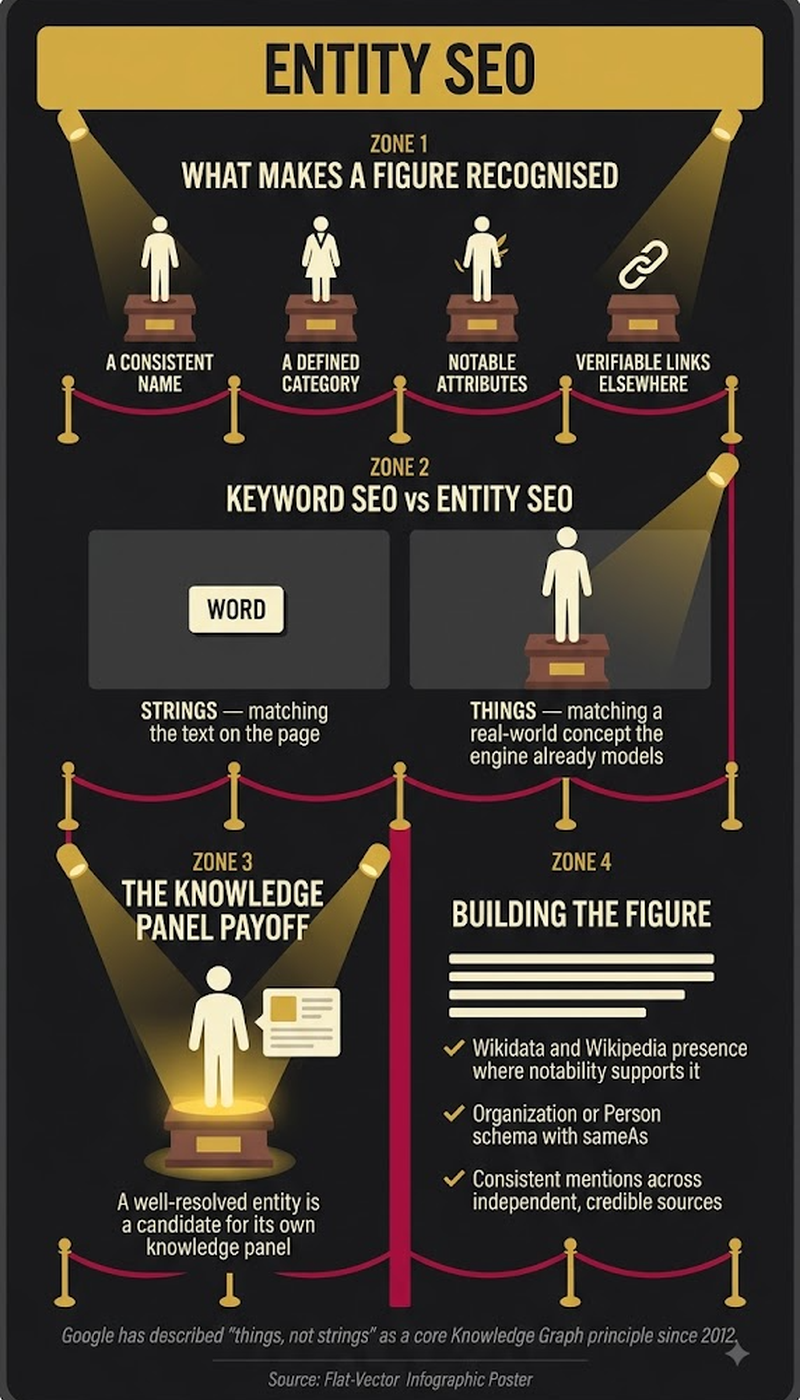
Entity SEO is the work of establishing a person, organization, place, product, or concept as a distinct, machine-readable entity, something search engines and AI systems can recognize as a standalone unit, connect to related entities, and cite with confidence. An entity differs from a keyword: the word apple could mean the fruit, the technology company, or the musician Fiona Apple, and entity SEO exists specifically to make clear which discrete, identifiable thing a piece of content or a brand actually refers to.
Key highlights
- Digital Applied's 2026 entity SEO guide puts Google's Knowledge Graph at an estimated 800-plus billion facts about entities and their relationships as of 2026.
- Branded web mentions correlate 0.664 with AI Overview citations, against just 0.218 for traditional backlinks, a gap wide enough that entity signals now carry more weight than link signals for AI visibility specifically, per Semrush's 2025 research.
- AI systems including Google AI Overviews, ChatGPT, and Perplexity are built on entity recognition at their core, operating at the entity level rather than treating each page as an isolated unit the way classic ranking does.
- Recognition typically takes three to nine months to establish once consistent signals are in place, faster in niche categories with little entity competition and slower in crowded ones where established entities already dominate.
- Wikidata entries are easier to create than Wikipedia articles, with no equivalent notability threshold, but the submission process still expects at least three independent editorial sources covering the entity before it goes live, per ReputationX's entity SEO guide.
Entity versus keyword
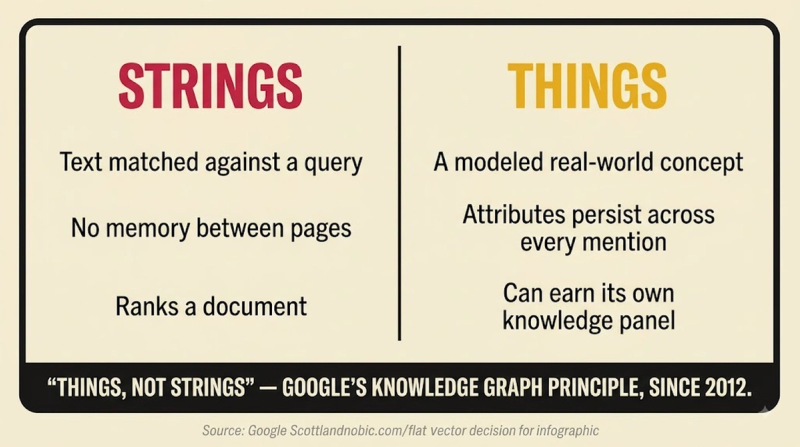
A keyword is a string of text someone might type. An entity is the specific, real-world thing that string could refer to, disambiguated from every other thing sharing the same name. Entity SEO exists because search engines and AI systems have to resolve that ambiguity before they can confidently retrieve, connect, or cite information about a brand or concept at all.
Building entity SEO
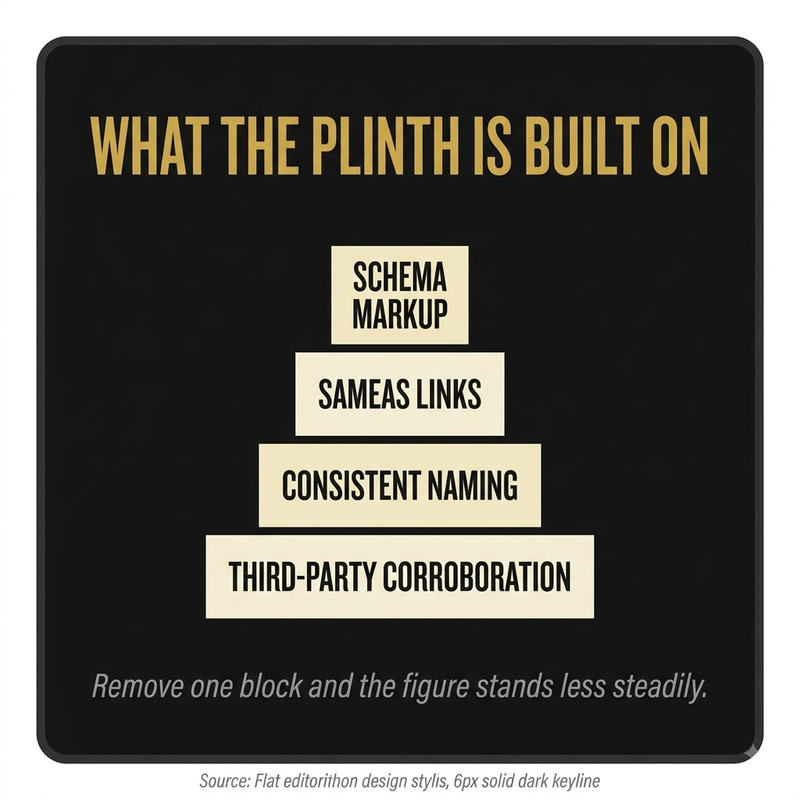
- Implement Organization and Person schema markup, defining the entity's core properties in a machine-readable format.
- Add sameAs links from that schema to canonical external profiles: Wikidata, LinkedIn, Crunchbase, and relevant trade-body listings.
- Line up at least three independent editorial sources covering the entity before attempting a Wikidata entry, since Wikidata's own submission process expects that level of verification.
- Keep name, address, and phone details identical across every listing and profile that references the entity.
Free Chrome extension
A free AI citation checker for ChatGPT and Gemini
CitoSkeleton passively captures fan-out queries, cited and fetched sources, and brand mentions behind an AI answer — then tracks your GEO visibility against named competitors. 100% local, no account, no server.
- Build Person entities for founders and key executives, complete with credentials and sameAs links to their own professional profiles, since an organizational entity is often anchored by the people connected to it.
Entity SEO next to semantic SEO
Entity SEO and semantic SEO overlap heavily but cover different scopes. Semantic SEO is the broader practice of optimizing content around meaning and intent in general. Entity SEO is the narrower, more technical discipline of establishing one particular entity's machine-readable identity, its schema markup, its sameAs connections, its presence in Wikidata and the Knowledge Graph, the foundation semantic SEO content then builds on top of.
Frequently asked questions
What is entity SEO?
Entity SEO establishes a brand, person, product, or concept as a distinct, machine-readable entity that search engines and AI systems can recognize, disambiguate, and cite with confidence, typically through schema markup, sameAs links, and Knowledge Graph presence.
How is an entity different from a keyword?
A keyword is text someone might search. An entity is the specific, disambiguated real-world thing that text refers to, separated from every other meaning the same word could carry, the fruit versus the company versus the musician all named apple.
What's the fastest way to start building an entity in the Knowledge Graph?
Organization or Person schema markup with sameAs links to verified external profiles like Wikidata and LinkedIn is the fastest starting point, followed by keeping business details consistent across every listing and lining up independent editorial coverage to support a Wikidata entry.
Does entity SEO outperform backlinks for AI visibility?
It shows a measurably stronger relationship. Semrush's 2025 research found branded web mentions correlate 0.664 with AI Overview citations, compared to only 0.218 for traditional backlinks, a wide enough gap that entity signals now matter more for AI specifically.
Is a Wikidata entry harder to get than a Wikipedia page?
Generally easier. Wikidata has no notability threshold equivalent to Wikipedia's, though the submission process still expects at least three independent editorial sources covering the entity before it goes live.


