
TL;DR. Author authority used to be treated as a nice-to-have byline detail; it now functions as a direct factor in both Google rankings and AI citations. Pages without a named author are roughly 40% less likely to get cited in ChatGPT and Perplexity than equivalent content carrying a verifiable byline, and authors who pair Person schema with sameAs links to at least two external platforms and five or more published articles on a topic start showing measurable citation gains within three to six months.
What is author authority?
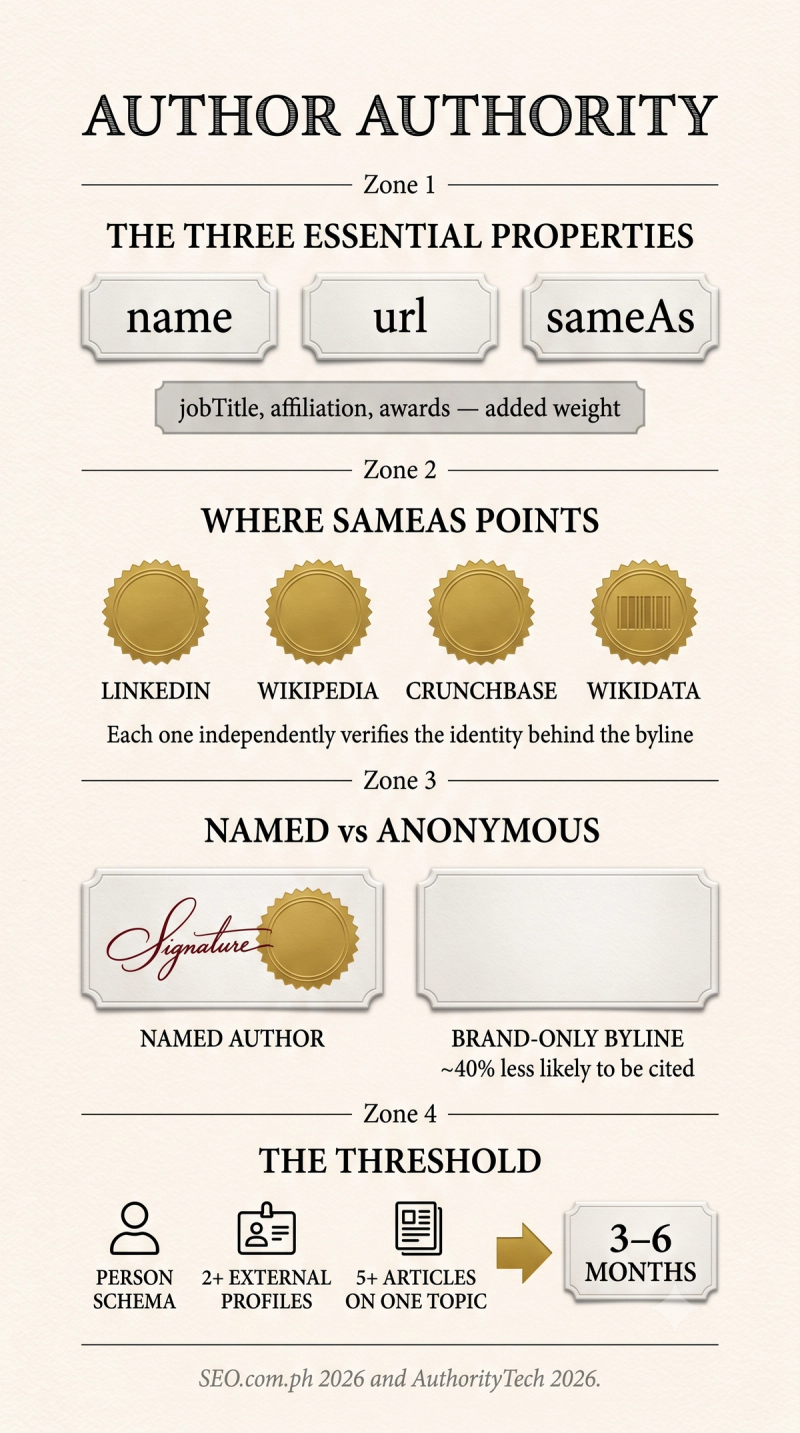
Author authority is the credibility a specific, named individual carries as a content creator, distinct from the overall authority of the site or brand publishing their work. It's built through demonstrated expertise, a consistent body of published work on a specific subject, verifiable external credentials, and structured data that explicitly connects the author to their professional identity across other authoritative platforms. It's no longer a soft, supplementary signal either, it functions as a direct factor shaping both Google rankings and AI search citations.
Key highlights
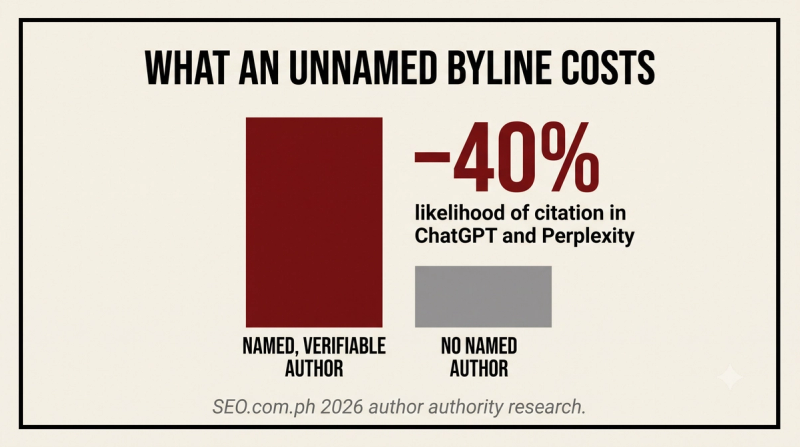
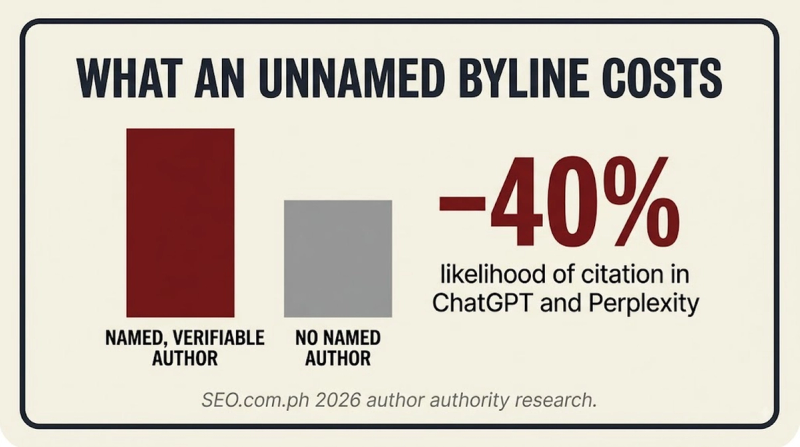
- Pages without a named author are roughly 40% less likely to be cited in ChatGPT and Perplexity than equivalent content with verifiable author bylines, per SEO.com.ph's 2026 author authority research.
- A byline alone isn't the differentiator. A page with a properly marked-up author who has clear credentials, a job title, and external authority signals outperforms a brand-only byline by a meaningful margin.
- LinkedIn, Wikipedia, Crunchbase, and Wikidata are the heaviest-weighted sameAs destinations for AI citation purposes, since each one independently verifies the identity behind the byline.
- Person schema's essential properties are just three: name, a url pointing to an author bio page, and sameAs links to external professional profiles, with job title, affiliation, and awards adding further weight on top.
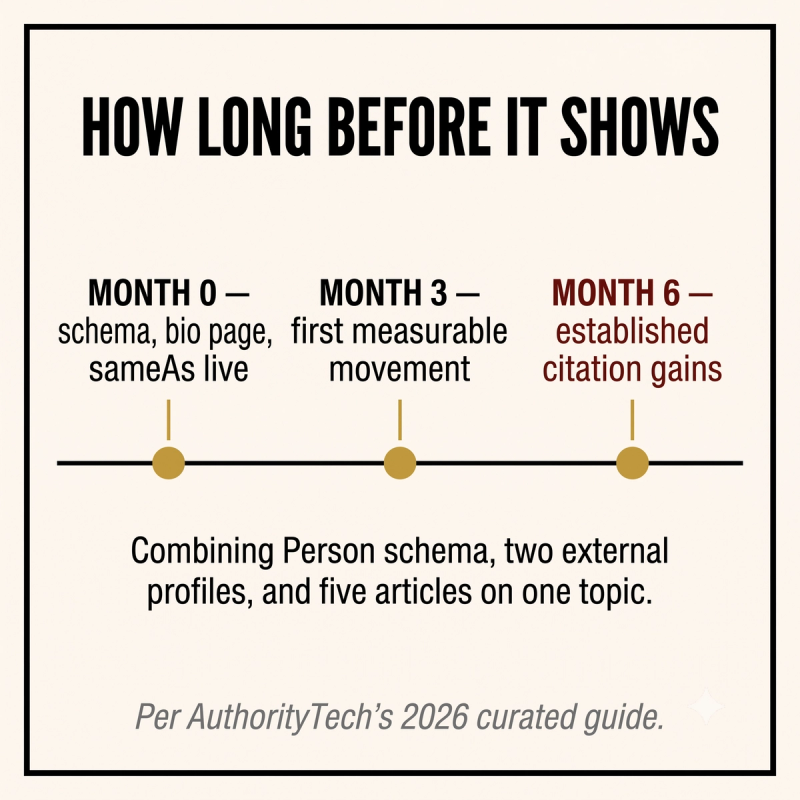
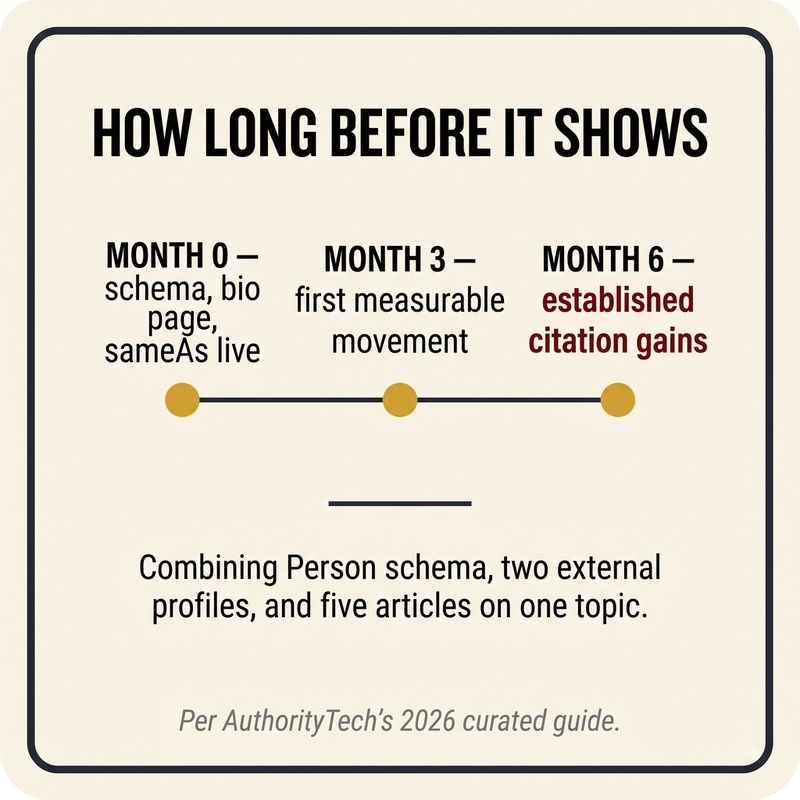
- Authors combining Person schema, sameAs links to at least two external platforms, and five or more published articles on a specific topic typically show measurable citation improvements within three to six months, per AuthorityTech's 2026 curated guide.
Why AI systems specifically reward a verifiable name
Author authority carries outsized weight for AI citation specifically, since AI systems evaluate the credibility of a claim partly through the verifiable identity of who's making it, a natural extension of E-E-A-T applied to a single person rather than a whole site. A named author with structured, cross-platform verification functions as a disambiguated entity an AI system can actually check, while an anonymous or brand-only byline gives the system nothing comparable to verify, which is a meaningful part of why unattributed content gets cited roughly 40% less often.
The schema that actually does the work
Author authority is built technically through Person schema markup applied consistently across an author's published content. The core properties are the author's full name, a url pointing to a dedicated author bio page, and a sameAs array linking to that person's verified external profiles, most valuably LinkedIn, Wikipedia, Crunchbase, or Wikidata. Adding job title, professional affiliation, and any relevant awards or certifications to that same markup gives both search engines and AI systems additional, explicit credibility signals beyond whatever the byline text itself says.
Building an author profile from zero
- Publish under a consistent, real author name rather than a generic brand byline or no byline at all.
- Create a dedicated author bio page listing credentials, professional background, and areas of expertise.
- Add Person schema markup to every article, including name, a url to the bio page, and a sameAs array linking to verified external profiles.
- Build a visible body of published work, at least five articles on a specific topic, to establish demonstrated subject-matter depth.
- Keep the author's credentials current and accurate, updating schema and bio content as their professional standing evolves.
Frequently asked questions
What is author authority?
Author authority is the verifiable credibility a specific named writer carries, built through demonstrated expertise, a consistent publishing history, and structured data connecting that person to their professional identity across the web.
Does a named author actually change whether AI tools cite the page?
Yes, measurably. Pages without named authors are roughly 40% less likely to be cited in ChatGPT and Perplexity than equivalent content with verifiable author bylines.
Which schema markup actually builds author authority?
Person schema, with core properties including the author's name, a url pointing to a dedicated bio page, and a sameAs array linking to verified external profiles, plus optional job title and affiliation fields for further weight.
Which sameAs platforms matter most?
LinkedIn, Wikipedia, Crunchbase, and Wikidata carry the most weight for AI citation purposes, since each represents independently verifiable, authoritative confirmation of an author's identity and credentials.
How long before author authority shows measurable results?
Typically three to six months, for authors combining Person schema, sameAs links to at least two external platforms, and five or more published articles on a specific topic.


