
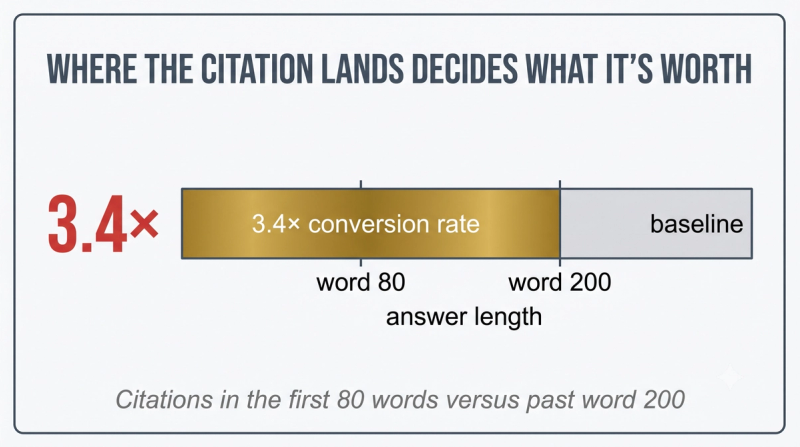
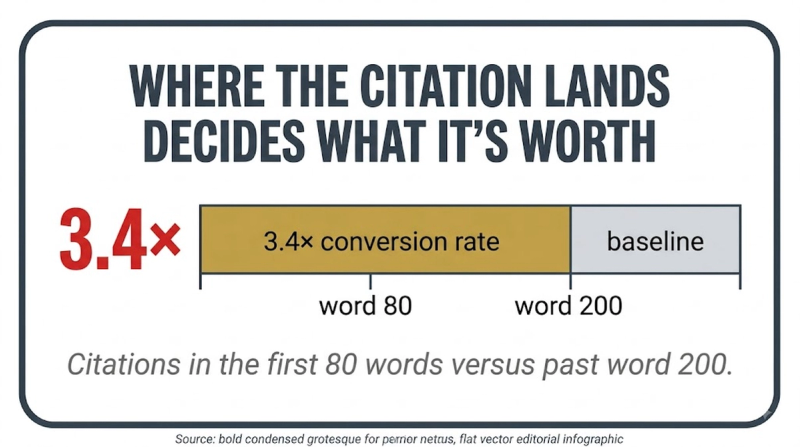
TL;DR. A brand visibility score compresses how often, how prominently, and how positively AI engines mention your brand into one number, usually out of 100. Citations placed in the first 80 words of an answer convert at 3.4 times the rate of citations placed past word 200, which is why position counts for as much as raw mention count.
What is a brand visibility score?
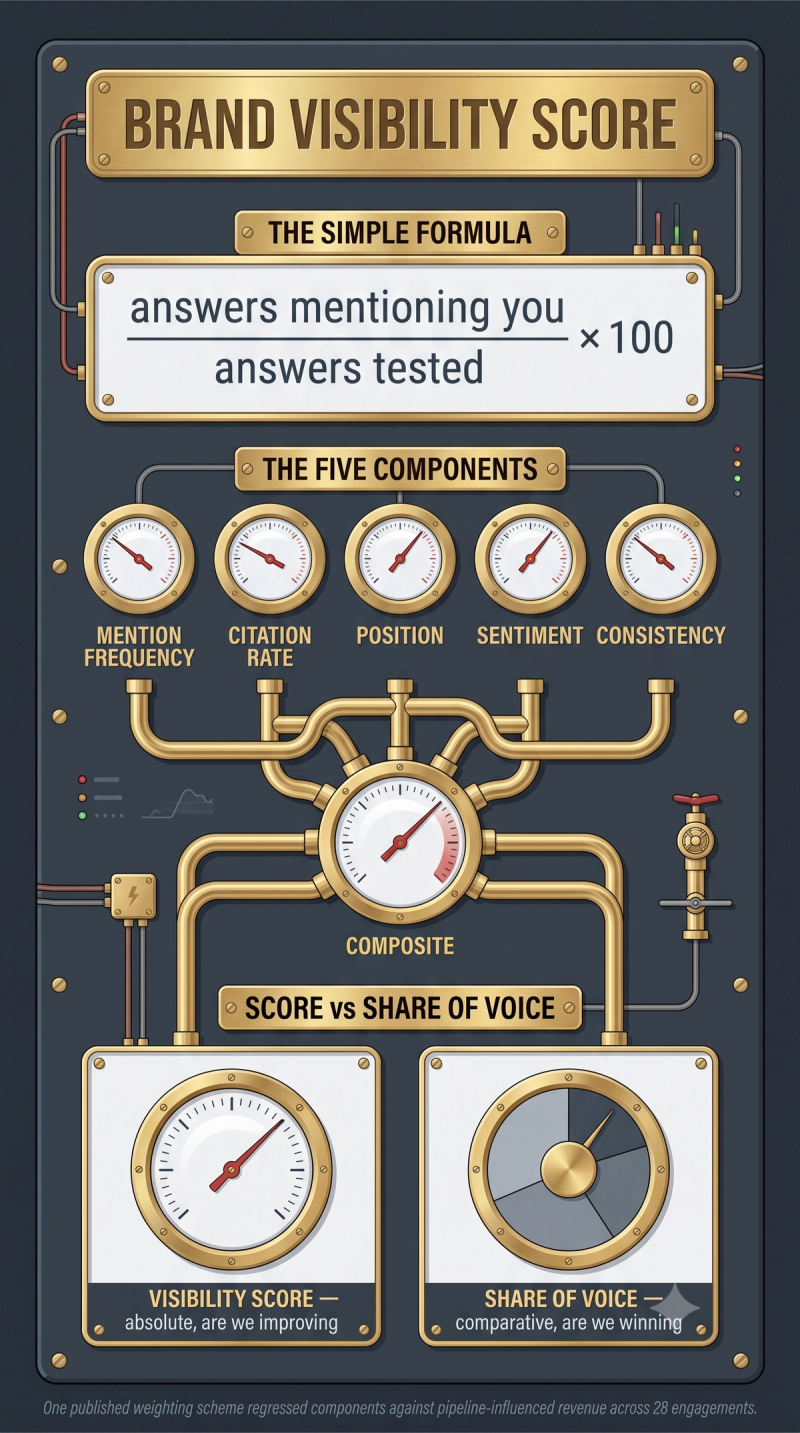
A brand visibility score is a composite metric that measures how reliably AI search engines find, mention, cite, and position a brand when answering questions relevant to its category. The simplest version is just the percentage of tested prompts that mention the brand at all.
It turns a vague sense of are we showing up in AI into a single number you can track month over month and stack up against named competitors.
Key highlights
- The basic formula: answers mentioning your brand divided by total answers tested, multiplied by 100.
- Citations in the first 80 words of an AI answer convert at 3.4 times the rate of citations appearing past word 200.
- More rigorous versions do not just count raw mentions. They weight several components together, mention rate, citation rate, position, and consistency, into one score.
- One published weighting scheme derived its weights by regressing each component against pipeline influenced revenue across 28 client engagements between mid-2024 and early 2026.
What actually goes into the score
A brand visibility score gets calculated by testing a set of category relevant prompts across AI engines and scoring each answer on whether, how often, and how favorably the brand appears. The simplest formula only counts presence. Weighted formulas combine several components into one number instead.
- Mention frequency: how often your brand gets named across the tested prompt set.
- Citation rate: how often the engine actually links to or credits your site as the source.
- Position: how early in the answer the mention lands, since earlier mentions convert far better.
- Sentiment: whether the description reads positive, neutral, or as a warning to avoid you.
- Consistency: whether the score holds steady across repeated runs and multiple engines.
Brand visibility score vs share of voice
A brand visibility score is usually an absolute number about your own brand, mentions, position, sentiment, out of a maximum. AI share of voice is explicitly comparative instead, your mentions as a percentage of total mentions across you and named competitors on the same prompt set.
Most teams end up tracking both. The visibility score shows whether you are improving. Share of voice shows whether you are actually winning.
Free Chrome extension
A free AI citation checker for ChatGPT and Gemini
CitoSkeleton passively captures fan-out queries, cited and fetched sources, and brand mentions behind an AI answer — then tracks your GEO visibility against named competitors. 100% local, no account, no server.
How to move the score
- State your core recommendation or claim in the first two sentences of relevant pages, since early position converts far better.
- Earn corroborating mentions on independent sites, since AI engines weight consensus heavily in scoring.
- Fix negative or outdated sentiment at the source, not only on your own site where it does less good.
- Track consistency across engines; a strong ChatGPT score paired with a weak Perplexity score signals a real gap worth closing.
Frequently asked questions
What is a brand visibility score?
It is a single composite number, typically out of 100, standing in for a much messier question: does AI actually know and trust who you are? It condenses mention frequency, citation rate, position, and sometimes sentiment into something you can track over time instead of eyeballing individual answers.
How is a brand visibility score calculated?
The simplest formula divides the number of tested answers that mention your brand by the total number of answers tested, multiplied by 100. More sophisticated versions weight multiple components, mention rate, citation rate, answer position, and consistency, into a single composite score.
What is the difference between a brand visibility score and share of voice?
A brand visibility score is usually an absolute measure of your own brand's presence and quality of mentions. AI share of voice is explicitly comparative, expressing your mentions as a percentage of total mentions across you and named competitors on the same prompt set. Teams typically track both together.
Does sentiment actually factor into the score?
Yes, in most rigorous scoring models. A mention that recommends your brand should count differently than a neutral mention or one that warns users away, so sentiment is typically weighted alongside raw mention count and position when the score is meant to reflect real business impact.
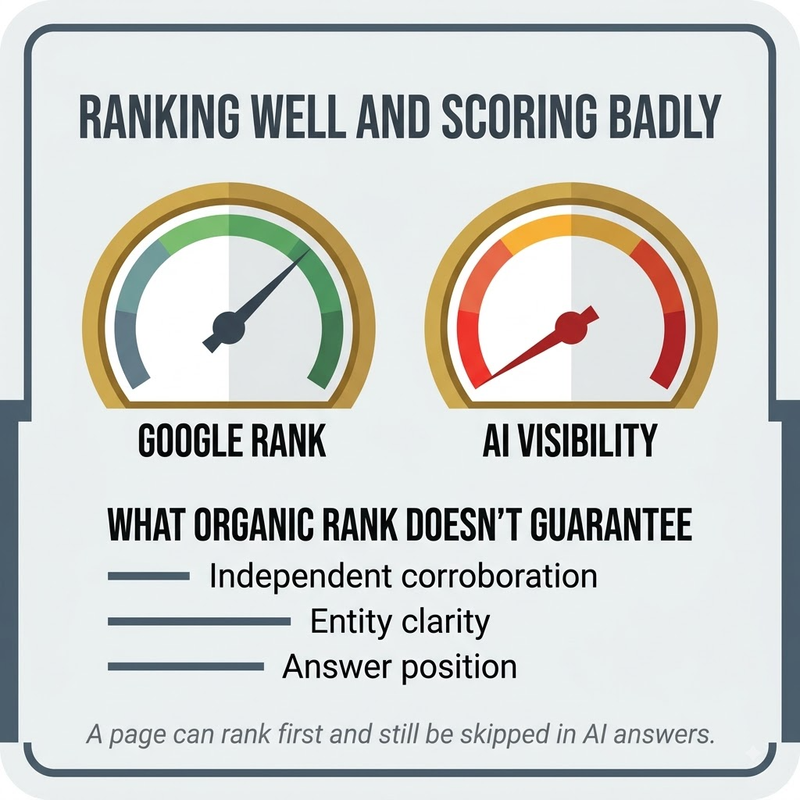
Why is my score low even though I rank well on Google?
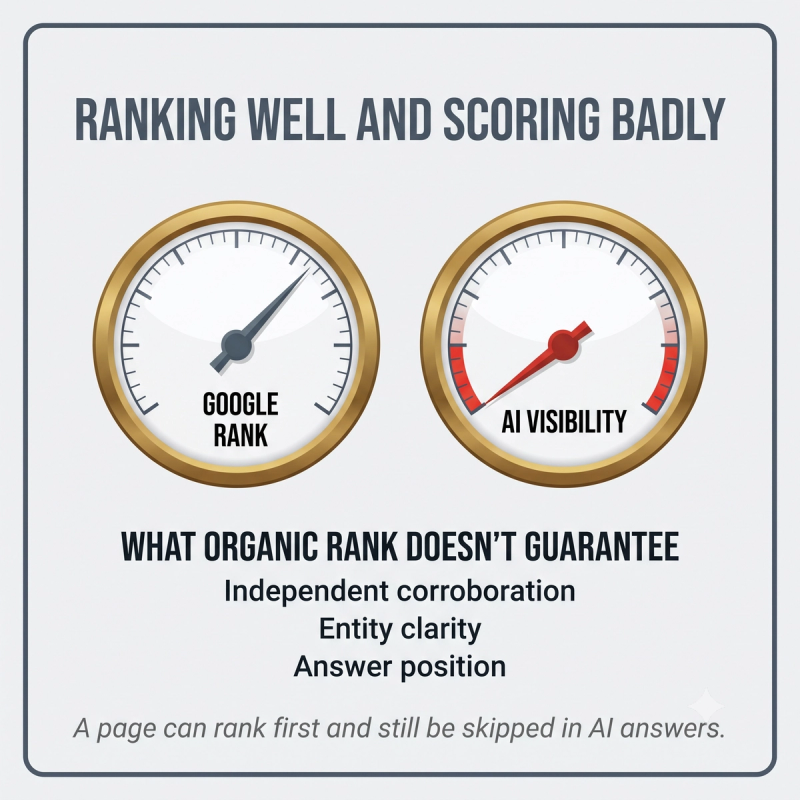
AI engines weight independent corroboration, entity clarity, and answer position heavily, none of which are guaranteed by a strong organic ranking. A page can rank first on Google and still be skipped in AI answers if competitors have stronger third party mentions or your key claims sit too far down the page to be extracted.
Is a higher score always better?
Generally yes, but context matters more than the raw number. A visibility score built from thin, low quality mentions is worth less than a lower score built from a handful of strongly positive, well positioned citations on sites that actually influence buyers. Read the components before trusting the composite.


