
TL;DR. Information gain measures how much a page adds beyond what a searcher has already encountered elsewhere on the same topic, a concept Google patented in June 2022 and expanded in 2024 to cover AI systems. Google's March 2026 core update turned that concept into the dominant ranking signal at scale, and sites built around original research and first-hand evidence gained 15 to 25% visibility while templated, repackaged content dropped 30 to 50% in the affected verticals.
What is information gain?
Information gain scores a page on novelty rather than coverage. The concept comes from a Google patent that compares a candidate page against the material a searcher has already seen on other pages about the same topic, then rewards the candidate for contributing something genuinely new: a fresh data point, a first-hand detail, an original finding, not a more thorough restatement of what three other sites already said.
Key highlights
- Google filed the information gain patent in June 2022, the latest entry in a series that began in 2020 and was updated in 2024 to explicitly extend the concept to automated assistants and AI systems, per Search Engine Land's explainer.
- The March 2026 core update was the first time information gain carried substantial weight across essentially every English-language query, operationalized at scale rather than tested in a narrow slice of results, per Digital Applied's analysis.
- The gap between original and derivative content widened sharply after that update: sites publishing original research and first-hand evidence gained 15 to 25% visibility, while templated, repackaged pages in the same verticals lost 30 to 50%, per the same 2026 analysis.
- AI-generated answers reward the same kind of novelty. Direct quotations carry a 42.6% citation lift over paraphrased material, and original statistics carry a 33% lift, meaning a page that quotes a real person or reports its own number gets picked up measurably more often than one that simply summarizes.
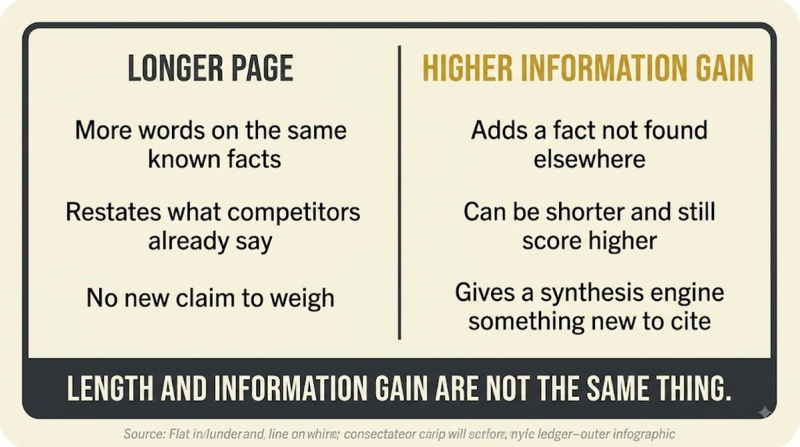
- Length has nothing to do with it. A short page anchored to one piece of unique, real data, a local price list, field photos, an original failure-rate timeline, can outrank a longer guide that covers the same ground more thoroughly but says nothing the top ten results haven't already said, per Digital Shift Media's information gain overview.
The patent behind the score
The patent describes a fairly mechanical process: take a candidate page, compare it against the content a user has already been shown for a query, and score how much of the candidate is genuinely new material versus restatement. It began as a 2020 filing and was updated in 2024 specifically to cover automated assistants and AI systems, which ties it directly to how a modern AI search product retrieves and synthesizes an answer, not just how a classic ranked list of blue links gets ordered.
Raising a page's score
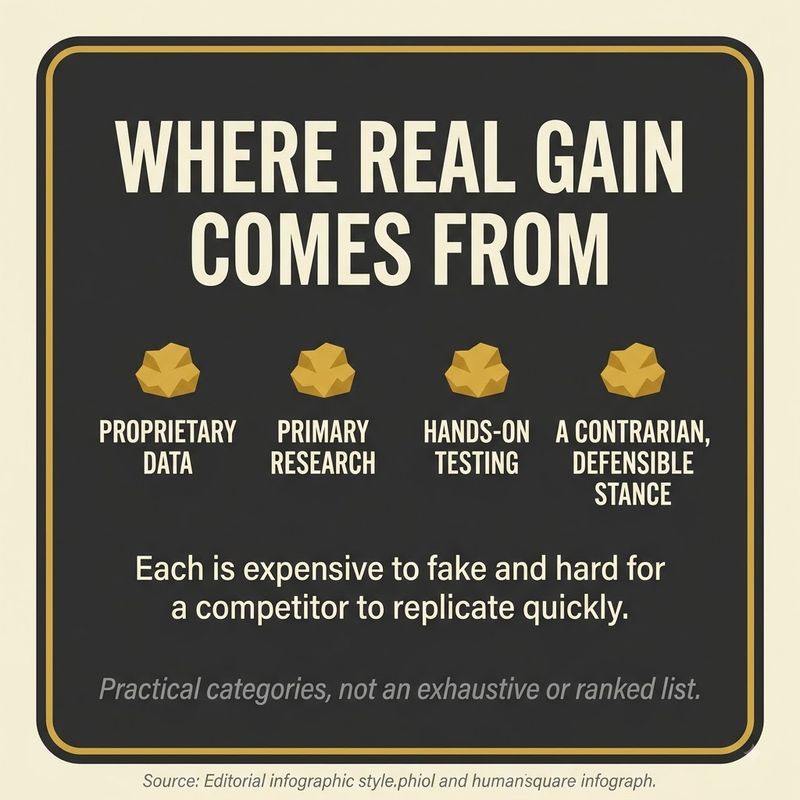
- Publish data the page's authors actually collected: a proprietary survey, internal performance numbers, or first-hand field observations nobody else has.
- Quote a named expert directly. Direct quotations carry that measured 42.6% citation lift in AI-generated answers.
- State a finding the page itself generated rather than only citing numbers found elsewhere. Original statistics carry a 33% lift on their own.
- Read what the current top-ranking pages already say, then deliberately add an angle, detail, or data point none of them cover.
- Skip content that only restates or lightly paraphrases the existing top results. Information gain specifically penalizes that kind of repackaging, no matter how polished the writing is.
Novelty versus comprehensiveness
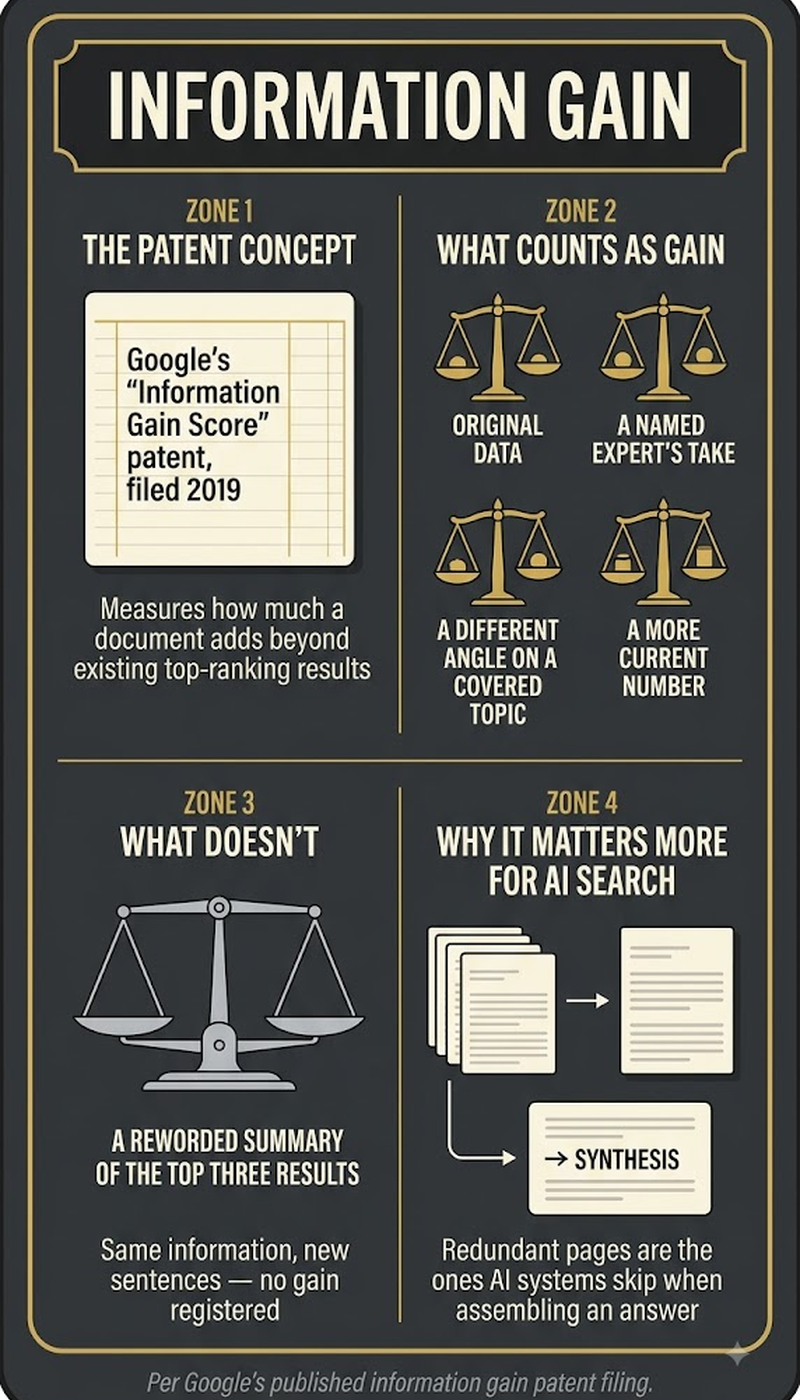
Comprehensiveness and information gain measure different things, and mixing them up leads to the wrong content strategy. A page can cover a topic exhaustively and still add nothing a searcher hasn't already read on three other sites. Information gain measures whether the page contributed something new, so a shorter page built around one genuinely original data point can outscore a much longer page that thoroughly restates the consensus.
Frequently asked questions
What is information gain in SEO?
Information gain in SEO scores how much new, useful material a page adds beyond what a searcher has already seen elsewhere on the same topic. It comes from a Google patent and rewards original contribution over thorough restatement.
Is information gain a confirmed ranking factor or just SEO theory?
It is a real, patented Google concept, filed in June 2022 as part of a series dating to 2020, and the March 2026 core update operationalized it at scale across essentially every English-language query, so it is no longer a theoretical signal.
Why did templated content lose visibility after the March 2026 update?
Templated content lost visibility because it rarely contributes anything a searcher hasn't already read. The same 2026 analysis found repackaged pages dropped 30 to 50% in affected verticals while pages built on original research and first-hand evidence gained 15 to 25%.
Does a longer page automatically score better on information gain?
No. Length is not the variable being scored. A short page built around one genuinely original data point can outrank a much longer page that covers the topic more exhaustively but adds nothing new, since the patent measures novelty, not word count.
What is the fastest way to add information gain to an existing page?
The fastest lever is usually a direct quote from a named expert or one original statistic the page itself generated, since direct quotations show a 42.6% citation lift in AI answers and original statistics show a 33% lift, both faster to add than a full proprietary research project.


