
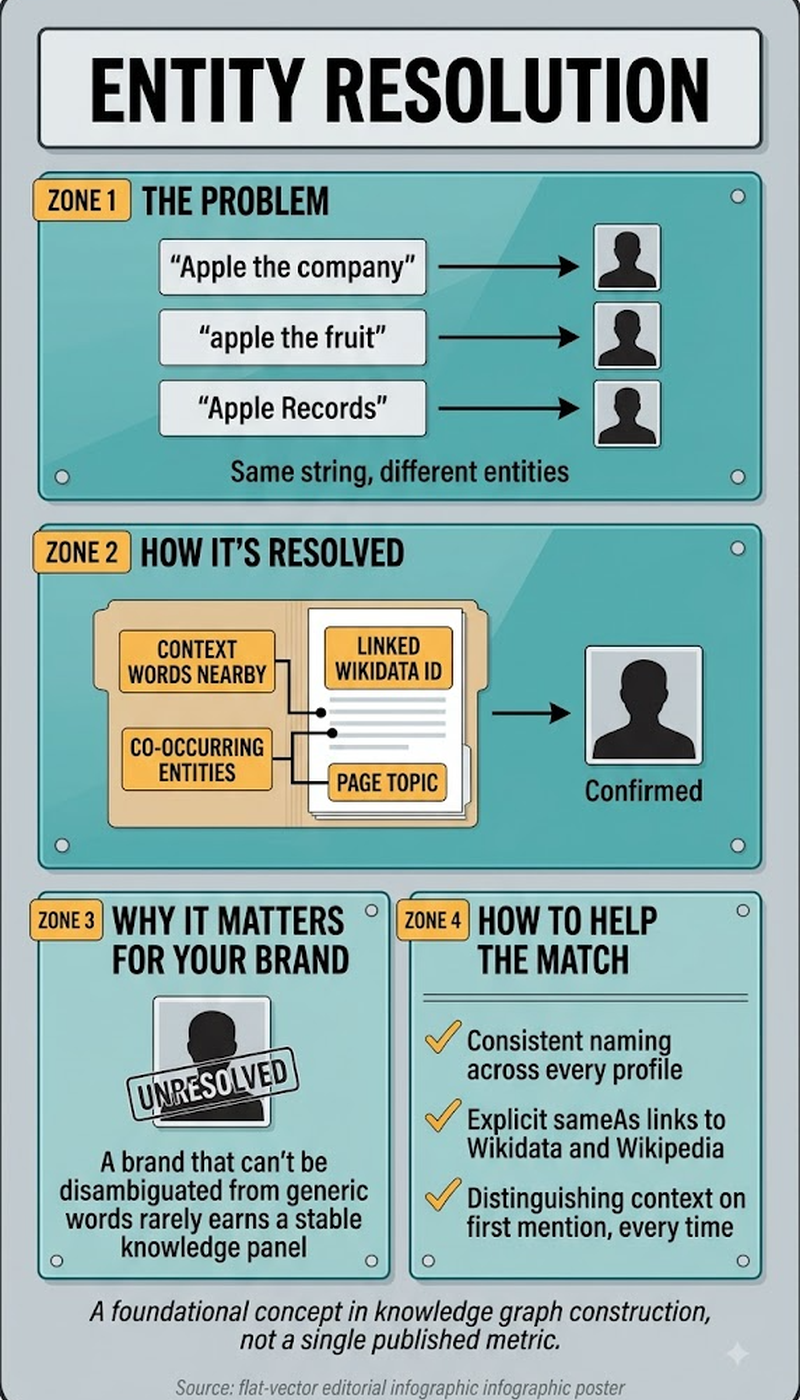
There are a dozen brands called Apollo. Search engines still keep them straight, mostly. The mechanism that decides which Apollo you meant is entity resolution, and getting it wrong quietly sinks your visibility in AI answers.
My position. Before you chase citations, make sure the engines even know which entity you are. Ambiguity is a tax on everything downstream.
How entity resolution works
Entity resolution works by gathering signals about a name, comparing them, and deciding whether separate mentions point to the same thing. Matching attributes like location, topic, and linked profiles let a system merge duplicates and split look alikes into distinct entities.
The output feeds a knowledge base. The resolved entity gets a stable identity inside a knowledge graph, which AI answers then draw on.
Why it matters for AI search
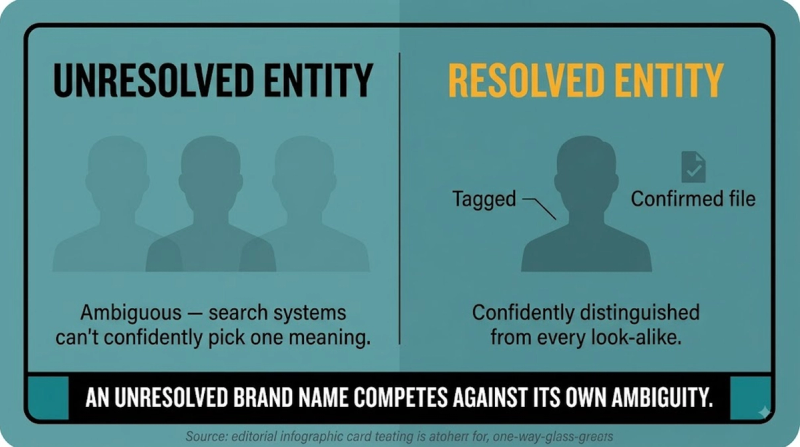
AI systems answer about entities, not strings of text. If they cannot resolve your brand to one clear identity, they hedge, blend you with a rival, or leave you out of the answer.
Entity resolution and your content
This is the machinery behind entity SEO, and you influence it with consistent names and explicit links between your profiles.
The sameAs pattern is your strongest tool. Point your site to your official profiles, and point them back at your site.
How to strengthen your entity signals
- Use one exact brand name everywhere, spelled and formatted the same way.
- Keep name, address, and contact details identical across the web.
- Add Organization or Person structured data with sameAs links to your profiles.
- Earn mentions that pair your name with your core topics.
- Fix duplicates and wrong associations as soon as you spot them.
Free Chrome extension
A free AI citation checker for ChatGPT and Gemini
CitoSkeleton passively captures fan-out queries, cited and fetched sources, and brand mentions behind an AI answer — then tracks your GEO visibility against named competitors. 100% local, no account, no server.
Signals engines use to resolve entities
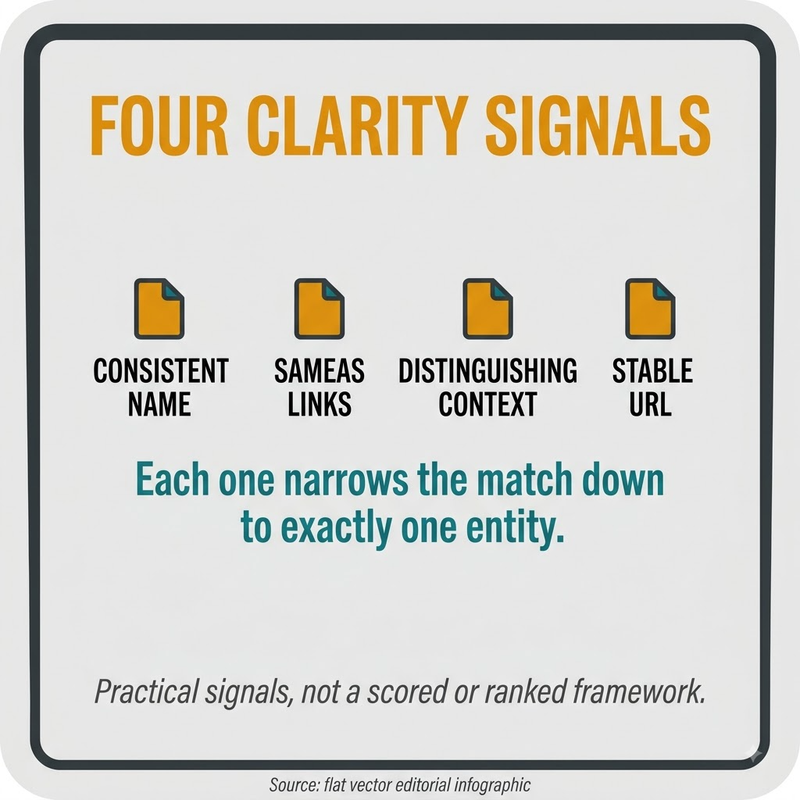
- Consistent naming and contact details.
- Explicit sameAs links between official profiles.
- Co-occurrence with the topics you want to own.
- Corroboration across independent trusted sources.
One thing teams underrate. A messy entity is worse than an unknown one. Contradictory signals make engines cautious, and caution means fewer citations.
Frequently asked questions
What is entity resolution in simple terms?
It is how a system decides that different mentions mean the same thing. If three pages name a company slightly differently, entity resolution figures out they are one business, not three. It then links that single entity to a knowledge graph so search and AI can reason about it.
How do I help Google resolve my brand correctly?
Use one consistent name and set of contact details everywhere, add Organization structured data with sameAs links to your official profiles, and earn mentions that tie your name to your topics. Consistency across independent sources is what lets engines merge your mentions into a single, confident entity.
What happens if entity resolution fails?
Your brand gets blended with a similarly named one, split across duplicate identities, or dropped from answers entirely. AI systems reason about entities, so an unresolved brand is hard to cite. Fixing naming, contact details, and profile links usually clears the confusion within a few crawl cycles.


