
Every AI search engine you care about, ChatGPT Search, Perplexity, Google AI Overviews, runs on some form of retrieval augmented generation. Understand this one pattern and the whole game of getting cited stops feeling like a mystery.
Here is the blunt version. If a retrieval system cannot find and cleanly quote your page, no amount of clever writing gets you into the answer.
How retrieval-augmented generation works
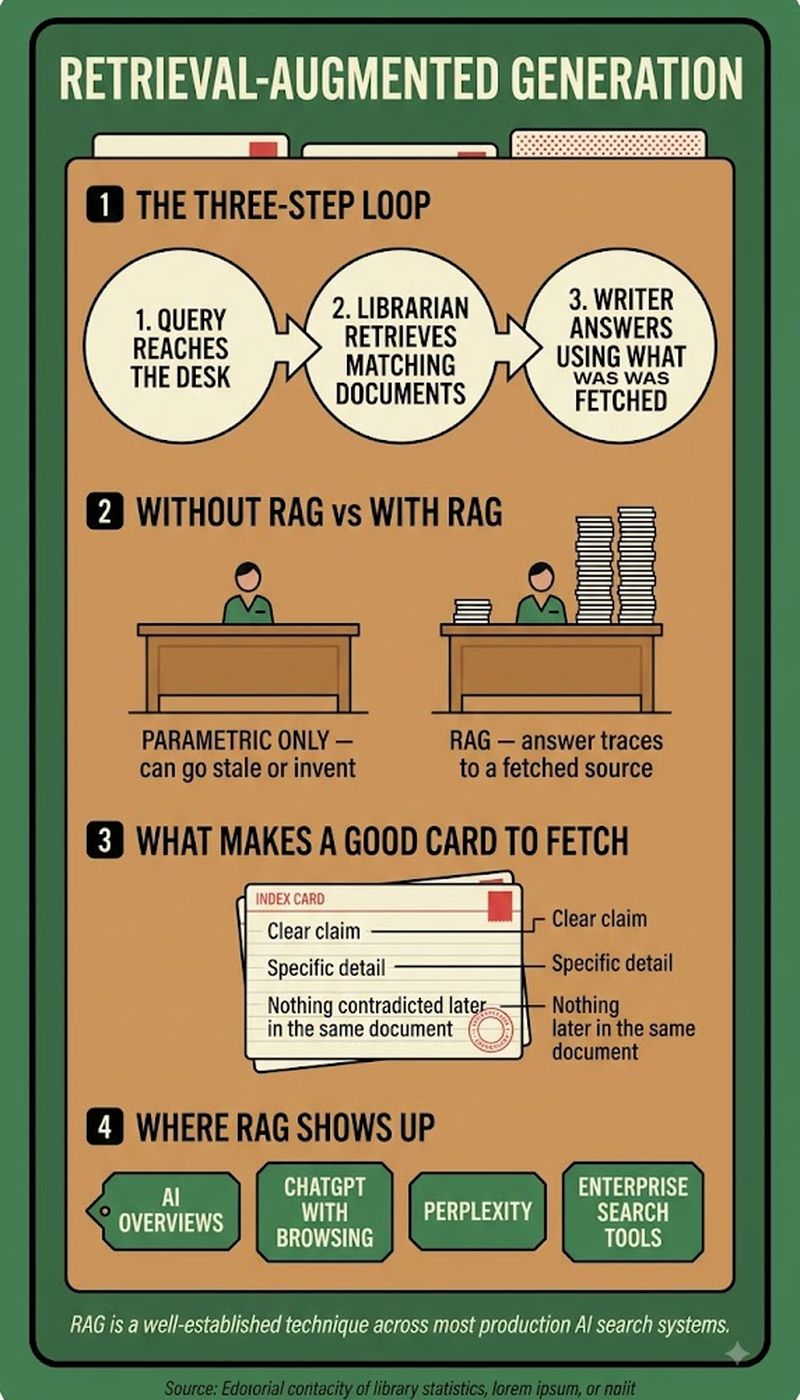
Retrieval-augmented generation works in two steps. First a retriever searches an external index for passages relevant to the query. Then a language model reads those passages and writes an answer grounded in them, usually citing the sources it used.
The retriever is the gatekeeper. It converts your content into vector embeddings and matches them against the query.
The generator then leans on grounding to keep its answer tied to the retrieved text rather than its own memory.
Why RAG matters for search visibility
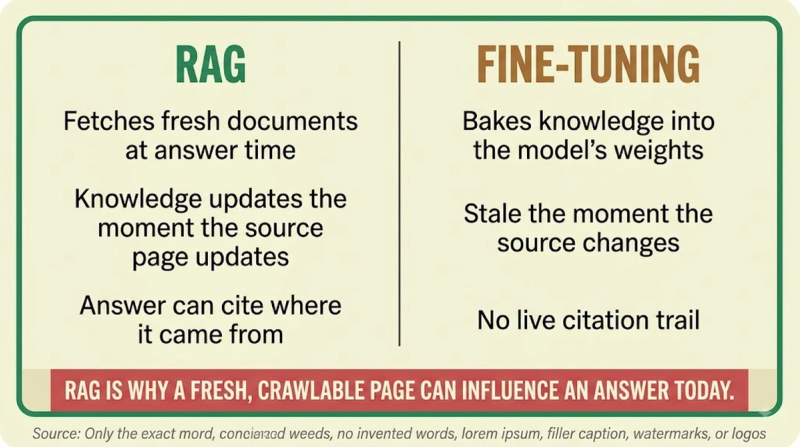
Plain language models answer from memory and go stale. RAG bolts on live retrieval, so answers reflect current pages. That is why fresh, well structured content can win citations even against bigger brands.
RAG and AI search
In practice your content is split into passages, so chunk retrievability decides whether a clean piece of your page ever reaches the model.
The takeaway is structural. Self contained sections, one idea each, retrieve far better than long, winding prose.
How to make content RAG friendly
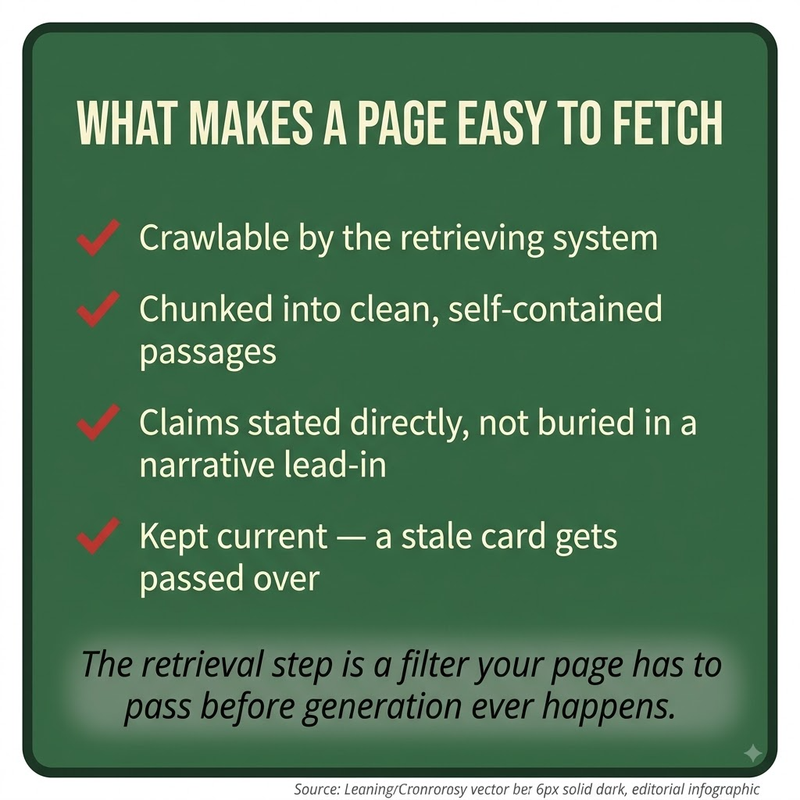
- Write self contained passages that still make sense lifted out of context.
- Put the answer first, then the support, inside each section.
- Use consistent entity names so the retriever matches you confidently.
- Add structured data to disambiguate facts and entities.
Free Chrome extension
A free AI citation checker for ChatGPT and Gemini
CitoSkeleton passively captures fan-out queries, cited and fetched sources, and brand mentions behind an AI answer — then tracks your GEO visibility against named competitors. 100% local, no account, no server.
- Keep pages crawlable, since a passage that is not indexed cannot be retrieved.
What RAG systems reward
- Clean passage boundaries the retriever can isolate.
- Factual density, one checkable claim per sentence.
- Entity consistency across the page and the wider web.
- Freshness, so retrieved facts are current.
I will be direct. Most GEO advice is just RAG hygiene in disguise. Nail the retrieval basics and the fancy tactics matter far less.
Frequently asked questions
What is retrieval-augmented generation in simple terms?
It is an AI method that looks things up before answering. Instead of relying only on what a model memorized during training, the system retrieves relevant documents at question time and writes its response from them. That keeps answers current and lets the model cite real sources rather than guessing.
How does RAG affect SEO?
RAG decides which pages an AI answer can reach and quote. Content that is crawlable, split into self contained passages, and full of clear, checkable claims retrieves more reliably. So classic indexing and clean structure directly influence whether your brand appears inside AI generated answers.
Is RAG the same as fine-tuning?
No. Fine-tuning changes a model's internal weights by training it on extra data, which is slow and static. RAG leaves the model alone and supplies fresh documents at query time. For staying current and citing sources, retrieval is usually the cheaper, more transparent choice.


