
TL;DR. Kevin Indig named the pattern ski-ramp scoring after analyzing 1.2 million ChatGPT citations and finding that a page's odds of being cited spike hard in its first 30%, then fall away, a curve shaped like a ski jump's ramp rather than any kind of flat or evenly declining line. His research, covered by Search Engine Land, found 44.2% of citations come from that first 30% of content, the middle 30 to 70% earns 31.1%, and material buried deep in a long page runs roughly 2.5 times less likely to get cited at all.
What is ski-ramp scoring?
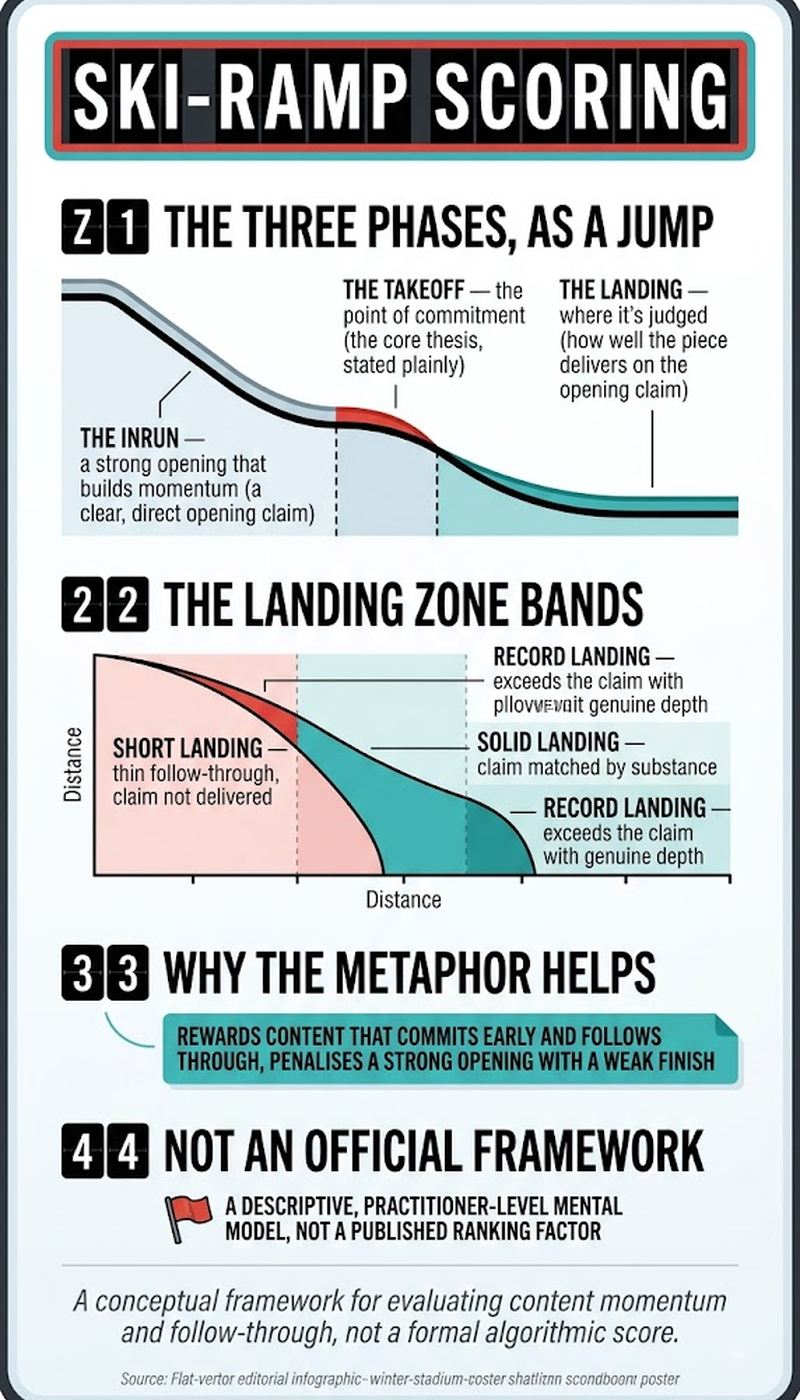
Ski-ramp scoring is the term Kevin Indig coined for the citation pattern he found by analyzing 1.2 million ChatGPT citations, published through his Growth Memo research. Plotted across a page, citation likelihood does not decline evenly from top to bottom. It spikes early, drops off hard, then flattens into a long low tail, a shape closer to a ski jump's ramp than a straight line, hence the name. The practical takeaway: where a claim sits on the page can matter as much as how well the claim is written.
Key highlights
- Kevin Indig's analysis, covered by Search Engine Land, found 44.2% of all ChatGPT citations across 1.2 million examples come from the first 30% of a page's content.
- The middle 30 to 70% of a page earns 31.1% of citations, while content buried deep in a long post runs roughly 2.5 times less likely to get cited than content near the top, per Indig's Growth Memo writeup.
- The 10 to 20% band of a page is where AI reads hardest across every vertical Indig studied, while the first 10%, usually navigation and intro filler, gets largely skipped over.
- Radiant Elephant's review of GEO tactics found sections between 120 and 180 words correlate with 4.6 average citations, against 2.7 for sections under 50 words.
Ski-ramp scoring vs the first-30% extractability rule
Ski-ramp scoring and extractability describe the same underlying finding from two different angles. Extractability covers how a passage needs to be written to survive being lifted into an answer. Ski-ramp scoring specifically names the shape of the citation curve across the page itself: the sharpest gains sit in the 10 to 20% band, not the very top, which is often navigation and intro filler that AI tends to skip entirely.
Structuring content around the curve
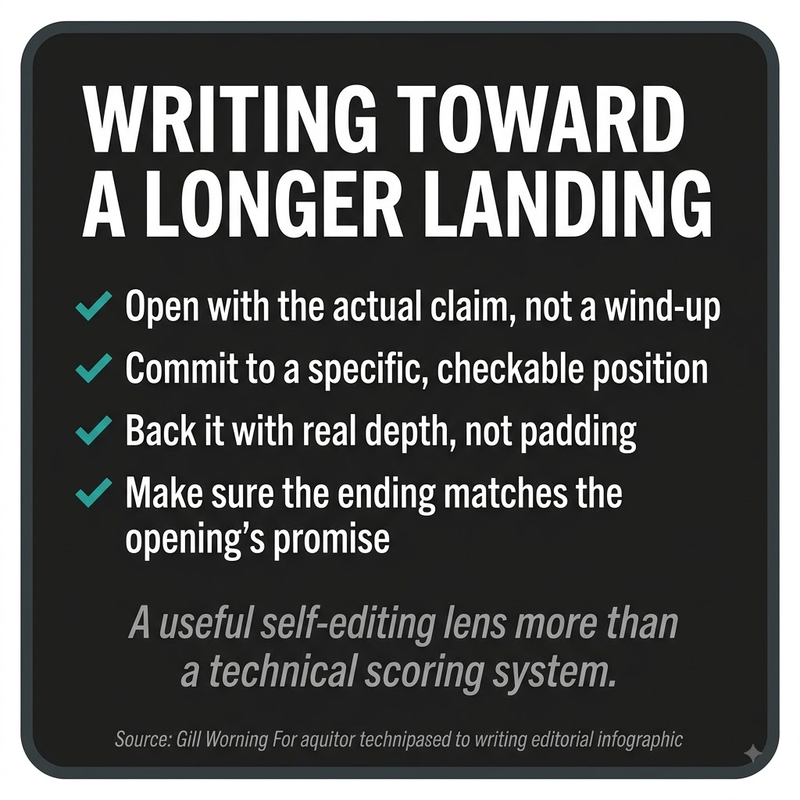
- Skip filler in the first 10% of a page, since that band gets mostly ignored, and move the highest-value claim into the 10 to 20% range where citation likelihood actually peaks.
- Keep body sections between roughly 120 and 180 words, the length correlated with the highest average citation count.
Free Chrome extension
A free AI citation checker for ChatGPT and Gemini
CitoSkeleton passively captures fan-out queries, cited and fetched sources, and brand mentions behind an AI answer — then tracks your GEO visibility against named competitors. 100% local, no account, no server.
- Restate the page's core claims again somewhere in the middle third, since the 30 to 70% band still earns nearly a third of citations and should not be written off as dead weight.
- Avoid burying the page's most important data point past the two-thirds mark, since content that deep runs roughly 2.5 times less likely to get cited than content near the top.
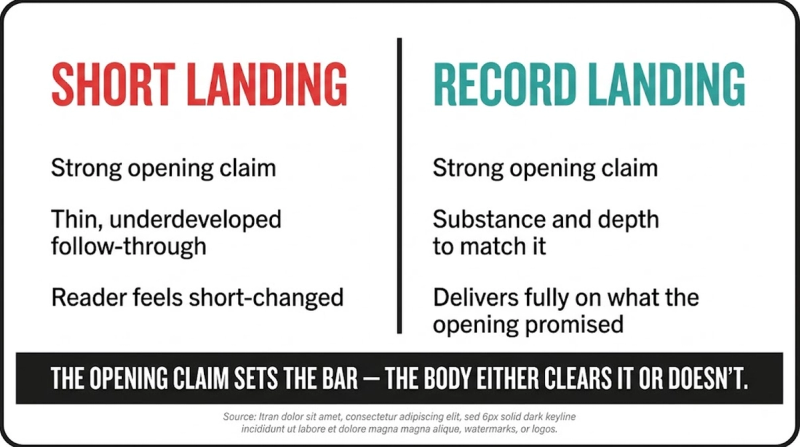
- Open with a direct bottom-line-up-front statement instead of scene-setting, since the ramp's steep early climb rewards a claim stated immediately.
Frequently asked questions
What exactly does ski-ramp scoring measure?
Ski-ramp scoring measures the citation-likelihood curve across a page's length, the shape traced by how often ChatGPT pulls a citation from each stretch of content, from the opening lines down to the closing paragraph.
Where did the term come from?
Kevin Indig coined it after analyzing 1.2 million ChatGPT citations and publishing the findings through his Growth Memo research, later picked up by outlets including Search Engine Land.
Why the ski-ramp name specifically?
The name follows the shape of the curve itself, a steep early rise, a drop, then a long flat tail, which looks a lot more like a ski jump's ramp than a smooth, even decline from the top of a page to the bottom.
What is the ideal section length if citations are the goal?
Sections between roughly 120 and 180 words correlate with the highest average citation count, at 4.6 citations, against 2.7 for sections under 50 words, per Radiant Elephant's review of evidence-backed GEO tactics.


