
TL;DR. Guest posting carries a credibility problem the data doesn't fully support: almost 98% of the sites listed on guest post marketplaces are low quality by any reasonable measure, yet websites earning just 5 to 10 high-quality guest post backlinks per quarter see an average 23% lift in organic traffic over six months. The tactic itself, writing and publishing an article on another website in exchange for a link back, isn't broken, only the marketplace version of it commonly is.
What is guest posting?
Guest posting is the practice of contributing an original article to another website, usually one relevant to a shared industry or audience, in exchange for a link back to the writer's own site placed within or alongside the content. It functions as a link building tactic, a relationship-building exercise, and a way to reach a new audience through an established publication's existing readership, all at once.
Key highlights
- Websites earning 5 to 10 high-quality guest post backlinks per quarter see an average 23% increase in organic traffic over six months, per Outreach Monks' 2026 case study data.
- Placement changes the outcome dramatically: posts carrying an in-content backlink generate 387% more referral traffic than the same post with only a bio-line link.
- A single contextual backlink from a DR 60-plus, topically relevant domain can outperform 50 links pulled from low-quality guest post farms combined.
- Almost 98% of the domains listed on guest post marketplaces qualify as low quality, meaning under 10,000 monthly visits and a Domain Rating around 40, per Stay Digital Marketers' 2026 analysis.
- Editorial rejection rates for guest post pitches have climbed 33% since 2023, a trend OutreachZ's 2026 report ties partly to AI content saturation and editors growing warier of generic, AI-written submissions.
The marketplace problem, in numbers
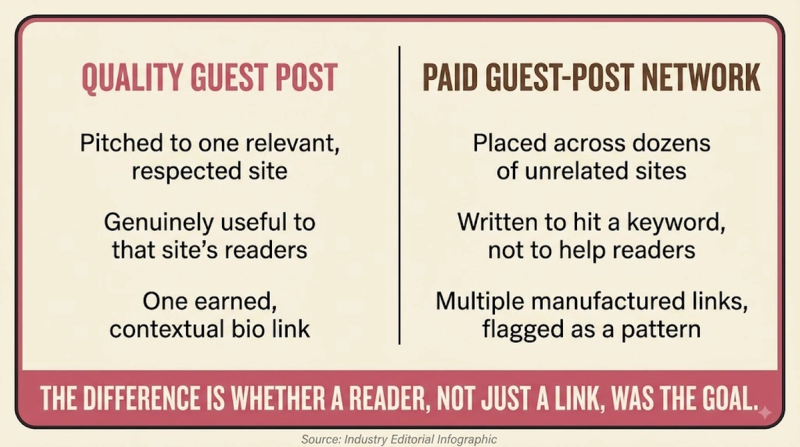
Guest post marketplaces sell placements at scale, and almost 98% of the domains listed on them are low quality by any reasonable standard, thin traffic, thin authority, and often willing to accept content from any buyer regardless of relevance. Publishing through them produces links that read as artificial to both search engines and any manual reviewer, and the industry-wide rise in editorial rejection rates reflects publishers actively pushing back against exactly this kind of low-effort, mass-produced submission.
Why bio links underperform in-content links
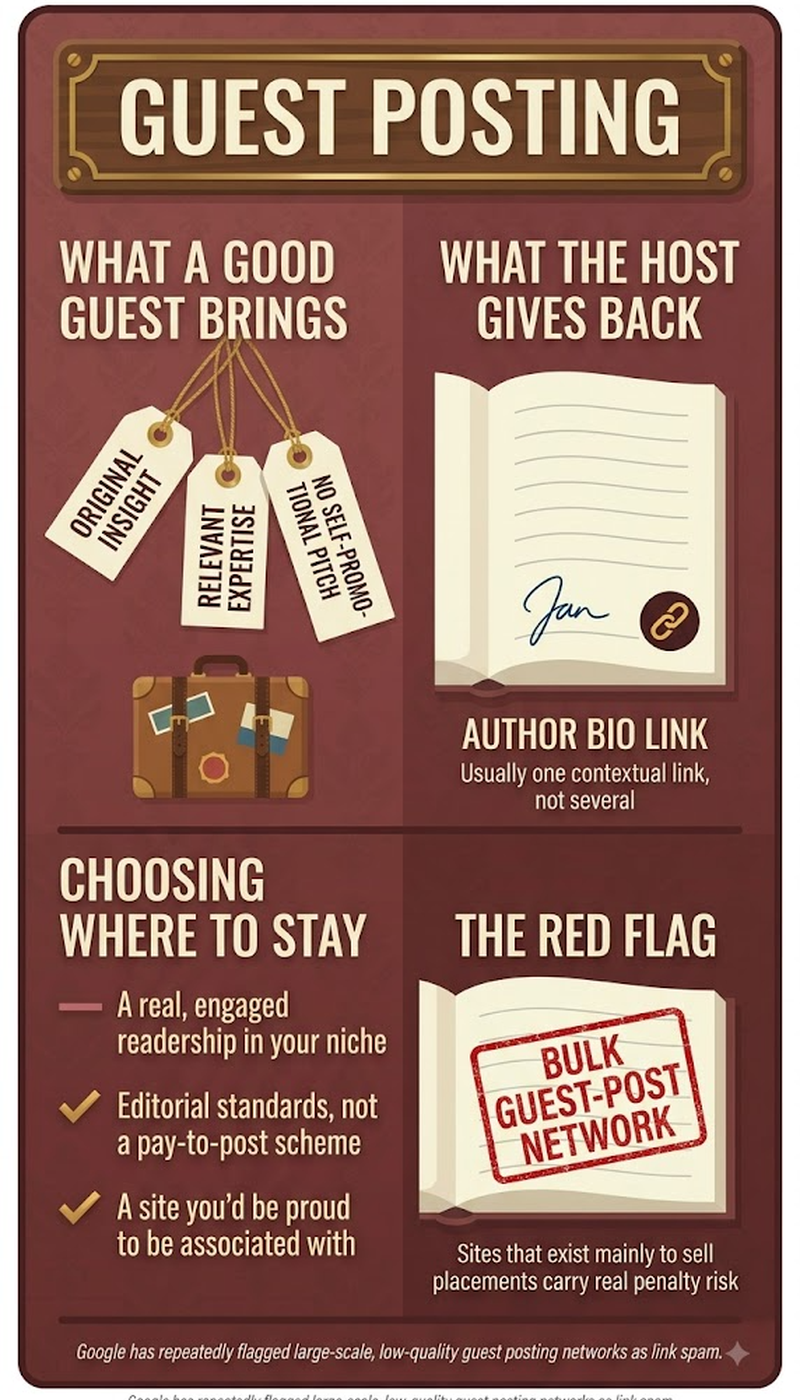
A link in the author bio sits below the content most readers never finish scrolling to, and it carries no surrounding context explaining why it's worth clicking. A link placed inside the body, next to the specific point it supports, gets read in context and clicked with intent, which is almost certainly why in-content backlinks generate 387% more referral traffic than bio-only placements. The gap isn't really about SEO mechanics, it's about where an actual reader's attention happens to be.
Pitching a piece that survives a pickier editor
- Target sites genuinely relevant to the topic, with real traffic and editorial standards, rather than marketplaces selling placements at scale.
- Pitch a specific, original angle backed by data or firsthand expertise, not a generic topic an editor has already seen a dozen times.
- Request an in-content contextual link rather than settling for a bio-only placement, since in-content links generate far more referral traffic.
- Write the piece to genuinely serve that publication's own audience, not just to house a link.
- Build ongoing relationships with a small number of quality publications instead of chasing one-off placements across many low-effort sites.

Frequently asked questions
What is guest posting?
Guest posting is writing and publishing an article on another relevant website, typically in exchange for a backlink to the writer's own site, used to build authority, referral traffic, and reach a new audience.
Is guest posting worth doing at all in 2026?
It's worth doing on the right sites specifically. Websites earning 5 to 10 high-quality guest post backlinks per quarter see an average 23% lift in organic traffic over six months, but that figure assumes genuinely relevant, reputable placements, not marketplace volume.
What's actually wrong with guest post marketplaces?
Almost 98% of the sites listed on them are low quality, thin traffic and thin authority, which produces links that look artificial to both search engines and any human reviewer checking a backlink profile.
Does it matter where the link sits inside the post?
Significantly. In-content backlinks generate 387% more referral traffic than links placed only in the author bio, since readers engage with them in context rather than skipping past them.
Why do editors seem to be rejecting more pitches lately?
Rejection rates have risen 33% since 2023, a shift tied partly to AI content saturation and growing editor skepticism toward generic or AI-written submissions flooding their inboxes.


