
Digital PR is the practice of earning media coverage, backlinks, and brand mentions from online publications, journalists, and influencers — using tactics like data-driven studies, expert commentary, and newsworthy campaigns instead of the print, broadcast, and event-focused tactics traditional PR relies on. Two disciplines, one campaign. The "PR" half is about earning genuine media attention and reputation; the "digital" half is about doing it in a way that also produces measurable SEO value — primarily backlinks from authoritative publications.
Key Takeaways
- Digital PR earns coverage, backlinks, and mentions specifically from online publications and digital-first outlets, distinguishing it from traditional PR's broader focus on print, broadcast, and offline events.
- The most common digital PR tactic is original, data-driven research — surveys, studies, proprietary data analysis — that gives journalists something genuinely newsworthy to cover and cite.
- Backlinks earned through digital PR tend to carry more authority than typical outreach links, since they come from journalists covering a story on its merits rather than a direct link-building ask.
- Digital PR overlaps meaningfully with SEO link building, but the two aren't identical — a digital PR campaign's primary goal is earned media coverage, with backlinks as a valuable byproduct rather than the sole objective.
- Success in digital PR is measured across multiple dimensions — coverage volume, backlink quality and quantity, brand mention sentiment, and referral traffic — not backlinks alone.
Digital PR is one of the primary tactics feeding link building with genuinely high-authority links, and campaigns built around proprietary data connect directly to the kind of original research toxic backlink-free link profiles are built on — earned coverage doesn't carry the same manipulation risk that purchased or exchanged links do.
How Is Digital PR Actually Different From Traditional PR?
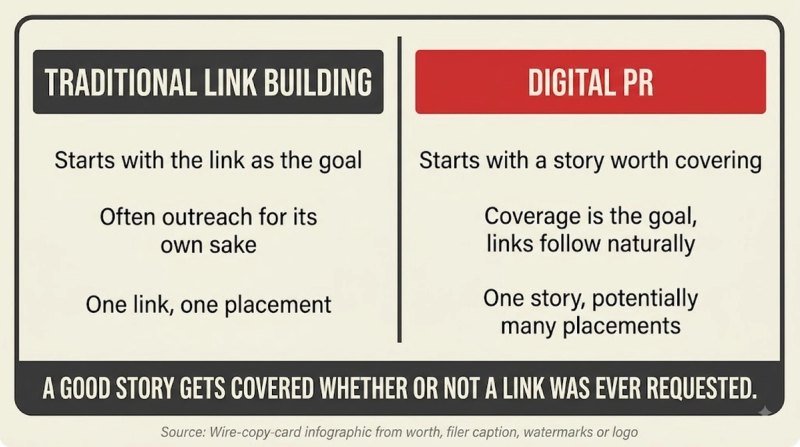
Traditional PR spans print media, broadcast, in-person events, and offline relationship-building with a broad range of outlets, while digital PR specifically targets online publications, blogs, and digital-first journalists with campaigns designed to also generate measurable SEO value through backlinks. The distinction isn't that digital PR replaced traditional PR — many brands run both — but that digital PR is built from the ground up with search visibility as a core success metric alongside brand awareness, which traditional PR historically wasn't designed to measure or optimize for. A traditional PR win might be a mention on a morning news segment; a digital PR win is more likely a feature article on an authoritative online publication that includes a live, followed backlink back to the source.
Comparing the two:
- Primary channels — Traditional PR: print, broadcast, events. Digital PR: online publications, blogs, digital media.
- Core success metric — Traditional PR: brand awareness, sentiment. Digital PR: coverage + backlinks + awareness combined.
- Measurability — Traditional PR: harder to directly measure SEO impact. Digital PR: backlinks and referral traffic are directly trackable.
- Typical tactics — Traditional PR: press releases, media relationships. Digital PR: data studies, expert commentary, newsjacking.
What Actually Makes a Digital PR Campaign Successful?
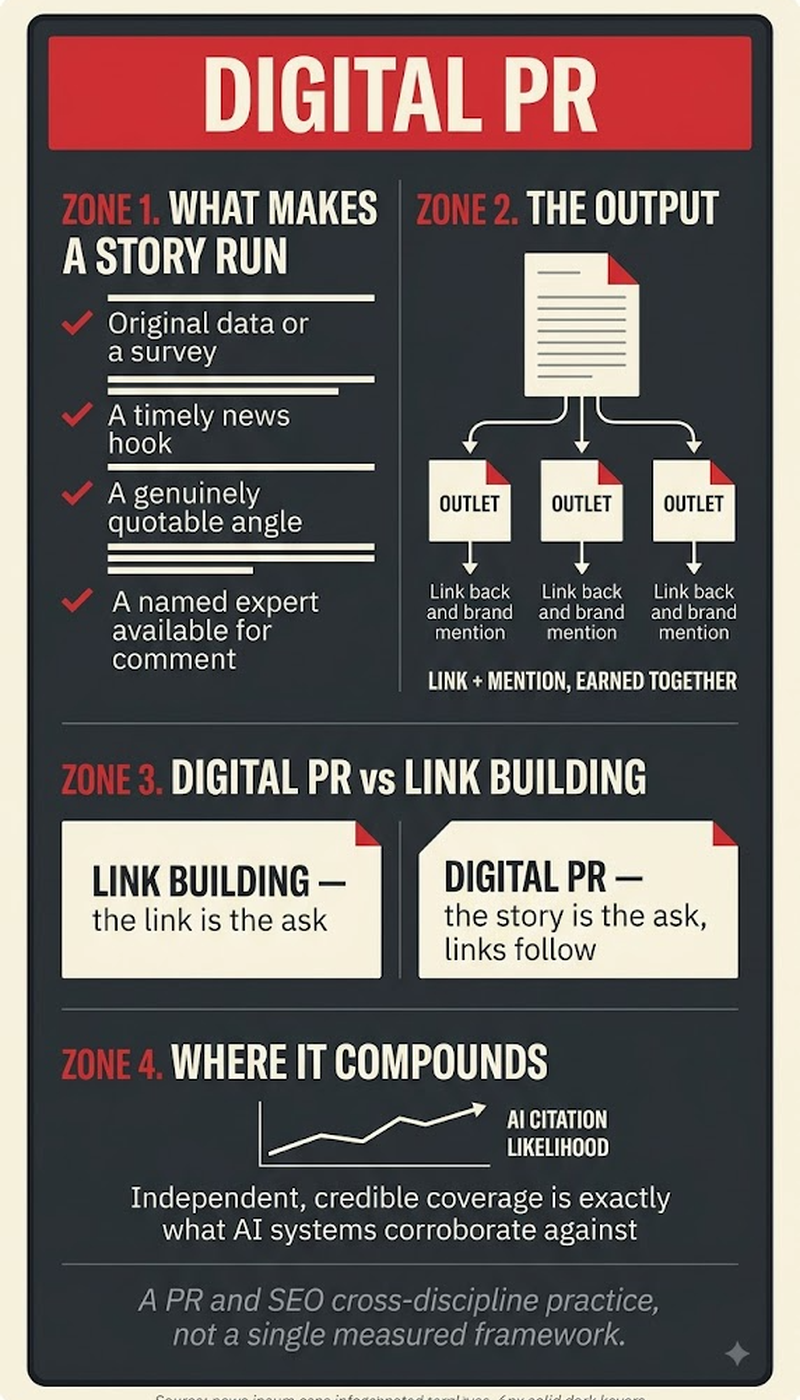
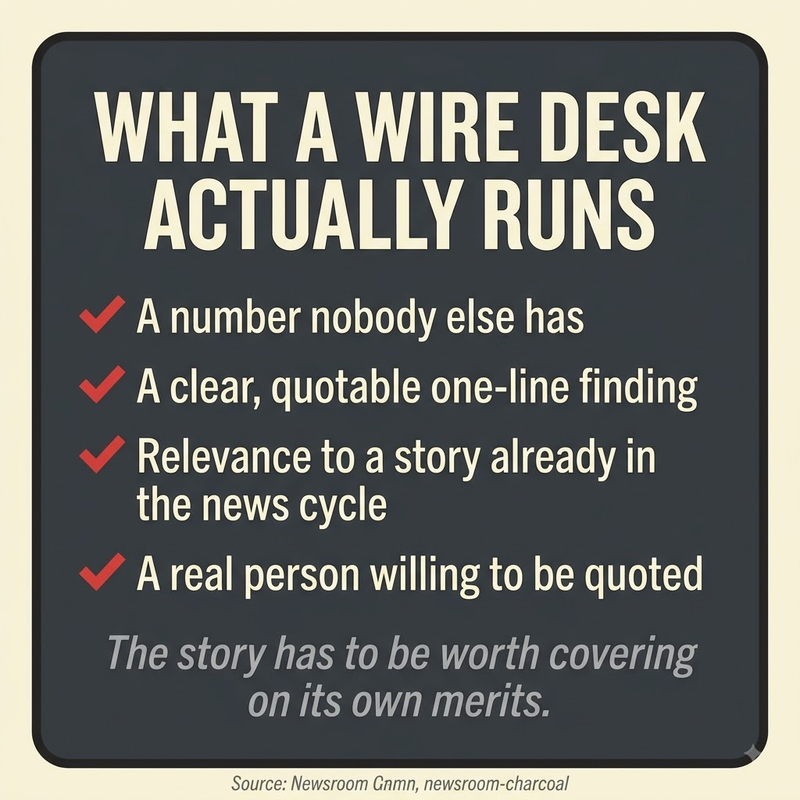
Original, data-driven research is the most consistently effective digital PR tactic, since it gives journalists something genuinely newsworthy and citable rather than asking them to cover a brand simply because the brand wants coverage. A proprietary survey, an analysis of publicly available data revealing a non-obvious trend, or an original study answering a question journalists in a specific beat are already covering tends to earn coverage far more reliably than a generic press release or product announcement. The pattern that separates successful digital PR from unsuccessful attempts usually comes down to newsworthiness from the journalist's perspective, not the brand's — a story angle that serves a reporter's audience and deadline gets picked up; a story that only serves the brand's promotional goals generally doesn't.
Why Do Digital PR Backlinks Tend to Carry More SEO Value?
Backlinks earned through digital PR generally come from a journalist choosing to cite a source because it genuinely supports their story, rather than from a direct outreach request asking for a link — and that distinction in origin is exactly why these links tend to carry more authority and trust in search engines' evaluation. A link embedded naturally within an article covering original research reads as a genuine editorial endorsement; a link acquired through a guest post pitch or paid placement reads differently, both to search engines and to any human evaluating the link's context. This isn't to say all digital PR links are automatically high-value — a low-authority blog covering a minor story still passes limited equity — but the mechanism by which the link was earned tends to correlate with how much real editorial trust sits behind it.
How Do You Actually Measure a Digital PR Campaign's Success?
A digital PR campaign's performance shows up across several distinct metrics, and looking at only one gives an incomplete picture:
- Track total coverage volume — the number of publications that picked up the story, weighted by the authority and relevance of each outlet.
- Count and evaluate earned backlinks specifically, distinguishing genuinely earned editorial links from any incidental or low-value mentions that don't include a link at all.
- Monitor brand mention sentiment across the coverage, since not all press attention is equally positive, and volume alone doesn't capture whether the coverage actually helped the brand.
- Measure referral traffic directly attributable to the campaign's coverage, which reflects real audience engagement beyond the SEO backlink value alone.
- Assess longer-term domain authority movement over subsequent months, since a single campaign's backlink impact compounds gradually rather than showing up as an immediate ranking jump.
Does Digital PR Still Matter in an AI-Search World?
Yes, arguably more than before — AI-generated search answers weigh source authority and trustworthiness heavily when deciding what to cite, and coverage from recognized, authoritative publications is exactly the kind of signal that reinforces a brand's credibility in both traditional search rankings and AI-generated answers. A brand cited by name in a respected publication's coverage of original research gains a form of third-party validation that's difficult to manufacture through owned content alone — the same validation traditional SEO backlinks provide, now doing double duty as a trust signal for AI systems evaluating which sources to treat as credible.
Frequently Asked Questions
Does digital PR require a large marketing budget to be effective?
Not necessarily — a well-designed original research study can be executed on a modest budget; the cost driver is usually the research and outreach effort rather than paid media spend.
How long does a typical digital PR campaign take to generate results?
Timelines vary, but a campaign built around original research often takes several weeks to plan and execute before pitching, with coverage typically materializing over the following weeks to months rather than immediately.
Can a small or unknown brand succeed at digital PR, or does it require existing brand recognition?
A small brand can succeed specifically because journalists cover the data and story, not necessarily the brand's existing reputation — genuinely newsworthy original research from an unknown brand can still earn coverage on its merits.
Is digital PR the same as influencer marketing?
No — influencer marketing involves paid or negotiated partnerships with individual creators, while digital PR targets earned coverage from journalists and publications based on newsworthiness, though the two disciplines sometimes overlap in campaign execution.
Does digital PR work for every industry, or mainly consumer-facing brands?
It works across industries, including B2B, though the specific data angles and outlets targeted differ significantly — a B2B software company's digital PR angle looks very different from a consumer product brand's.
What's the difference between digital PR and content marketing?
Content marketing typically involves publishing content directly to owned channels, while digital PR specifically aims for third-party publication and earned coverage on outlets the brand doesn't control.
Can a failed digital PR pitch still provide value even without coverage?
The underlying research or data asset created for the pitch can often be repurposed as owned content even without securing press coverage, so the effort isn't necessarily wasted.
Do digital PR links need to be "dofollow" to count as valuable?
A nofollow link from a highly authoritative, relevant publication can still provide real brand and referral value even without passing direct link equity, though dofollow earned links carry additional SEO-specific benefit.
How is digital PR different from traditional SEO guest posting?
Guest posting typically involves a brand writing content directly for another site in exchange for a link, while digital PR involves a journalist independently choosing to cover and cite a brand's original research or expertise.
Does newsjacking (commenting on trending news) count as a digital PR tactic?
Yes — providing expert commentary on breaking or trending news is a common digital PR tactic, distinct from but often used alongside original research campaigns.
Can digital PR campaigns be measured in real time, or only after the fact?
Coverage and backlink acquisition can be tracked in near real-time using media monitoring and backlink tracking tools, though longer-term SEO impact (like domain authority movement) takes more time to fully materialize and measure.


