
TL;DR. Off-page SEO is everything that builds a site's authority from outside its own pages: backlinks, brand mentions, reviews, and citations. Pages ranking first on Google carry 3.8 times more backlinks on average than pages in positions 2 through 10, and newer research shows brand mentions now correlate with AI visibility roughly three times more strongly than backlinks do.
What is off-page SEO?
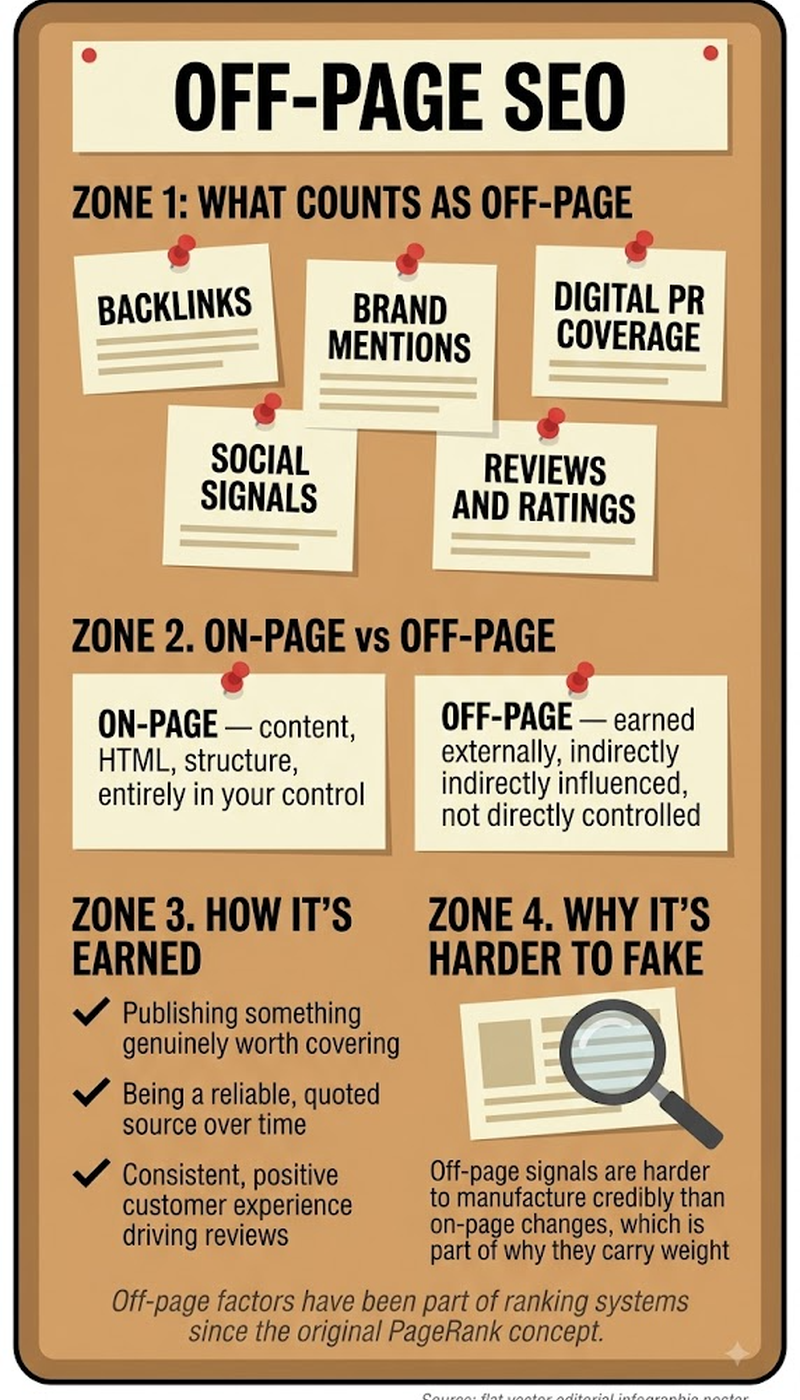
Off-page SEO is the practice of building a website's authority, trust, and relevance through activity that happens away from the site itself, primarily backlinks, brand mentions, reviews, and social signals. Search engines treat these external signals as third party votes for how credible and useful a site actually is.
It answers a question on-page work simply cannot: does anyone besides you think this page deserves to rank?
Key highlights
- Backlinko's analysis of 11.8 million search results found pages ranking first carry 3.8 times more backlinks than pages ranked 2 through 10.
- The number of unique linking domains correlates with search traffic at roughly 0.82, one of the strongest measurable off-page signals around.
- An Ahrefs study of 75,000 brands found web mentions correlating with AI Overview presence at 0.664, versus just 0.218 for backlinks, a roughly three times gap.
- A December 2025 follow up from Ahrefs found YouTube mentions carrying the strongest correlation with AI visibility of any signal measured, around 0.737.
Off-page SEO vs on-page SEO
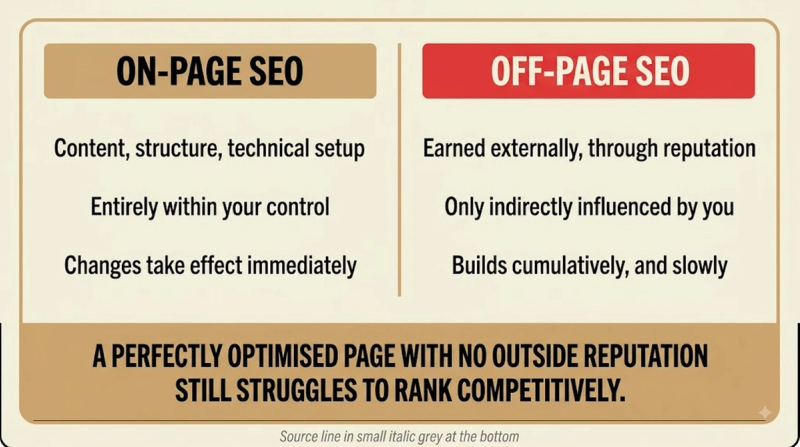
On-page SEO is everything you directly control on your own pages, titles, headings, content, internal links. Off-page SEO is everything that happens elsewhere and gets earned rather than written.
Neither works alone. A perfectly optimized page with zero external validation rarely outranks a well linked, well mentioned competitor with average copy, and a heavily linked page that answers the query poorly still loses to one that actually satisfies the reader.
The core off-page techniques
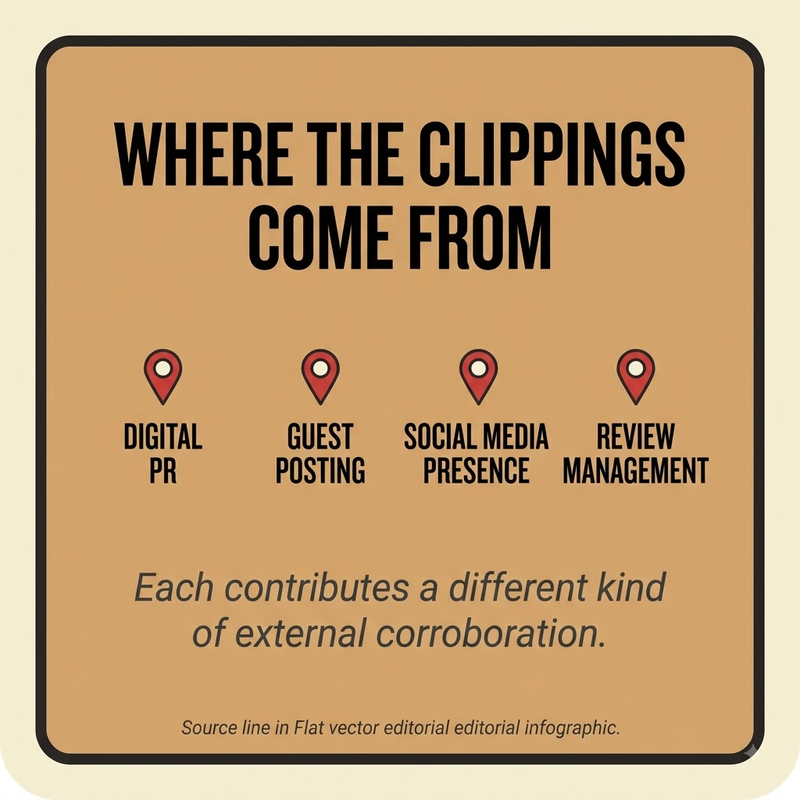
- Link building: earning backlinks through digital PR, original research, and outreach to relevant, credible sites.
- Brand building: generating reviews, unlinked mentions, and consistent coverage across independent sites.
- Community engagement: genuine, useful participation on Reddit, Quora, and niche forums, not drive by self promotion.
- Local signals: citations and consistent NAP data for businesses with a physical presence.
- Social and video: YouTube coverage, social shares, and influencer collaborations, now carrying outsized weight for AI visibility.
The part most teams have not updated
Generative engine optimization leans on corroboration, multiple independent sources repeating the same fact about you, and unlinked mentions now correlate with AI visibility far more strongly than classic backlinks do.
The practical shift is where you invest. A guest post that used to be justified purely by its link may now earn more value from the brand mention and third party validation than from the link itself.
Off-page SEO checklist
- Audit your current backlink and mention profile against your two closest competitors.
- Publish one piece of original data or research that is actually worth citing.
- Pitch that research to journalists and industry publications covering your space.
- Claim and actively manage review profiles relevant to your category.
- Track mentions, not just links, on a recurring schedule.
Frequently asked questions
What is off-page SEO?
Off-page SEO is the set of actions taken outside your own website, backlinks, brand mentions, reviews, and social signals, that build the authority and trust search engines use to help decide rankings. Unlike on-page SEO, it is earned through outside validation rather than written directly on your pages.
What is the difference between off-page and on-page SEO?
On-page SEO covers everything you directly control on your own site, content, titles, headings, and internal links. Off-page SEO covers everything earned elsewhere, backlinks, mentions, and reviews. Both work together, since strong content with no external validation rarely outranks a well linked, well mentioned page.
Are backlinks the only off-page factor that matters?
No. Backlinks remain a strong classic ranking signal, but brand mentions, reviews, and video coverage now correlate more strongly with AI visibility specifically. A 75,000 brand study found mentions correlating with AI Overview presence roughly three times more strongly than backlinks.
What are the main off-page SEO techniques?
The core techniques are link building through digital PR and outreach, brand building through reviews and unlinked mentions, genuine community engagement, local citations for businesses with a physical presence, and social or video coverage. Original research tends to earn the strongest combination of links and mentions at once.
How long does off-page SEO take to work?
Most off-page campaigns take three to six months to show a measurable ranking shift, since search engines weight external signals gradually and prefer patterns over spikes. Brand mention effects on AI visibility can appear faster, sometimes within weeks, once multiple independent sources start repeating the same claim.
Should backlinks or brand mentions get more of my budget right now?
It depends on the goal. Backlinks still move classic organic rankings and remain the stronger, more established signal there. But if AI visibility is the priority, brand mentions now correlate roughly three times more strongly with getting cited, so a budget split that leans mentions and PR over pure link acquisition tends to pay off faster in that specific channel.


