
TL;DR. Nofollow was Google, Yahoo, and Microsoft's joint answer to the comment-spam epidemic overwhelming blogs and forums in the mid-2000s, introduced as the rel='nofollow' attribute on January 18, 2005. For nearly fifteen years it functioned as an absolute directive, a nofollow link passed zero ranking credit, full stop, until Google announced in September 2019 that nofollow, alongside two new attributes, sponsored and ugc, would shift to a hint search engines could weigh at their own discretion starting March 1, 2020.
What is a nofollow link?
A nofollow link is a hyperlink marked with the rel='nofollow' attribute in its HTML, telling a search engine the site publishing it isn't vouching for the destination. The tag doesn't hide the link from visitors and doesn't stop a crawler from finding it; it specifically withholds the endorsement value a normal link would otherwise carry.
Key highlights
- Google introduced rel='nofollow' on January 18, 2005, working alongside Yahoo and Microsoft to blunt a flood of comment spam hitting blogs, forums, and message boards, per Conductor's nofollow explainer.
- Matt Cutts, then Google's head of web spam, and Jason Shellen from Blogger built the tag as a direct response, giving publishers a way to host open comments without silently endorsing whatever got posted in them.
- Google announced in September 2019 that nofollow would move from a strict rule to a hint, effective March 1, 2020, meaning a nofollow link can now factor into crawling, indexing, or ranking depending on context, per Google's own announcement.
- Two companion attributes arrived at the same time: sponsored, for paid or promotional links, and ugc, for links embedded in user-generated content such as comments and forum posts, both narrower cases of the same underlying idea nofollow covers generally.
- Ahrefs' 2020 research on the top 110,000 sites found 10.6% of all backlinks pointing to them were nofollow, per Ahrefs' study, a large enough share that it likely shaped Google's decision to stop treating the attribute as all-or-nothing.
From absolute rule to hint: what actually changed in 2020
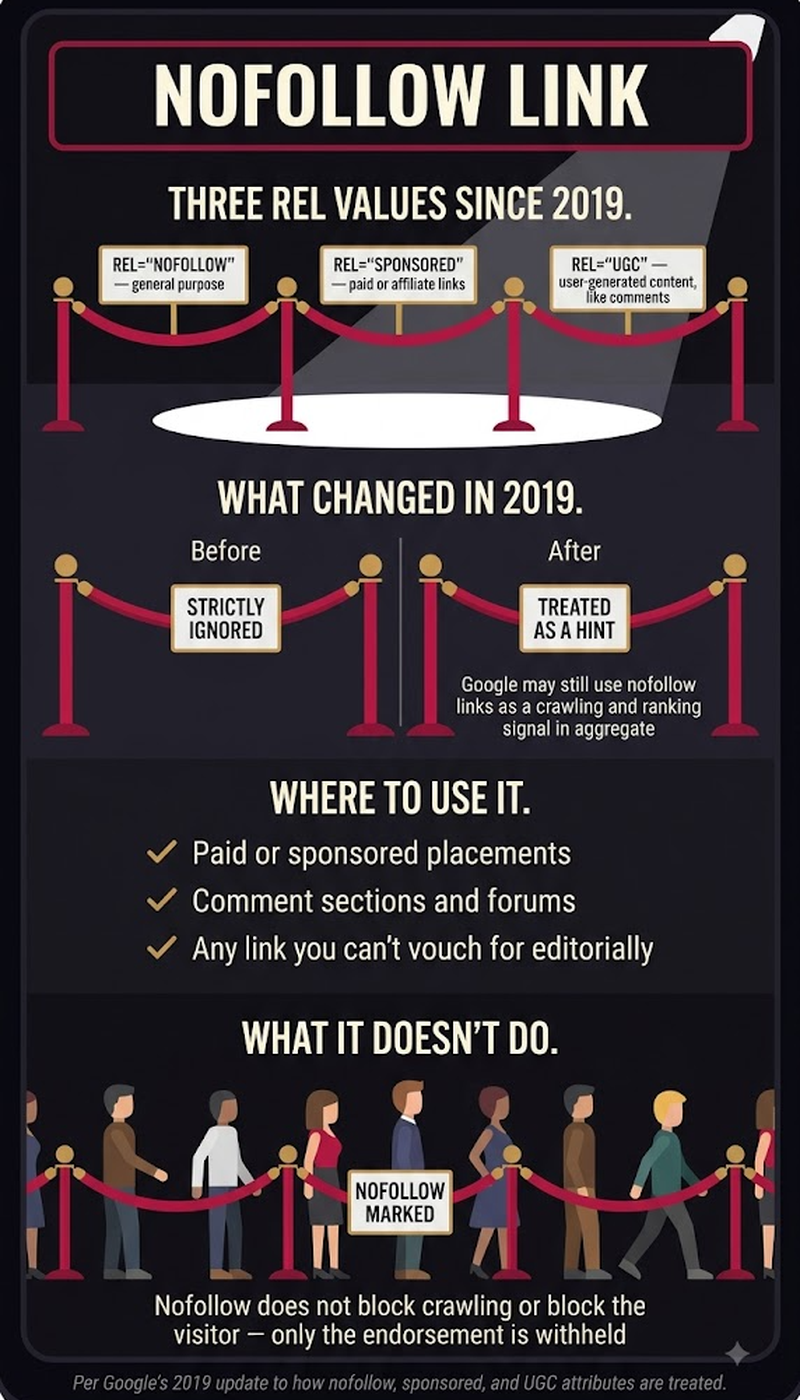
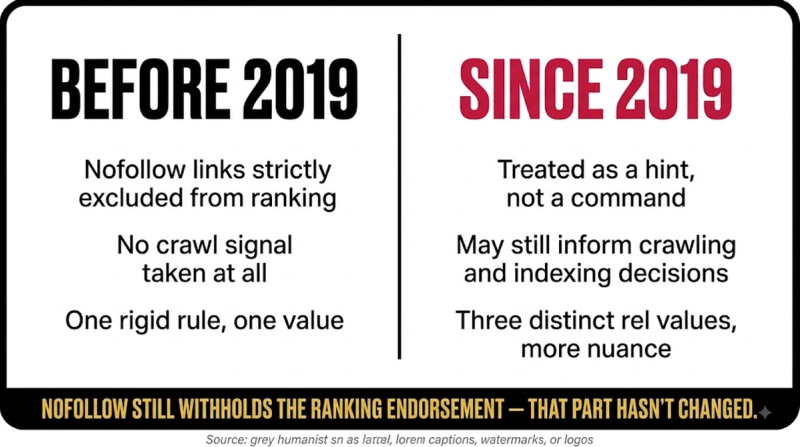
Before March 2020, nofollow was binary: a nofollow link passed no ranking signal whatsoever, no exceptions. Google's shift to treating nofollow, sponsored, and ugc as hints means a search engine can now choose, at its own discretion, to weigh a nofollow link for crawling, indexing, or ranking if the surrounding context suggests it's relevant. Practically, that removes the guarantee nofollow once offered. It no longer promises zero influence, only reduced influence, which is a meaningfully different thing to build a linking strategy around.
Nofollow, sponsored, and ugc aren't interchangeable
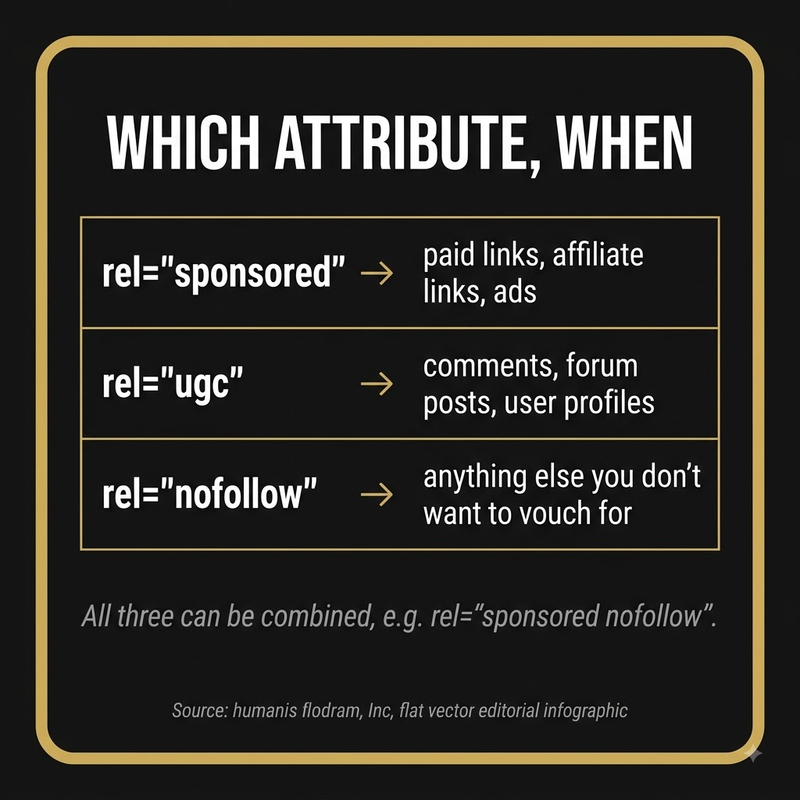
Nofollow remains the general-purpose attribute for any link a site doesn't want to vouch for. Sponsored specifically marks paid or promotional links, such as affiliate placements. Ugc specifically marks links inside content the site owner didn't write themselves, like comments or forum posts. All three withhold the endorsement a dofollow link carries by default, they just describe different reasons for doing it, and mixing them up (marking a paid link as plain nofollow instead of sponsored, for instance) can matter for compliance even if the ranking effect looks similar.
Where nofollow belongs on a real site
- Add ugc, or plain nofollow if the CMS doesn't support the newer attribute, to links inside comments and forum posts.
- Add sponsored, not plain nofollow, to any paid, affiliate, or promotional link.
- Use nofollow for links to sources a site hasn't verified or can't fully stand behind.
- Leave genuine editorial citations followed. Stripping that signal off a link a site actually vouches for weakens the trust benefit the citation was supposed to provide.
- Audit link attributes periodically. A mislabeled followed link on a paid placement creates a real compliance problem, not just a minor SEO inefficiency.
Frequently asked questions
What is a nofollow link?
A nofollow link carries the rel='nofollow' HTML attribute, signaling that the site publishing it isn't fully vouching for or passing ranking credit to the destination page.
Why was nofollow created in the first place?
Nofollow was created on January 18, 2005, by Google, Yahoo, and Microsoft together, specifically to blunt the comment spam flooding blogs, forums, and message boards at the time, giving publishers a way to keep comments open without endorsing whatever got posted in them.
Does a nofollow link still carry zero SEO value today?
Zero value is no longer guaranteed. Since March 1, 2020, nofollow functions as a hint rather than a strict rule, meaning Google can factor a nofollow link into crawling, indexing, or ranking depending on context, even though it remains far weaker than a followed link.
What's the difference between nofollow, sponsored, and ugc?
Nofollow is the general-purpose attribute. Sponsored specifically marks paid or promotional links. Ugc specifically marks links inside user-generated content like comments, where the site owner didn't write the link themselves.
Should a cautious site just nofollow everything to be safe?
Blanket nofollow isn't the safe default it sounds like. Genuine editorial citations to authoritative sources build credibility signals a blanket policy would strip away for no real benefit. Nofollow works best applied selectively, to paid, user-generated, or unverified links specifically.


