
TL;DR. External links carry a measurable correlation with rankings: SEO.ai found a 16.1% positive correlation between a page's outbound link count and its position in search results, and a separate 2024 analysis of 3.6 million search results found pages with 3 to 5 relevant outbound links to high-authority domains outranking pages with none, a benefit that leveled off past roughly 10 links. An external link, also called an outbound link, points from one page to a different domain, most commonly to cite a source, support a claim with outside data, or send a reader toward deeper coverage the page itself doesn't provide.
What is an external link?
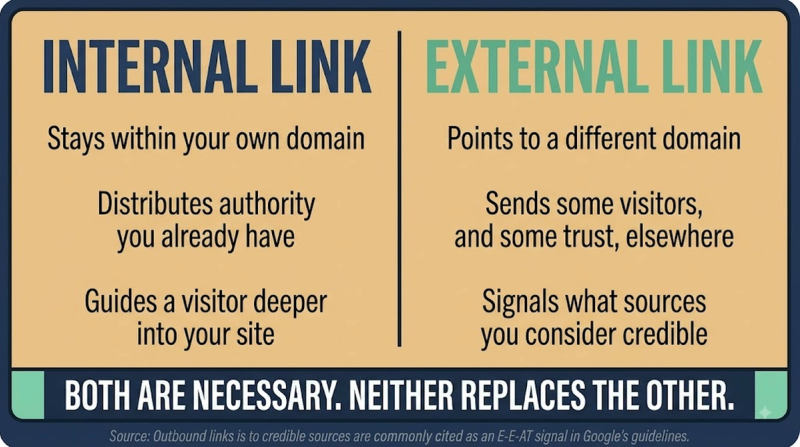
An external link is a hyperlink that leaves the current domain entirely, the opposite of an internal link, which stays within the same site. Search engines and readers both use it the same way: as a pointer toward a claim's original source or toward deeper material a page chooses not to repeat. A page built entirely from bare assertions and internal links gives neither a crawler nor a skeptical reader anywhere to verify what's being said, and external links are the mechanism that closes that gap.
Key highlights
- SEO.ai's research found a 16.1% positive correlation between a page's outbound link count and its search ranking position.
- A 2024 analysis of 3.6 million search results found pages carrying 3 to 5 relevant outbound links to high-authority domains outranking pages with none, though the advantage stopped compounding past roughly 10 links.
- Moz's proprietary studies point to informational queries specifically: pages with just 1 to 3 authoritative citations outperformed link-less competitors in that category.
- Placement carries as much weight as count. A citation dropped next to the specific claim it supports reads as intentional to both a reader and a crawler, while a cluster of links in a closing paragraph reads as an afterthought.
- Respona's 2025 analysis tied outbound citations to user behavior directly, finding measurable lifts in click-through rate and session duration on pages that linked out to authoritative references.
- The one-link-per-230-words rule of thumb undersells how much good practice actually varies: a 3,000-word investigative piece might reasonably carry fifteen citations, while a 400-word how-to might only need one.
The 3-to-5 range, and why it's not a hard rule
The research keeps converging on a similar band. SEO.ai found a 16.1% positive correlation between outlink count and rankings, and the 2024 analysis of 3.6 million results found the 3-to-5-link range captured most of the measurable benefit for pages linking to high-authority domains. Neither number is a hard target: a dense, data-heavy guide legitimately needs more citations than a short explainer, and forcing either one into the same fixed count misses the point of citing sources in the first place.
Where the ranking benefit stops compounding
Ranking benefit plateaus after roughly 10 outbound links, per the same 2024 analysis, which tracks with how citation actually works: the fifth genuinely relevant source still adds credibility, the fifteenth mostly adds clutter. Padding a page with links purely to hit a number dilutes the ones that matter and gives readers more places to click away without adding real trust.
Using outbound links without diluting them
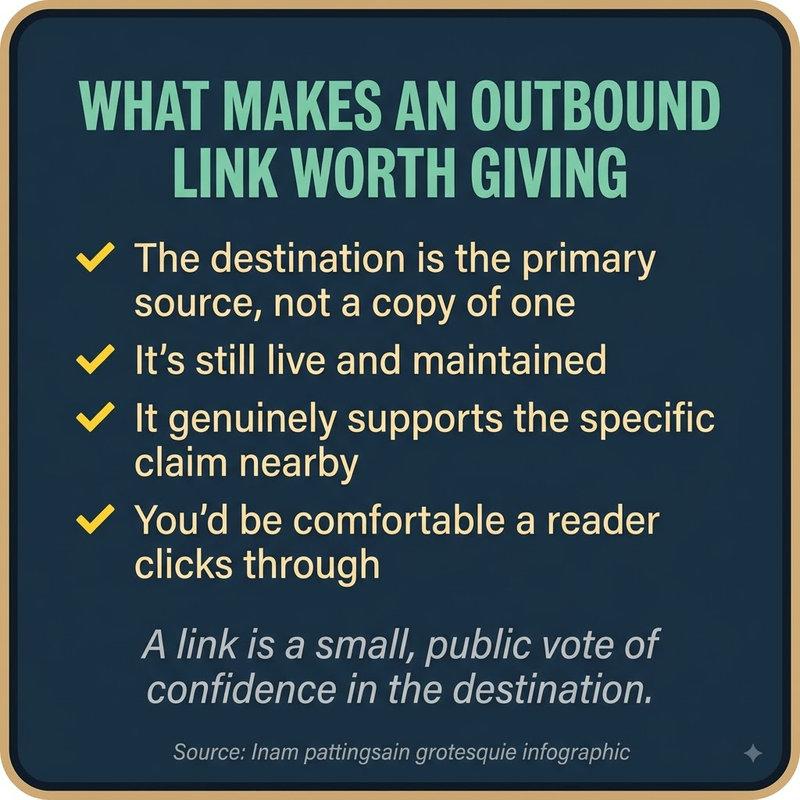
- Link only to sources that genuinely support the specific claim sitting next to them, not just the general topic.
- Favor a small number of highly authoritative, relevant sources over a long list of mediocre ones.
- Aim for roughly 3 to 5 outbound links on a typical page, scaling up for longer, data-heavy content.
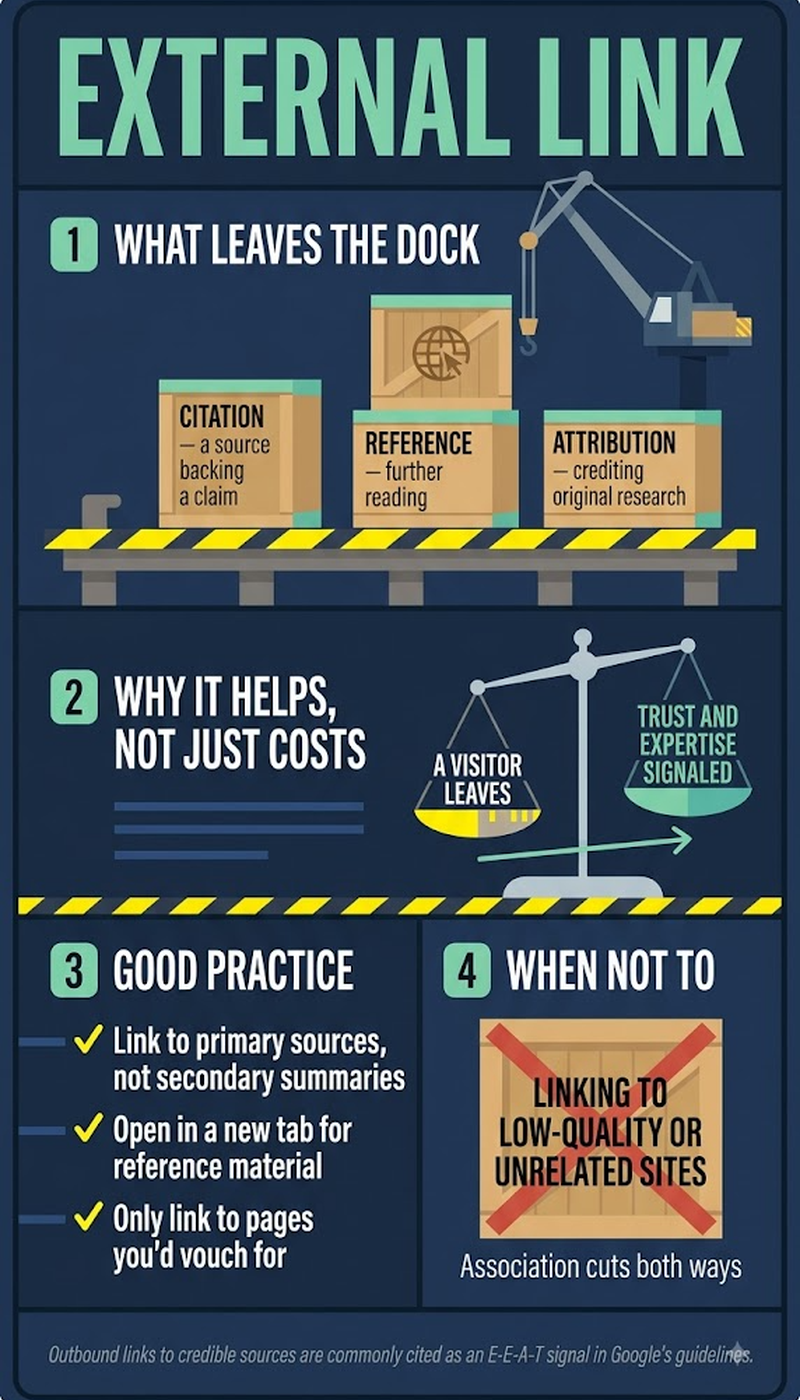
- Reserve nofollow for links a site can't fully vouch for, such as paid placements or unverified sources, and leave genuine editorial citations followed.
- Revisit external links periodically. A source that was authoritative two years ago can go dead, get acquired, or quietly decline in quality.
Frequently asked questions
What is an external link?
An external link points from the current page to a page on a different domain, most often placed to cite a source, back up a claim with outside data, or send a reader toward coverage the page itself doesn't attempt.
Do external links actually move rankings, or is the correlation coincidental?
The correlation holds up across more than one independent study. SEO.ai measured a 16.1% positive correlation between outlink count and ranking position, and a 2024 analysis of 3.6 million search results found linked pages outranking unlinked ones directly, which is stronger evidence than a single dataset alone would provide.
How many external links should a page carry?
Most pages land in the 3-to-5-link range for outbound citations to high-authority domains, with the measurable ranking benefit tapering off past roughly 10. Longer, research-heavy pages reasonably carry more.
What actually separates an external link from an internal link?
An external link crosses onto a different domain, while an internal link stays inside the same site, connecting a site's own pages to each other rather than citing an outside source.
Should every external link stay dofollow, or does nofollow ever make sense here?
Not every external link should stay dofollow. Genuine editorial citations to sources a page can vouch for typically stay followed, while nofollow fits paid placements, unverified sources, or any link a site isn't ready to fully endorse.


