
TL;DR. Link building shows one of the starkest gaps in SEO data: the first-ranking page on Google averages 3.8 times more backlinks than the pages sitting in positions two through ten, yet 94% of all published content earns zero external links and only 6% ever earns even one. Link building itself is the deliberate practice of acquiring hyperlinks from other websites, since a hyperlink functions as one of the clearest votes of confidence search engines use to judge a page's trustworthiness.
What is link building?
Link building is the deliberate practice of earning or acquiring backlinks from other websites, since search engines treat a hyperlink as one of their core ranking signals, a vote of confidence cast by one site toward another. Referring domains, the count of distinct sites linking in rather than the raw number of links, correlate meaningfully with rankings, at a Spearman correlation of 0.22 to 0.24 overall, rising to 0.33 for local search queries specifically.
Key highlights
- The first-ranking page on Google averages 3.8 times more backlinks than pages ranking positions two through ten, per SHNO's 2026 link building statistics.
- Agencies now put an average of 32.1% of their entire SEO budget toward link acquisition alone, and search interest in link building hit an all-time high on Google Trends in early 2025.
- Digital PR is rated the single most effective link building tactic by 48.6% of SEO professionals, more than three times the 16% who rank guest posting second, per Loopex Digital's 2026 statistics.
- 94% of all published content gets zero external links, and only 6% ever earns even a single backlink, a reminder of how rare genuine link-worthiness actually is.
- Pages with a strong backlink profile pull in up to 77% more organic traffic than comparable pages without meaningful links.
- Referring domains correlate more strongly with rankings than raw link volume does, a distinction that matters because ten links from ten different authoritative sites carry more weight than fifty links from a handful of weak ones.
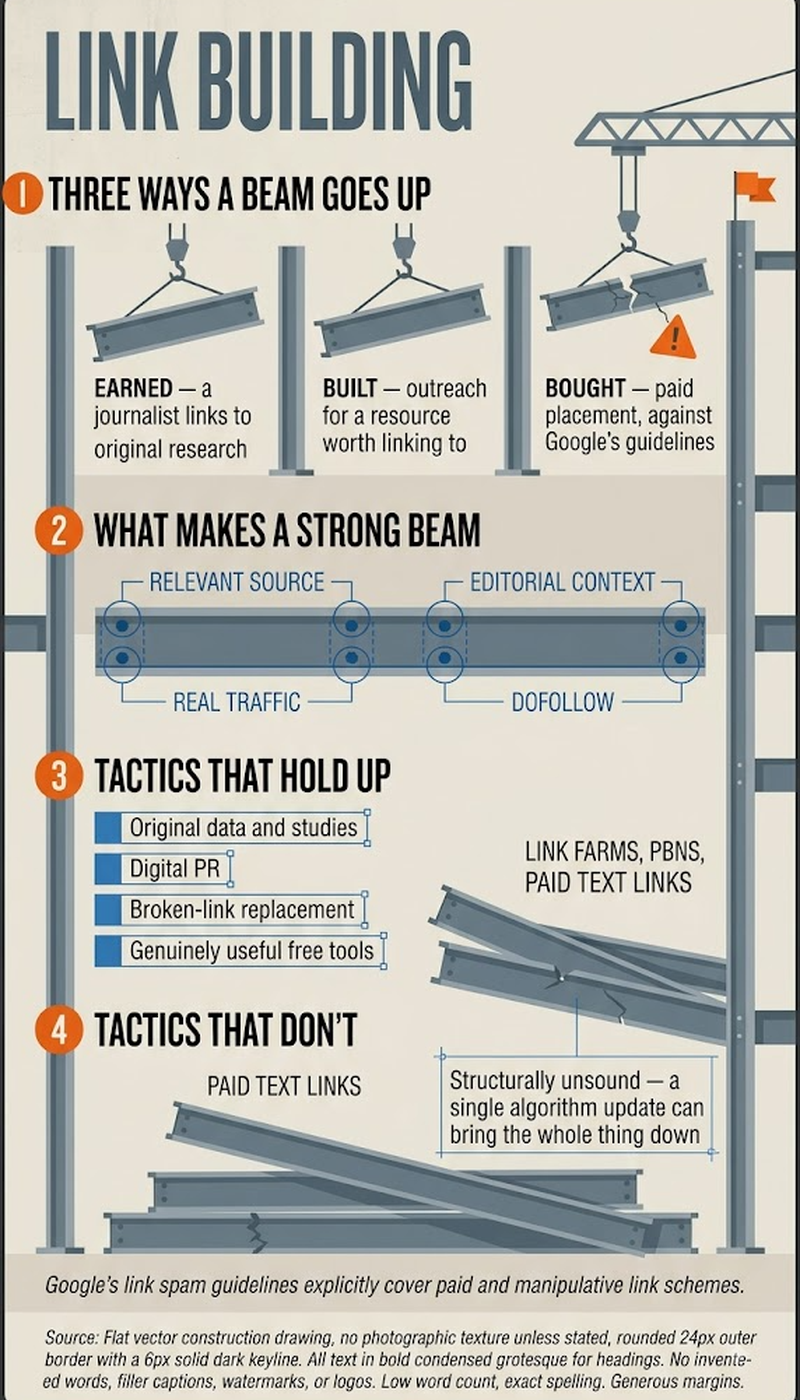
- 93.8% of practitioners now prioritize quality over volume outright, treating the old high-volume approach as a liability rather than a shortcut.
Where the effort actually pays off
- Digital PR. Rated most effective by 48.6% of SEO professionals, earning links through press coverage and media placements rather than direct placement.
- Guest posting. Rated second most effective at 16%, publishing content on other relevant sites in exchange for a link back.
- Linkable assets. Original research and data rated highly effective by 12% of experts, since unique data naturally attracts citations without any outreach at all.
- Preferred by roughly 9.4% of practitioners for speed and access to already-established page authority.
Referring domains over raw link count
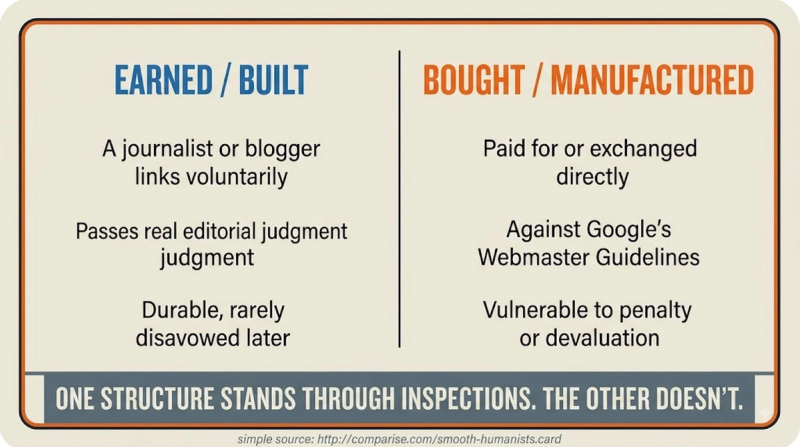
The number of unique referring domains correlates more strongly with rankings than the total count of backlinks, since ten links from ten different authoritative sites carry more weight than fifty links from a handful of low-quality domains. 93.8% of practitioners now prioritize quality over volume, which has quietly turned high-volume, low-relevance link building from an accepted tactic into an outdated one.
Building a program that survives scrutiny
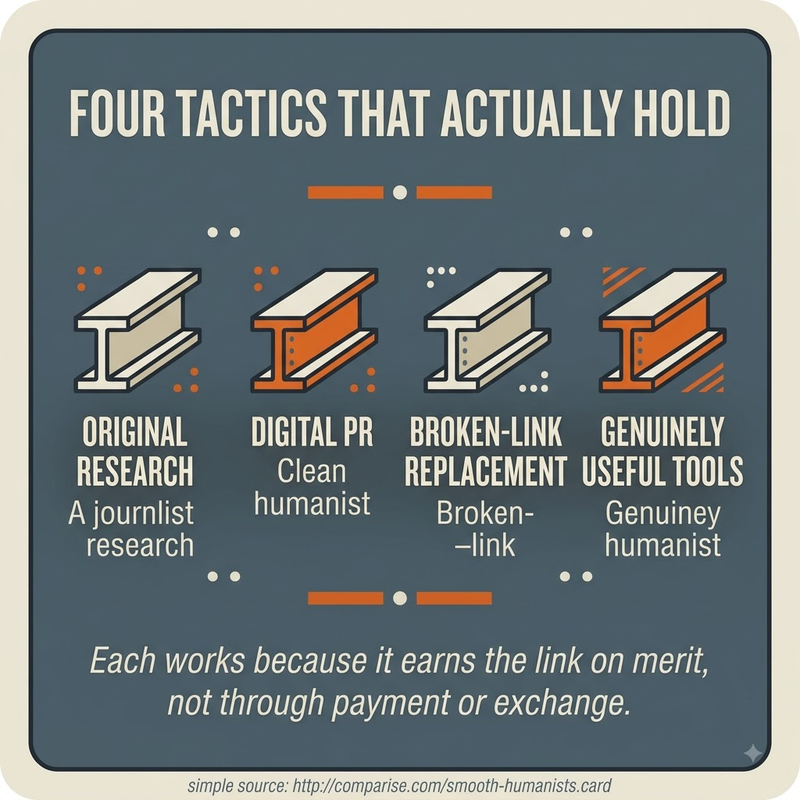
- Prioritize digital PR and original research, the two tactics working SEO professionals rate most effective.
- Create genuinely linkable assets, since why-and-what posts along with infographics secure roughly 25.8% more links than how-to guides and videos.
- Pursue links from a diverse set of referring domains rather than accumulating many links from the same handful of sites.
- Target topically relevant, authoritative sites over high-volume, low-quality directories or link farms.
- Track referring domain growth over raw backlink count as the primary success metric for a campaign.
Frequently asked questions
What is link building?
Link building is the practice of acquiring backlinks from other websites, which search engines treat as a ranking signal reflecting a page's authority and trustworthiness, typically pursued through outreach, content creation, and relationship building.
What's the single most effective link building tactic?
Digital PR, rated most effective by 48.6% of SEO professionals, well ahead of guest posting at 16% and original research or data-driven linkable assets at 12%.
Does backlink volume matter more than domain diversity?
No, domain diversity wins out. Unique referring domains correlate more strongly with rankings than total backlink count, so many links from the same few low-quality sites carry far less weight than fewer links from diverse, authoritative domains.
How much published content actually earns backlinks?
Very little. 94% of published content earns zero external links, and only 6% ever earns even a single backlink, which is why link-worthiness has to be built deliberately rather than assumed.
Should a campaign chase quantity or quality?
Quality, consistently. 93.8% of practitioners now prioritize fewer, higher-authority, niche-relevant placements over high-volume acquisition, and that approach correlates more strongly with actual ranking improvement.
How big is the backlink gap between the top result and everything below it?
Substantial. The first-ranking page averages 3.8 times more backlinks than pages sitting in positions two through ten, one of the clearest gaps in link building data.


