
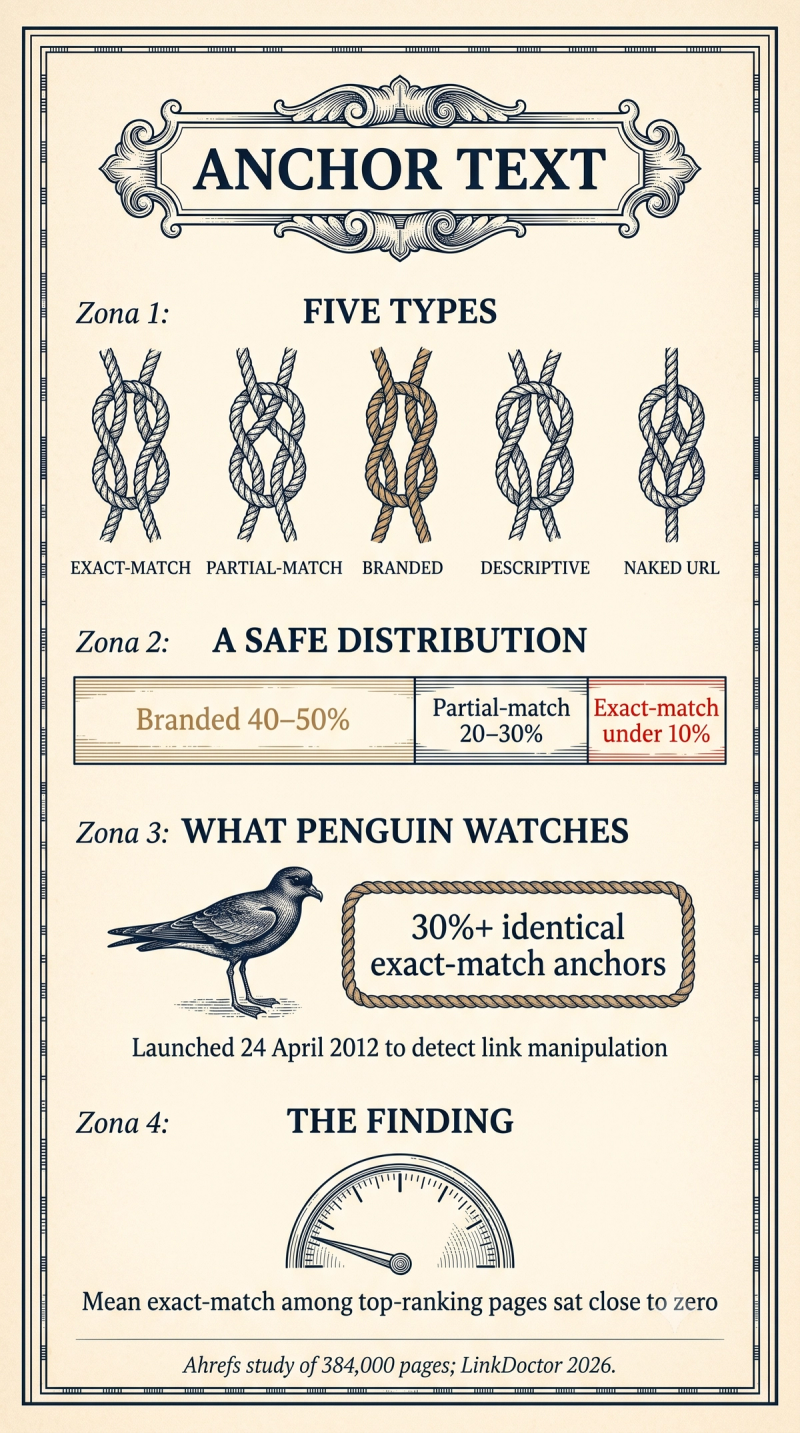
TL;DR. Anchor text carries two jobs at once: it tells a reader what waits on the other end of a click, and it tells a search engine what that destination page is actually about. Google's Penguin algorithm, launched April 24, 2012, specifically targets unnatural anchor text patterns, and Ahrefs' study of 384,000 web pages found the mean average of exact-match anchor text among top-ranking pages sat close to zero, evidence that pages reach page one through a natural, diverse anchor mix rather than by stuffing keywords into link text.
What is anchor text?
Anchor text is the visible, clickable portion of a hyperlink, the words a reader actually clicks rather than the underlying URL itself. Search engines read it as a relevance signal about the page it points to, since the words inside and around a link have long been one of the clearest indications of what that destination page is actually about, for internal links and for backlinks from other sites alike.
Key highlights
- Google's Penguin algorithm, launched April 24, 2012, specifically targets unnatural, over-optimized anchor text patterns inside backlink profiles.
- Ahrefs' study of 384,000 web pages found the mean average of exact-match anchor text among top-ranking pages sat close to zero, evidence that pages reach page one through natural, diverse anchor distribution rather than keyword-stuffed link text.
- A separate study of nearly 390,000 web pages found that combining keyword-rich, branded, and partial-match anchors together outperforms concentrating on any single anchor type.
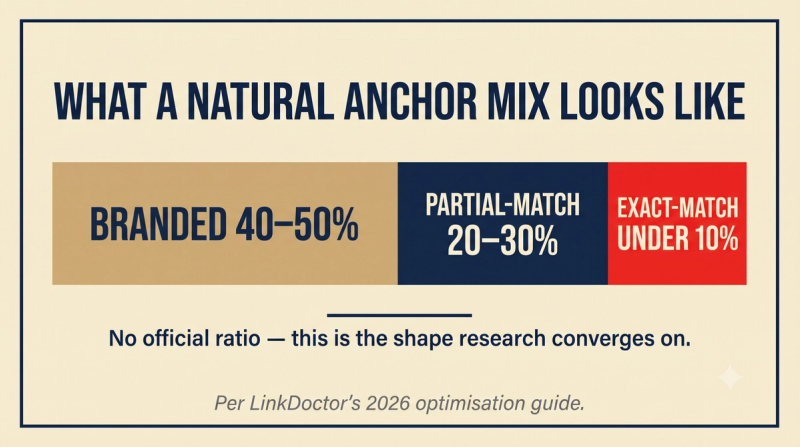
- Industry guidance generally recommends a distribution weighted around 40 to 50% branded anchors and 20 to 30% partial-match anchors, with exact-match anchors kept under about 10%, per LinkDoctor's 2026 optimization guide.
- Anchor text influences rankings indirectly, supporting relevance and topical signals alongside page quality and intent alignment rather than functioning as a standalone ranking lever on its own.
Types of anchor text
- Exact-match. Uses the precise keyword a page wants to rank for as the link text.
- Partial-match. Includes the target keyword alongside other natural words.
- Branded. Uses a company or site's name as the link text.
- Generic or descriptive. Uses natural, contextual phrases like click here or read more, or a description of the linked content.
- Naked URL. Uses the raw URL itself as the visible link text.
What Penguin actually watches for
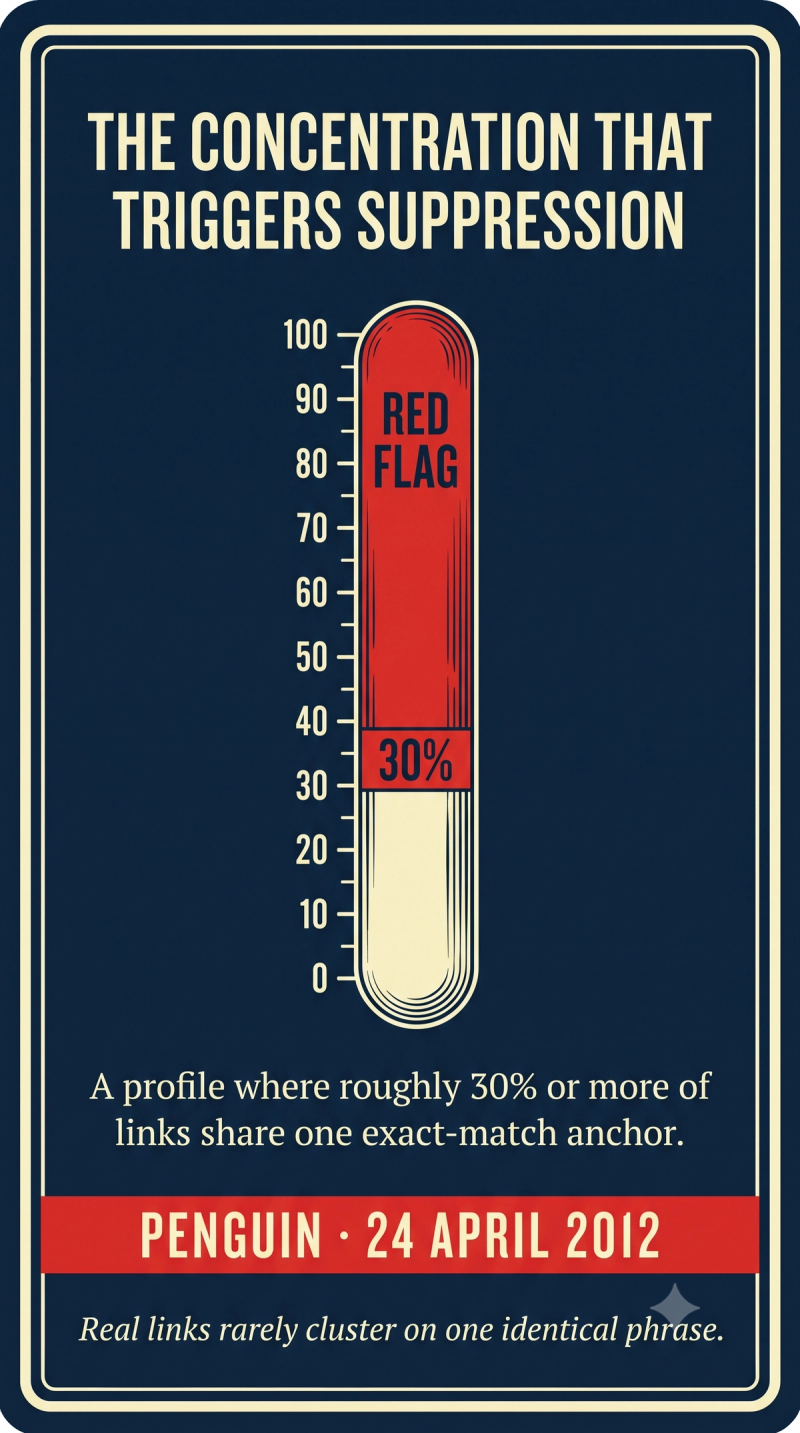
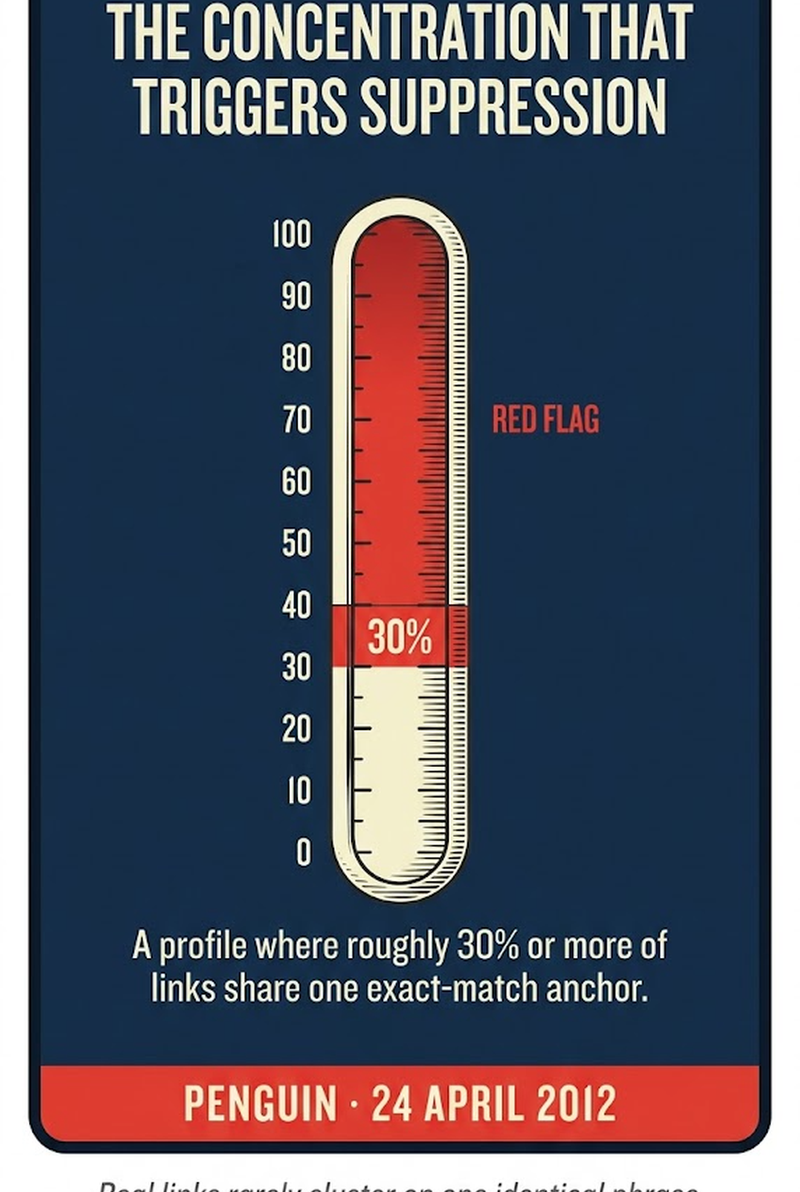
Penguin, launched April 24, 2012, was built specifically to detect backlink manipulation, and unnatural anchor text patterns are among its clearest signals. A backlink profile where roughly 30% or more of links use the same exact-match anchor text is generally treated as a red flag that can trigger algorithmic suppression, since real, organically earned links rarely cluster around one identical phrase that consistently.
What a safe distribution looks like
There's no single official ratio, but industry research converges on a similar shape: branded anchors carrying the largest share, roughly 40 to 50%, partial-match anchors around 20 to 30%, and exact-match anchors kept to single digits or low double digits at most. The underlying principle matters more than any specific number: a natural link profile accumulates a mix of anchor types over time, since real websites linking organically rarely all choose the identical exact phrase.
Using anchor text well
- Default to branded or natural, descriptive anchor text for most links rather than exact-match keywords.
- Reserve exact-match anchor text for a small minority of links, and only where it reads naturally in context.
- Vary anchor text across multiple links pointing to the same page, mixing partial matches, related terms, and brand mentions.
- Make sure the anchor text actually describes the linked page's content, since relevance matters more than keyword presence alone.
- Audit an existing backlink profile periodically for anchor text concentration, since an unnaturally repetitive pattern can develop gradually through unmanaged link building.
Frequently asked questions
What is anchor text?
Anchor text is the visible, clickable text of a hyperlink, used by search engines as a relevance signal about the page it links to, whether it's an internal link or a backlink from another site.
What are the main types of anchor text?
Exact-match, partial-match, branded, generic or descriptive, and naked URL, each varying in how directly the link text matches a target keyword versus describing the brand or content naturally.
Can too much exact-match anchor text actually hurt rankings?
It can. Google's Penguin algorithm specifically targets unnatural anchor text concentration, and a backlink profile with roughly 30% or more identical exact-match anchors is treated as a risk signal that can trigger suppression.
What does a safe anchor text distribution look like?
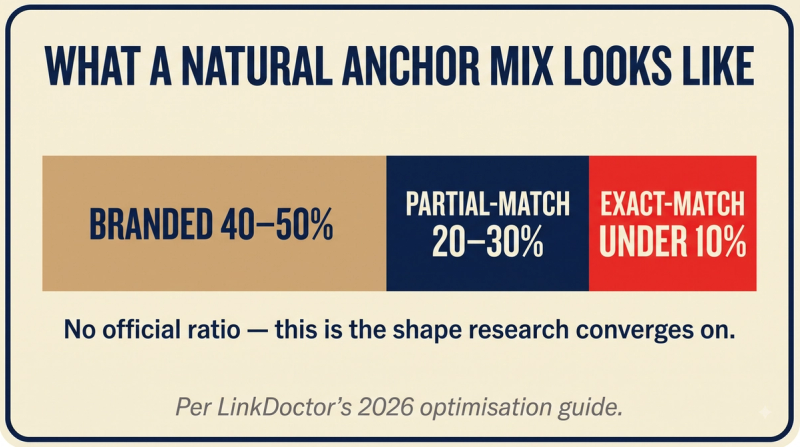
Branded anchors weighted highest, around 40 to 50%, partial-match anchors around 20 to 30%, and exact-match anchors kept to single digits, reflecting the natural mix real websites accumulate over time rather than a deliberately engineered ratio.
Does anchor text still move the needle on rankings today?
Yes, but indirectly. It supports relevance and topical signals alongside page quality and intent alignment rather than functioning as a standalone ranking factor on its own.


