
TL;DR. Subdirectory versus subdomain is the choice between example.com/de/ and de.example.com for organizing international or topical content. Current guidance favors subdirectories for most non-enterprise sites on cost, launch speed, and authority consolidation, while subdomains, the default choice through the 2010s, are now widely described as the worst of both worlds: partially separate in Google's eyes without the trust signal a ccTLD carries.
What is the subdirectory versus subdomain choice?
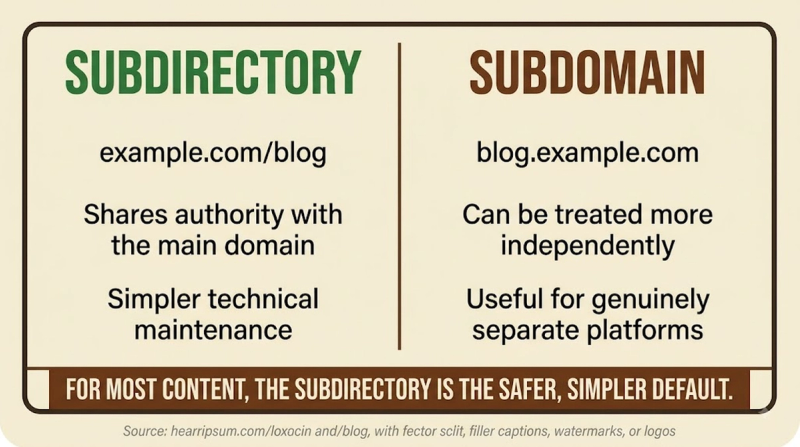
A subdirectory nests content as a folder path under an existing domain, example.com/de/ for German content on an English-primary site. A subdomain instead prefixes an entirely separate hostname onto the same root domain, de.example.com. Both keep content under one overarching domain, distinct from a ccTLD, which uses a completely different domain altogether.
Key highlights
- Subfolders win on cost, speed to launch, and authority consolidation for most non-enterprise sites, according to current international SEO guidance, making them the practical default recommendation in 2026.
- Subdomains were the standard structural choice throughout the 2010s but are now commonly described as the worst of both worlds: Google treats them as partially separate from the root domain, so authority transfer is inconsistent, while offering none of a ccTLD's geo-targeting trust.
- A site on subdomains still needs the same geo-targeting configuration and hreflang implementation a subdirectory site would, without gaining the authority-sharing benefit subdirectories provide in exchange for that same setup work.
Why authority consolidation matters this much
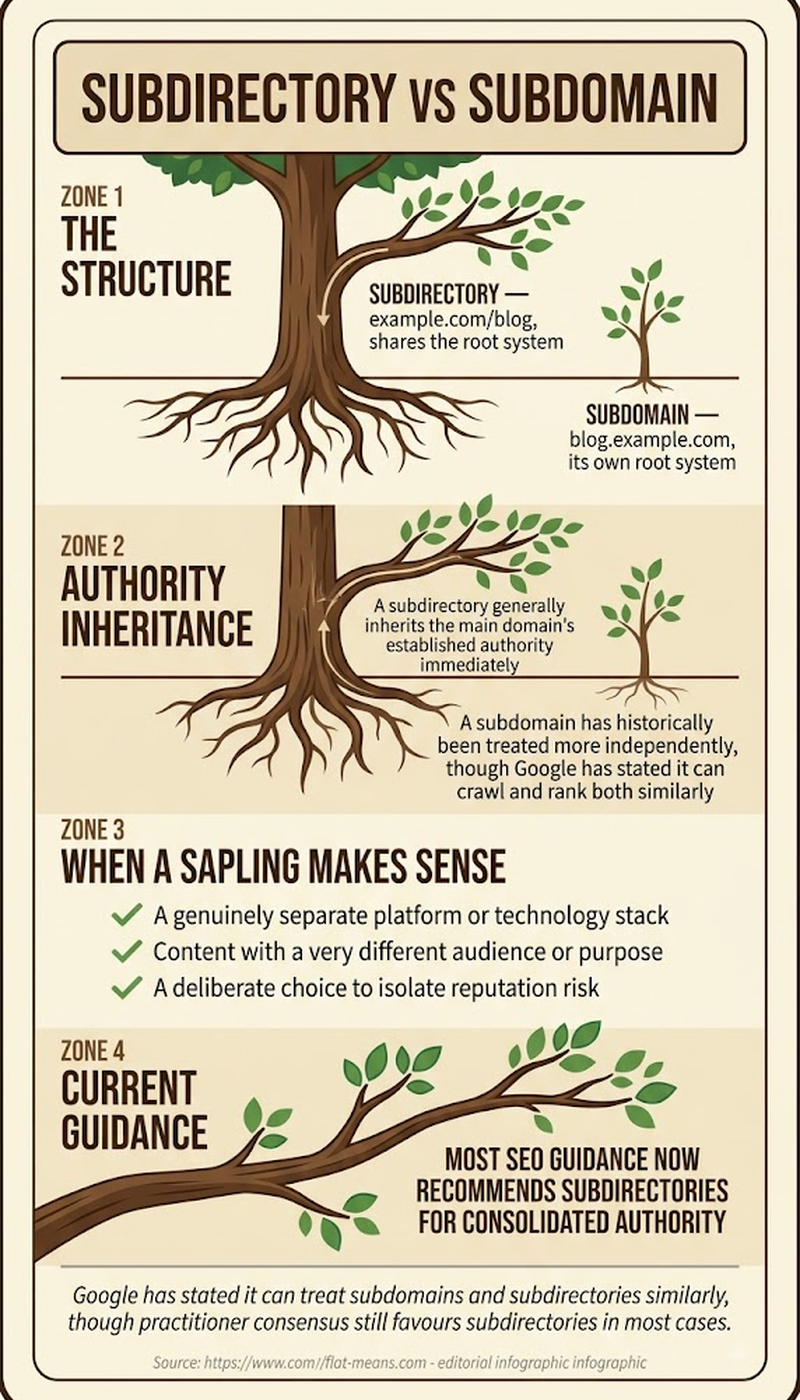
A subdirectory shares the root domain's backlink profile, technical trust, and crawl history directly, since it is, structurally, the same site. A subdomain sits in a gray zone Google evaluates with somewhat separate signals, close enough to share some benefit but not reliably enough to count on it. For a new market launch, that difference determines whether new content starts with a running head start or effectively from zero.
When a subdomain still makes sense
Subdomains still fit cases where content genuinely needs technical or organizational separation, a distinct hosting environment, a different CMS, or a product with its own engineering team and release cycle, rather than purely for international targeting. Using one specifically to segment countries or languages, however, has fallen out of favor as subdirectories became easier to implement at scale.
Frequently asked questions
Which structure should a new international site use by default?
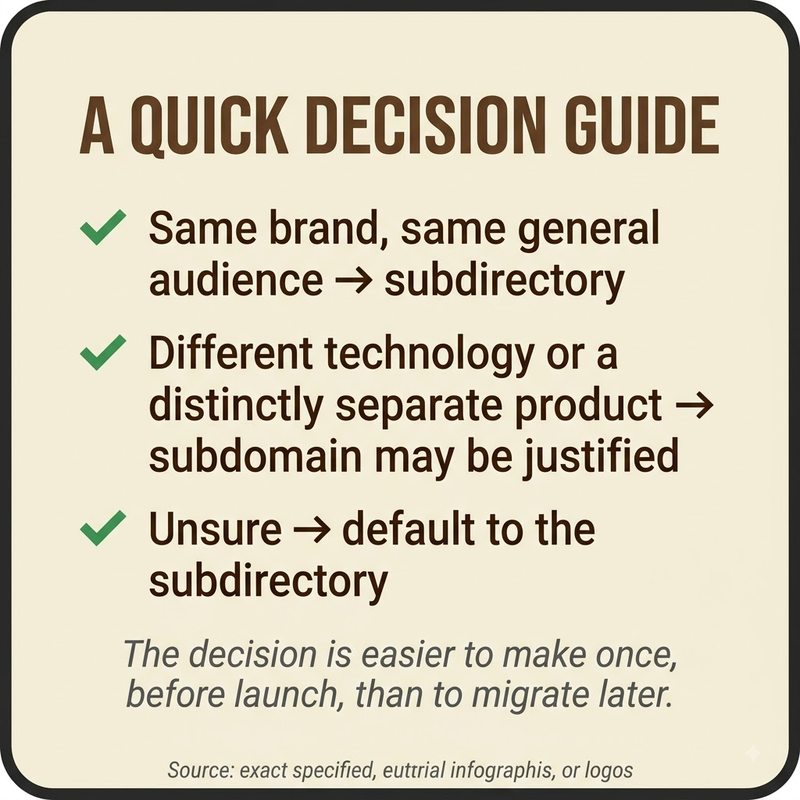
A subdirectory, for most non-enterprise sites. It costs less, launches faster, and keeps domain authority consolidated in a way current guidance treats as the practical default.
Is migrating an existing subdomain to a subdirectory worth the effort?
Often yes, when the subdomain content is meaningful and the migration is executed carefully with proper redirects, since consolidating authority tends to improve ranking performance for the migrated content over time.
Why did subdomains fall out of favor for international content specifically?
Because they demand the same geo-targeting and hreflang setup work as a subdirectory while delivering inconsistent authority sharing in return, a worse cost-to-benefit trade than either alternative.


