
TL;DR. Python for SEO means writing scripts, usually in Python specifically because of its accessible syntax and mature library ecosystem, to automate technical SEO tasks that don't scale well by hand: bulk crawling, log file parsing, large redirect audits, keyword and ranking data analysis. 68 percent of enterprise SEO teams now use Python somewhere in their workflow. Automated crawling delivers roughly ten times faster audits than manual review, according to industry benchmarking.
What is Python for SEO?
Python for SEO covers any use of the Python programming language to handle SEO tasks programmatically, rather than manually. That includes pulling data from APIs like Google Search Console or a rank tracker, parsing server logs at scale, crawling a site to check thousands of URLs for a specific issue, or processing keyword data too large for a spreadsheet to handle comfortably. It isn't a single tool. It's a general-purpose capability that SEO practitioners apply to whichever repetitive or large-scale task needs automating.
Key highlights
- 68 percent of enterprise SEO teams report using Python somewhere in their workflow, making it the dominant scripting language in technical SEO rather than a niche specialty skill.
- 34 percent of technical SEO experts at enterprises specifically use scripted automation, in Python or JavaScript, as a core part of their regular process rather than an occasional side project.
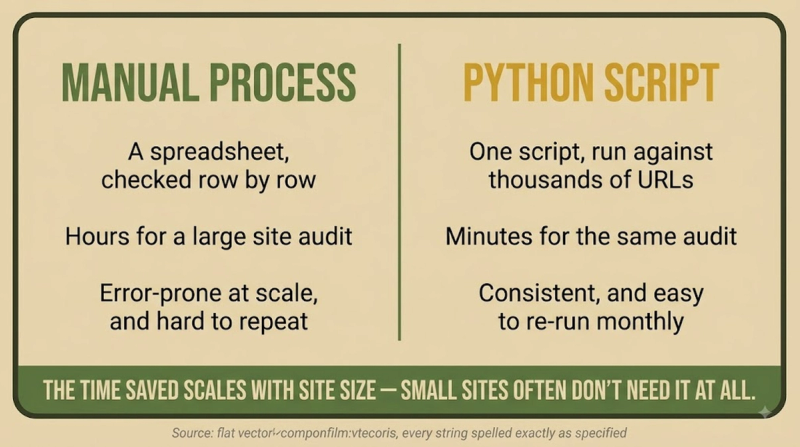
- Teams reporting automation adoption see roughly a 40 percent reduction in reporting time, freeing up hours that previously went into manually assembling recurring audits and dashboards.
- Automated crawling runs roughly ten times faster than manual review for comparable audit scope. That gap widens further on larger sites, where manual checking becomes impractical past a few thousand URLs.
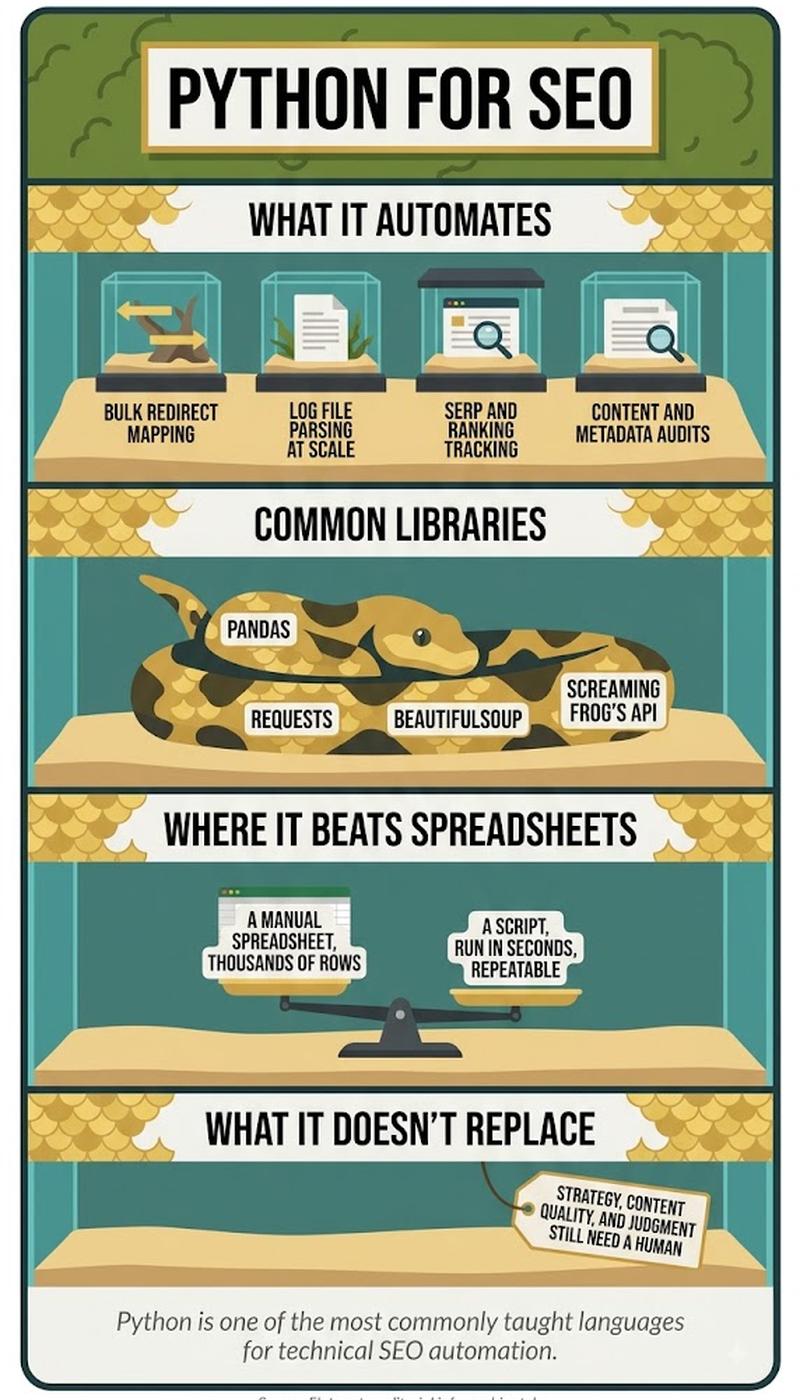
Where Python actually gets used in SEO work
- Bulk crawling and site audits, checking thousands of URLs for status codes, redirect chains, or missing metadata far faster than a GUI-based crawler tool allows for custom checks.
- Parsing and analyzing server log files at a scale spreadsheet tools handle poorly, since raw logs from a busy site can run into millions of lines.
- Pulling and combining data from multiple APIs, Search Console, a rank tracker, an analytics platform, into a single unified dataset rather than exporting and manually merging spreadsheets.
- Ad hoc data science tasks, clustering keywords by search intent or detecting anomalies in traffic patterns, that go beyond what spreadsheet formulas can reasonably express.
Frequently asked questions
Does an SEO practitioner need to be a full software engineer to use Python?
No. Most SEO-specific Python use involves relatively simple scripts built around a handful of well-established libraries, well within reach of someone with basic programming literacy rather than a formal engineering background.
Why Python specifically, rather than another language?
Its readable syntax lowers the barrier for non-engineers, and its mature ecosystem of data and web-focused libraries covers most SEO use cases without needing to build tooling from scratch.
What's the highest-leverage first Python skill for an SEO practitioner to learn?
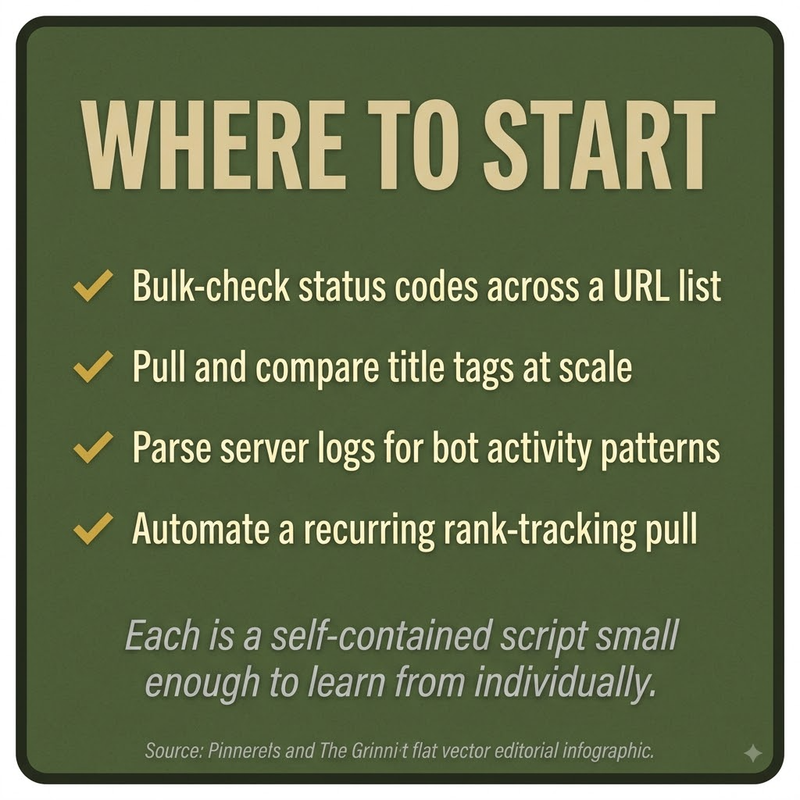
Basic API interaction, pulling data from Search Console or a similar platform programmatically, since it immediately removes the manual export-and-merge step behind most recurring reporting work.


