
TL;DR. Server-side rendering builds a page's complete HTML on the server for each incoming request, so a search crawler receives finished content immediately rather than an empty shell waiting on JavaScript. Next.js, Nuxt, SvelteKit, and Astro all make server-rendered HTML the default in 2026 with no extra developer effort, which is a large part of why SSR has become the baseline recommendation rather than an advanced optimization.
What is server-side rendering?
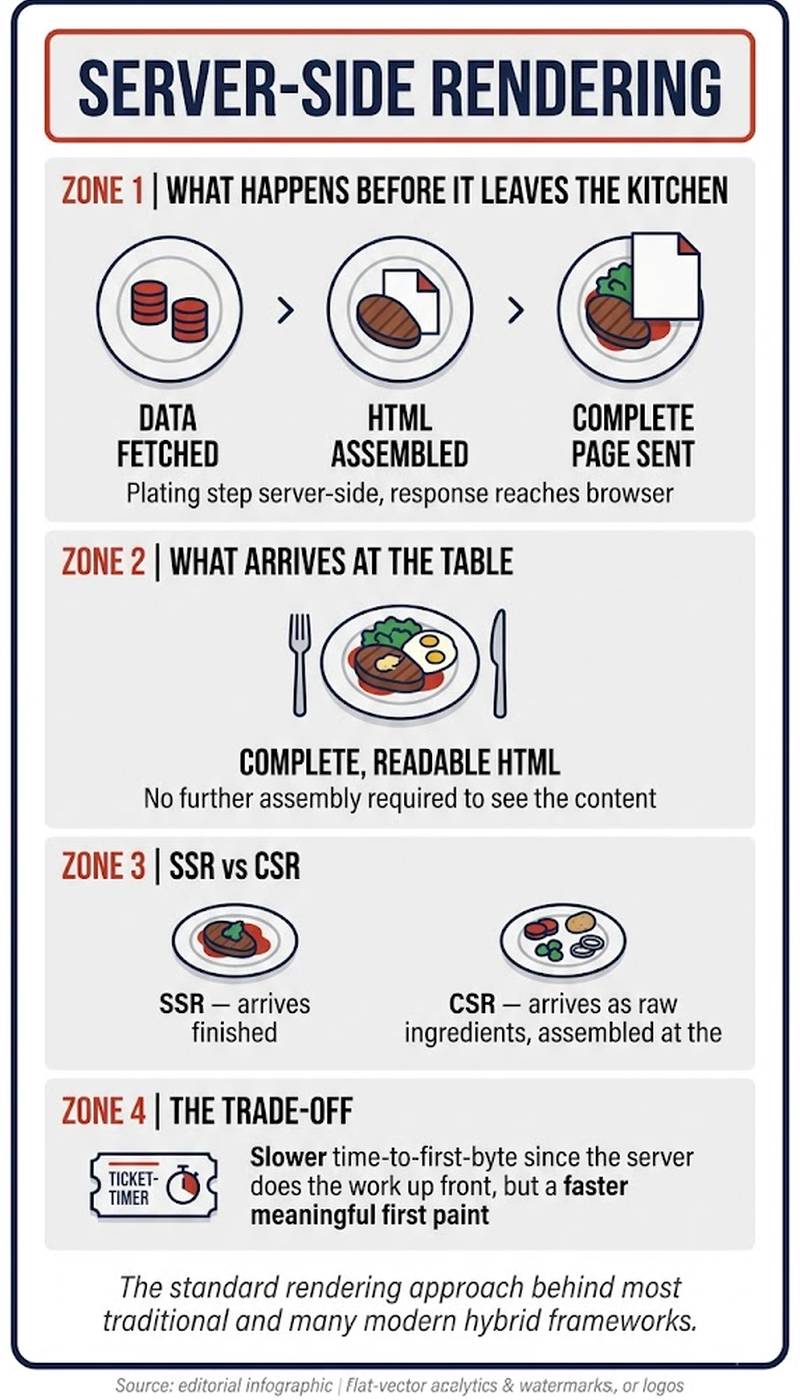
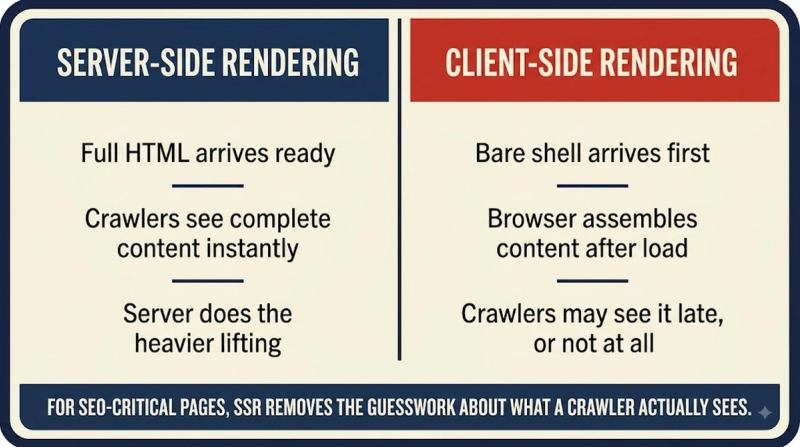
Server-side rendering means the server runs the application code and generates fully formed HTML for each request before that HTML ever reaches the browser or a crawler. Unlike client-side rendering, nothing critical waits on JavaScript execution in the browser; the page arrives already containing its visible content, with JavaScript layered on afterward purely for interactivity.
Key highlights
- Modern meta-frameworks default to it: Next.js, Nuxt, SvelteKit, and Astro all render HTML server-side out of the box, without developers needing to configure anything extra to get the SEO benefit.
- SSR sidesteps Google's Wave 2 rendering delay entirely for the routes it covers, since the crawler receives complete content on Wave 1 without needing a separate JavaScript execution pass at all.
- SSR pages also tend to score better on Core Web Vitals, particularly Largest Contentful Paint, since the browser doesn't have to wait on a JavaScript bundle to download and execute before the main content appears.
The tradeoff SSR introduces
Rendering HTML on every request costs server compute time that a purely static or client-rendered approach avoids, and under heavy traffic that cost can translate into slower time to first byte if the server isn't sized or cached appropriately. Most production SSR setups pair it with edge caching or incremental static regeneration to keep repeat requests fast without re-rendering identical content from scratch every time.
SSR versus prerendering, briefly
SSR rebuilds HTML fresh on every single request. Prerendering instead generates a static HTML snapshot ahead of time and serves that cached version repeatedly, which is cheaper computationally but only works well for content that doesn't change between requests.
Frequently asked questions
Is SSR always better than CSR for SEO?
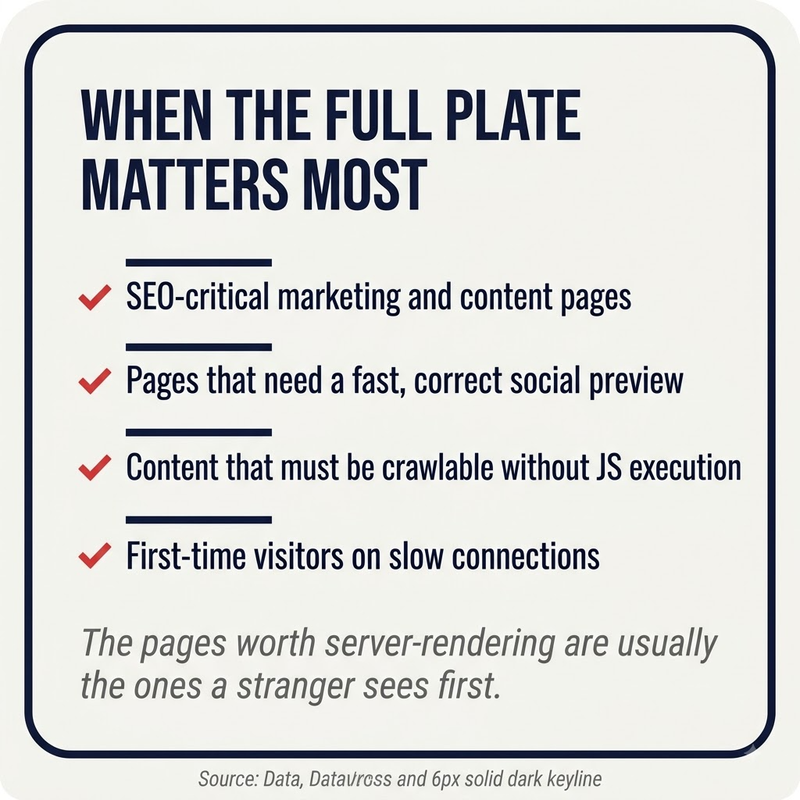
For content that needs to rank, yes, essentially. The one exception is content that genuinely doesn't need search visibility at all, where the rendering approach becomes a pure performance and engineering tradeoff instead.
Does SSR slow down the server?
It adds compute cost per request compared to serving static files, but caching layers and incremental regeneration typically keep that cost manageable for most sites at normal traffic levels.
Can a site mix SSR with client-side rendering?
Yes, and most production sites do exactly that: SSR or static generation for indexable content, client-side rendering reserved for interactive widgets that don't need to appear in search.


