
TL;DR. Featured snippets sit above every other organic result on the page, and 99.58% of the pages that win one were already ranking in the top 10 before Google ever pulled a passage out of them. SEMrush's Annual SERP Features Report found snippet click-through rate climbed to 8.2% in 2026, up from 6.6% the year before, and a page holding both the snippet and the first organic spot at once pulls a combined CTR of 52.3%, nearly double what the top organic position earns alone. Existing rankings aren't a nice-to-have here, they're the entry ticket.
What is a featured snippet?
Featured snippets are the highlighted result Google displays at or near the top of a search page, lifting a short passage, a numbered or bulleted list, or a data table straight from a page's own content to answer a query before anyone needs to click through. Search engineers often call the spot position zero, since it sits above the normal first organic result while still linking back to its source. None of this makes a featured snippet a separate ranking, it's Google reformatting content a page already earned into an extracted answer box.
Key highlights
- SEMrush's Annual SERP Features Report found snippet click-through rate rose to 8.2% in 2026, up from 6.6% in 2025, with paragraph snippets earning the highest CTR at 9.1%, list snippets at 7.8%, and table snippets trailing at 6.4%.
- Holding both the featured snippet and the first organic position at once produces a combined CTR of 52.3%, nearly double the rate of holding first place alone, per featured snippet statistics research.
- Featured snippets show up in 23.7% of all searches, and 62.5% of the searches that trigger one end without a single click, according to Amra and Elma's 2026 statistics.
- Winning a snippet without already ranking is nearly impossible: 99.58% of pages that captured a featured snippet were already sitting in the top 10 organic results for that exact query, per featured snippet statistics research.
- AI Overviews grew from roughly 6.5% of US searches in January 2025 to 50 to 60% by early 2026, and Ahrefs found click-through rate to the number-one organic position dropped by roughly 58% when an AI Overview appears alongside it, per GoodFirms' 2026 SEO statistics.
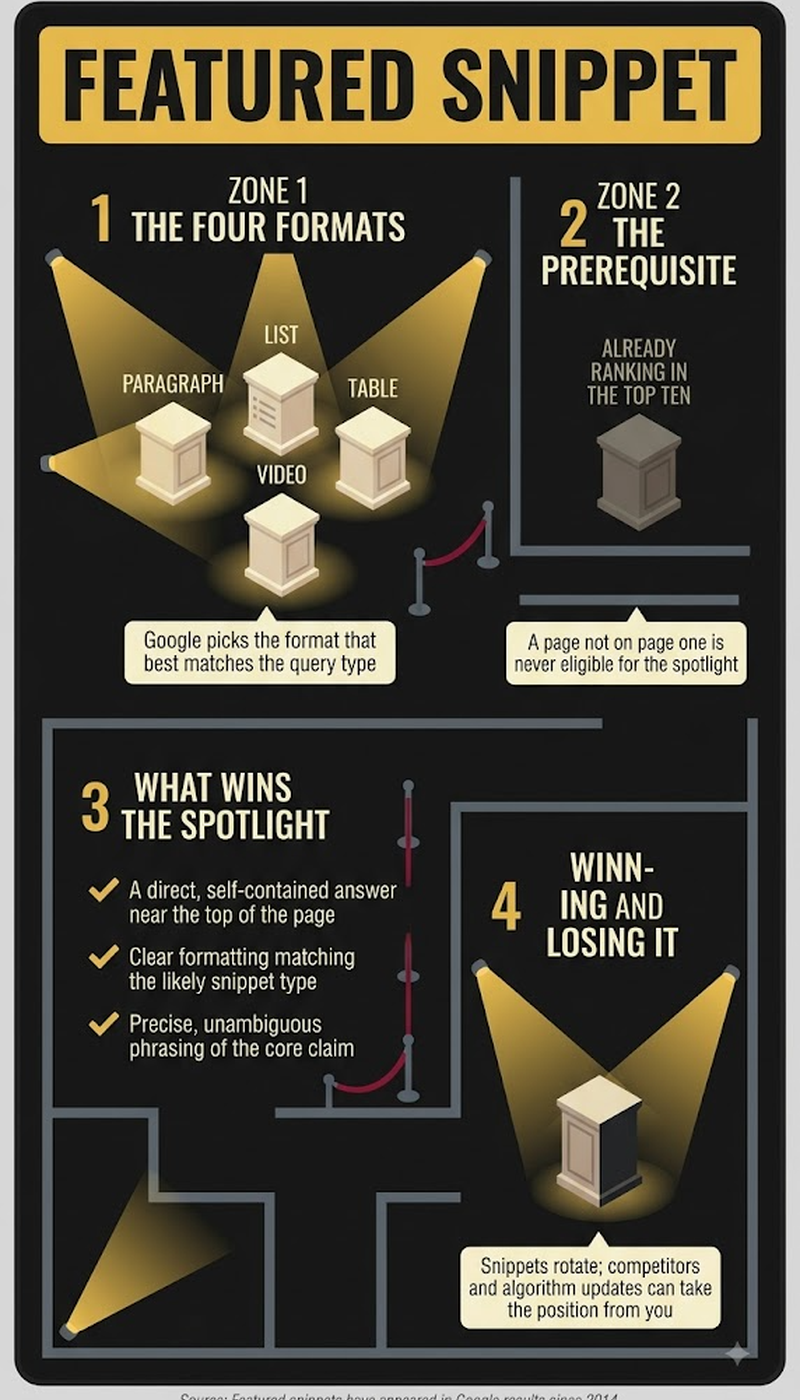
The four snippet formats Google pulls from
- Paragraph snippets answer a query in a tight 40 to 60 word block of text and remain the most common format by far.
- List snippets present numbered steps or bulleted collections, pulled directly from a page's real ordered-list or unordered-list markup, not from prose formatted to look like a list.
- Table snippets surface structured comparison data, prices, specs, dimensions, lifted from a genuine HTML table element.
- Video snippets jump straight to a specific timestamped clip inside a video that answers the query directly.
How Google actually picks a passage to extract
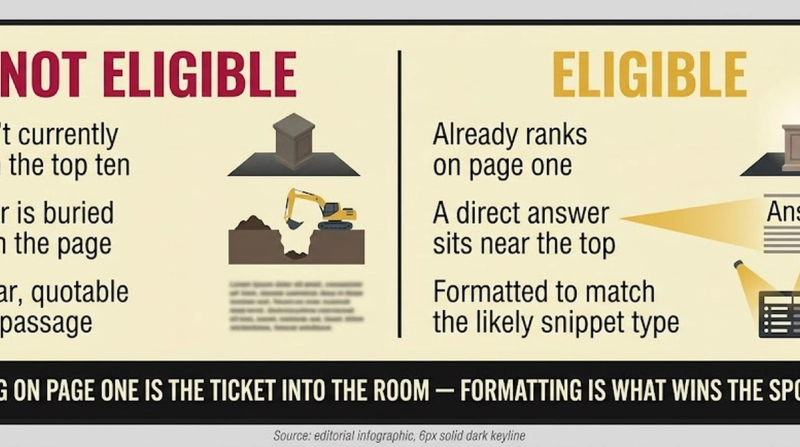
Google draws a featured snippet exclusively from pages it has already placed in the top 10 organically, the 99.58% figure above leaves little room for exceptions. Within that eligible pool, the algorithm favors passages answering the query directly and concisely, formatted to match the likely snippet type, a tight paragraph for a definition question, a real list for a how-to or ranking question, an actual table for anything comparison-shaped.
Snippets and AI Overviews aren't the same feature
Featured snippets extract one exact passage from one page and link back to it directly. AI Overviews synthesize several sources into a generated summary, citing multiple pages rather than lifting a single verbatim passage from any one of them. The two features share a growing overlap in effect, though, not mechanism: as AI Overviews expanded from 6.5% of US searches to the 50 to 60% range within about a year, they measurably cut into clicks the traditional first organic result used to get, which raises the stakes on winning either feature rather than lowering them.
Optimizing a page to actually win one
- Confirm the target page already ranks in the top 10 organically for the query, since eligibility depends on that first.
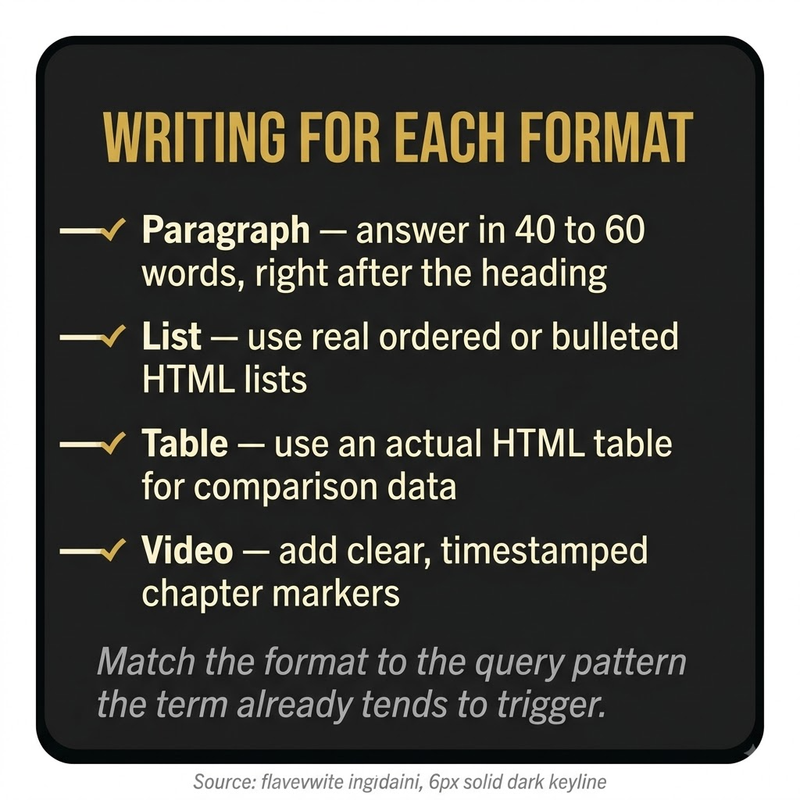
- Answer the query directly in 40 to 60 words immediately under a heading phrased close to the question, for paragraph-type snippets.
- Use genuine ordered-list or unordered-list HTML for step-by-step or ranked content.
- Use a real HTML table element for comparison or specification data.
- Match the heading's wording closely to how the target query actually gets typed.
Frequently asked questions
What is a featured snippet?
Featured snippets are the highlighted answer box Google places above the normal organic results, extracting a passage, list, or table from a page to answer a query directly while linking back to the source underneath it.
Can a page win a snippet without ranking well organically first?
Winning a snippet without an existing top-10 ranking almost never happens. Research found 99.58% of snippet-winning pages were already ranking there organically, which makes solid rankings a prerequisite for snippet optimization, not a separate goal to chase independently.
Do featured snippets still matter with AI Overviews taking over so many searches?
Featured snippets matter more, not less, as AI Overviews spread. GoodFirms found AI Overviews cut click-through to the top organic result by roughly 58% when they appear, which makes any visibility feature above the fold, snippet included, more valuable even as overall organic clicks shrink.
Why do some snippet formats get more clicks than others?
Paragraph snippets earn the highest click-through at 9.1%, per SEMrush's 2026 data, likely because a short text answer still leaves a reason to click through for more detail. List and table snippets, at 7.8% and 6.4% respectively, tend to satisfy the query more completely on their own, which shrinks the incentive to click at all.
What's the fastest way to lose a featured snippet once you have one?
Losing a snippet usually traces back to two things: a competitor restructuring their content to answer the same query more directly, or the original page slipping out of the top 10 organically, since snippet eligibility disappears the moment the underlying ranking does.


