
Google switched AI Overviews on across a large share of queries through 2024. For many searches the first thing a user reads is a paragraph Google wrote, not a link you earned. Being one of the sources under that paragraph is the new top spot.
Here is what I tell clients. You cannot game an AI Overview. You earn a place in one the same way you earn trust anywhere, by being clear, current, and corroborated.
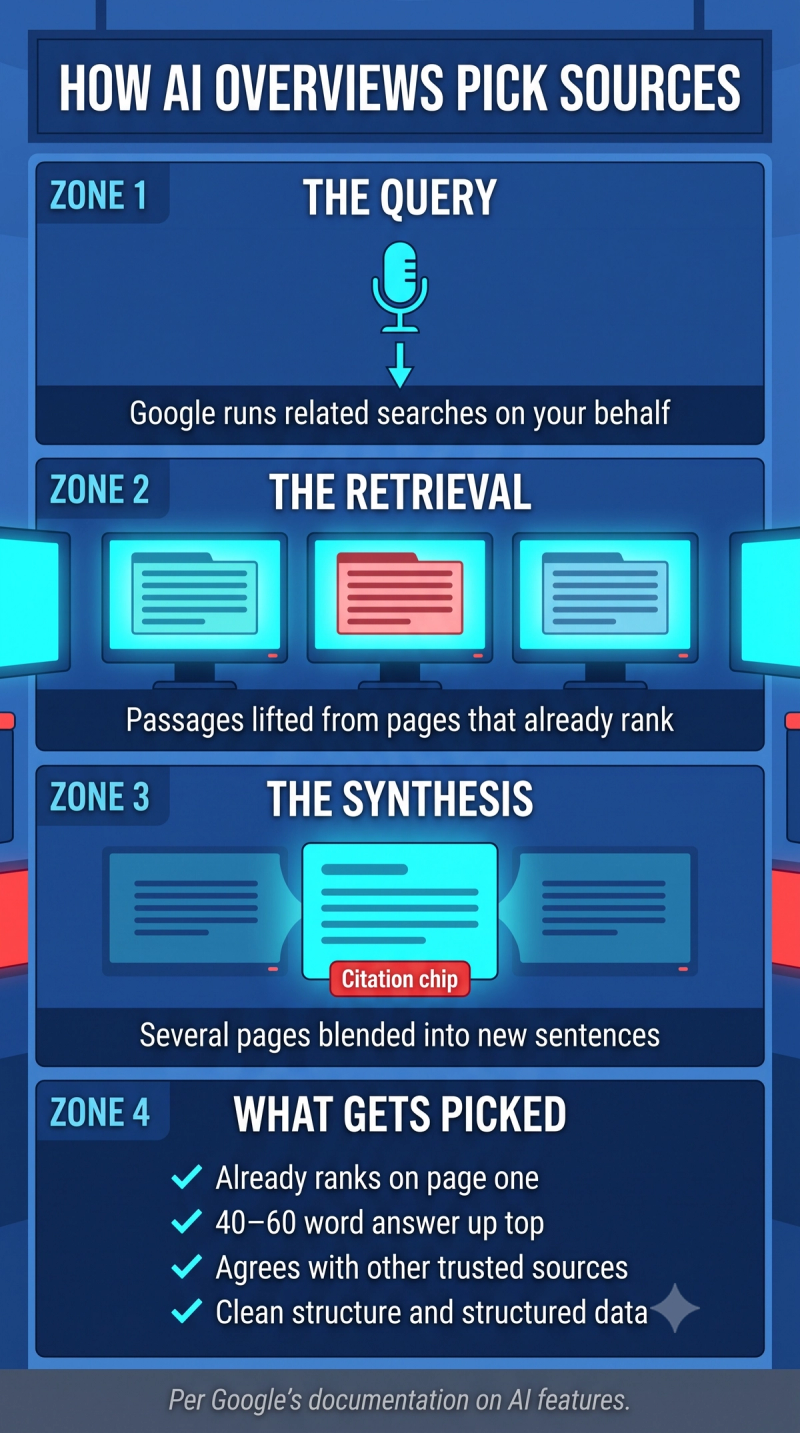
How AI Overviews work
AI Overviews work by taking a query, pulling passages from pages that already rank, and generating a short answer with links to the sources. Google's documentation on AI features describes running related searches on your behalf, then blending the strongest results.
The sources chosen are rarely the flashiest pages. They are the ones with a clean, quotable claim that matches the question and agrees with other trusted pages.
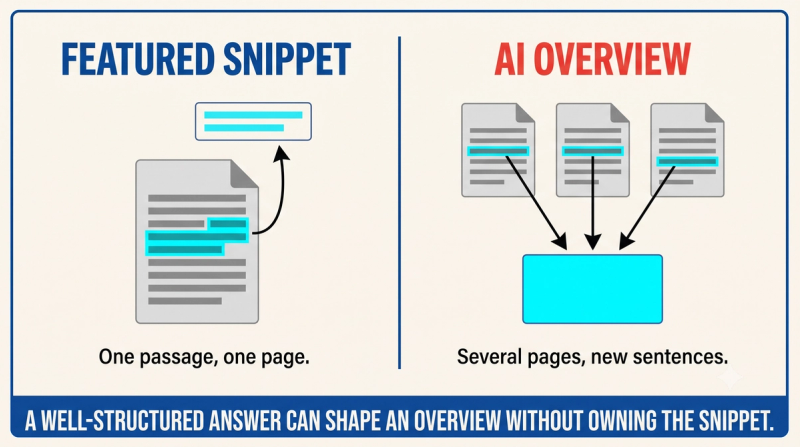
AI Overviews versus featured snippets
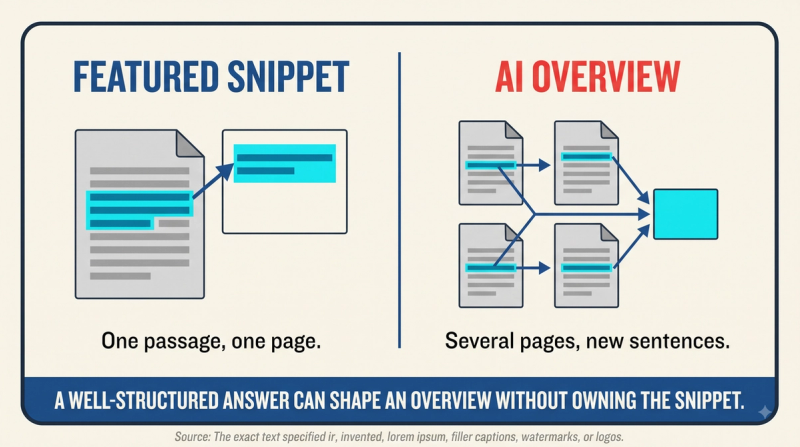
People mix these up. A featured snippet lifts one passage from one page. An AI Overview blends several pages into new sentences, so a single well structured answer can shape it even without owning the old snippet.
AI Overviews and the wider AI search shift
Overviews are the visible tip. Google's fuller conversational surface, AI Mode, pushes the same synthesis further, so the habits that earn Overview citations carry straight over.
Optimizing for this outcome across every engine at once is the job of generative engine optimization.
How to get cited in AI Overviews
- Rank first. Overviews mostly draw from pages already on page one.
- Lead each section with a direct, 40 to 60 word answer.
- State facts as single, checkable claims with clear numbers.
- Mark up entities and facts with structured data.
Free Chrome extension
A free AI citation checker for ChatGPT and Gemini
CitoSkeleton passively captures fan-out queries, cited and fetched sources, and brand mentions behind an AI answer — then tracks your GEO visibility against named competitors. 100% local, no account, no server.
- Keep the page fresh so its numbers stay current.
What makes a page Overview friendly
- Existing ranking strength for the query.
- A quotable answer near the top of the relevant section.
- Agreement with other trusted sources on the facts.
- Clean structure the model can segment into passages.
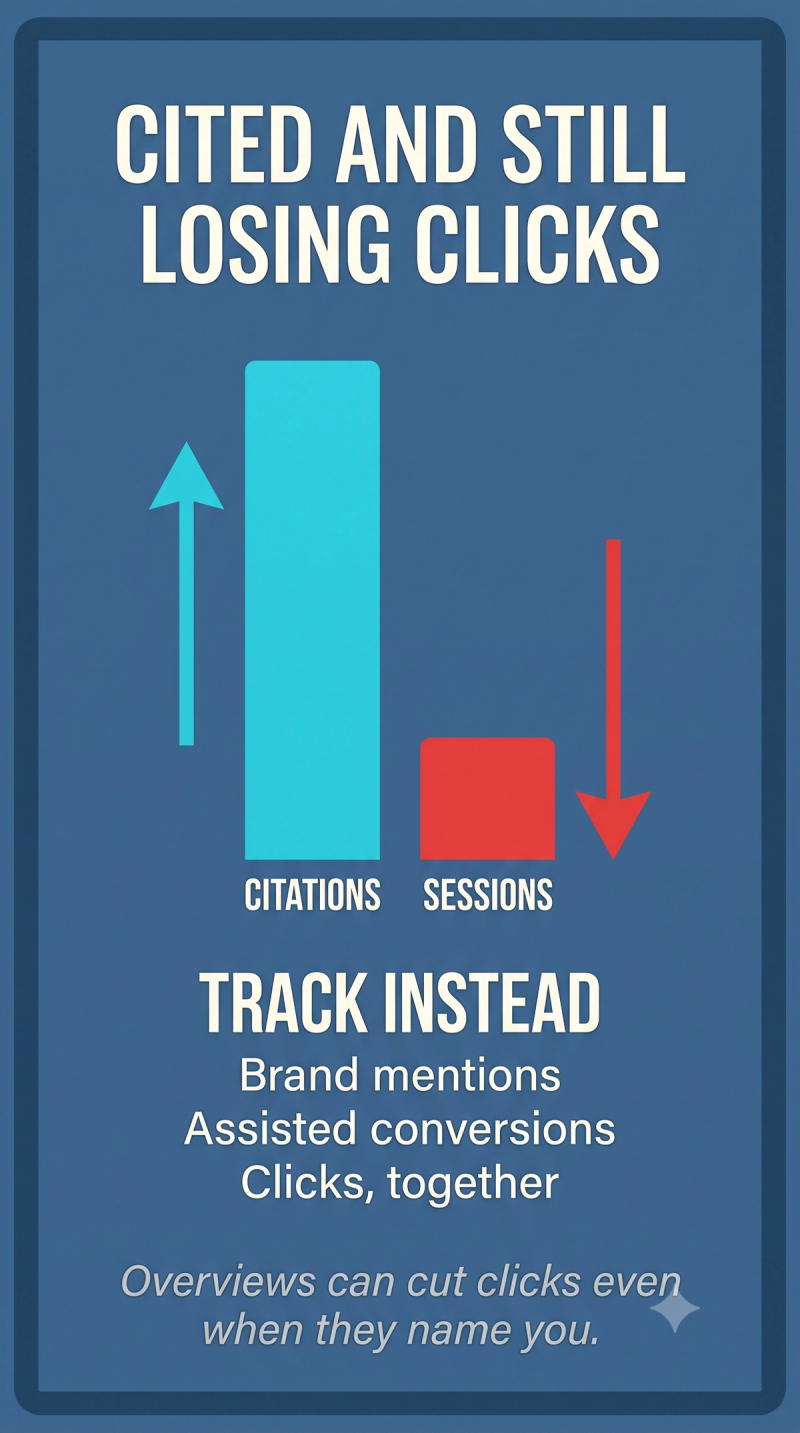
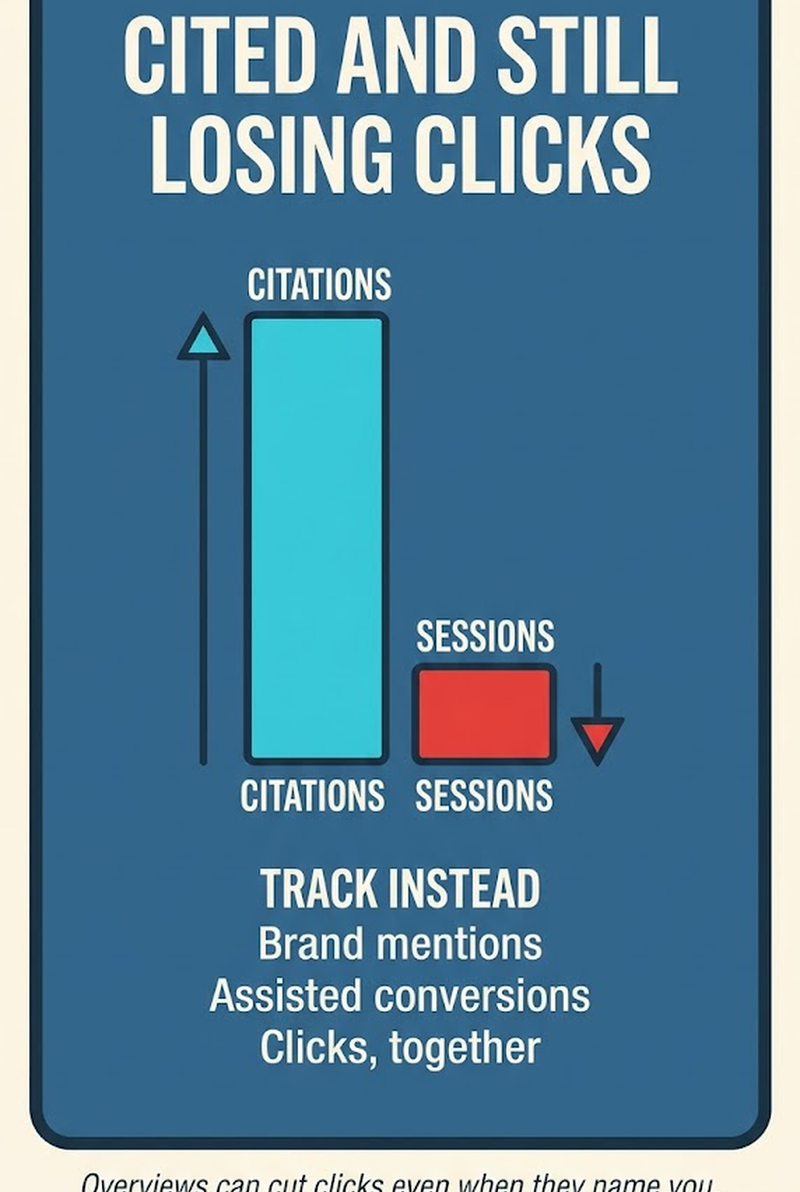
One caution. Overviews can cut your clicks even when they cite you. Track brand mentions and assisted conversions, not only sessions, or you will misread the impact.
Frequently asked questions
How do I appear in Google AI Overviews?
Rank on page one for the query, then lead the relevant section with a direct 40 to 60 word answer built from single, checkable claims. Add structured data and keep the facts current. Overviews mostly cite pages that already rank and read as trustworthy.
Do AI Overviews reduce website traffic?
Often yes for informational queries, because the answer appears without a click. They can still send qualified visits when users want depth. Measure brand mentions, assisted conversions, and clicks together so a drop in raw sessions does not hide the real value.
Can you opt out of AI Overviews?
You cannot selectively remove one page from Overviews while staying in normal results, since they use the same index. Certain robots directives can suppress AI features, but that usually costs more visibility than it saves. Most sites should optimize to be cited, not hide.


