
TL;DR. Keyword cannibalization sets a site against itself: two or more pages target the same keyword and the same intent, splitting ranking signals, backlinks, and clicks between them instead of concentrating those signals on one strong page. Google generally shows just one URL per query prominently, so competing internal pages dilute each other's rankings instead of reinforcing them, and AI systems like ChatGPT and Perplexity compound the problem by judging a domain's overall topical authority, meaning fragmented signals can push an AI system toward citing a weaker page, or a competitor, instead.
What is keyword cannibalization?
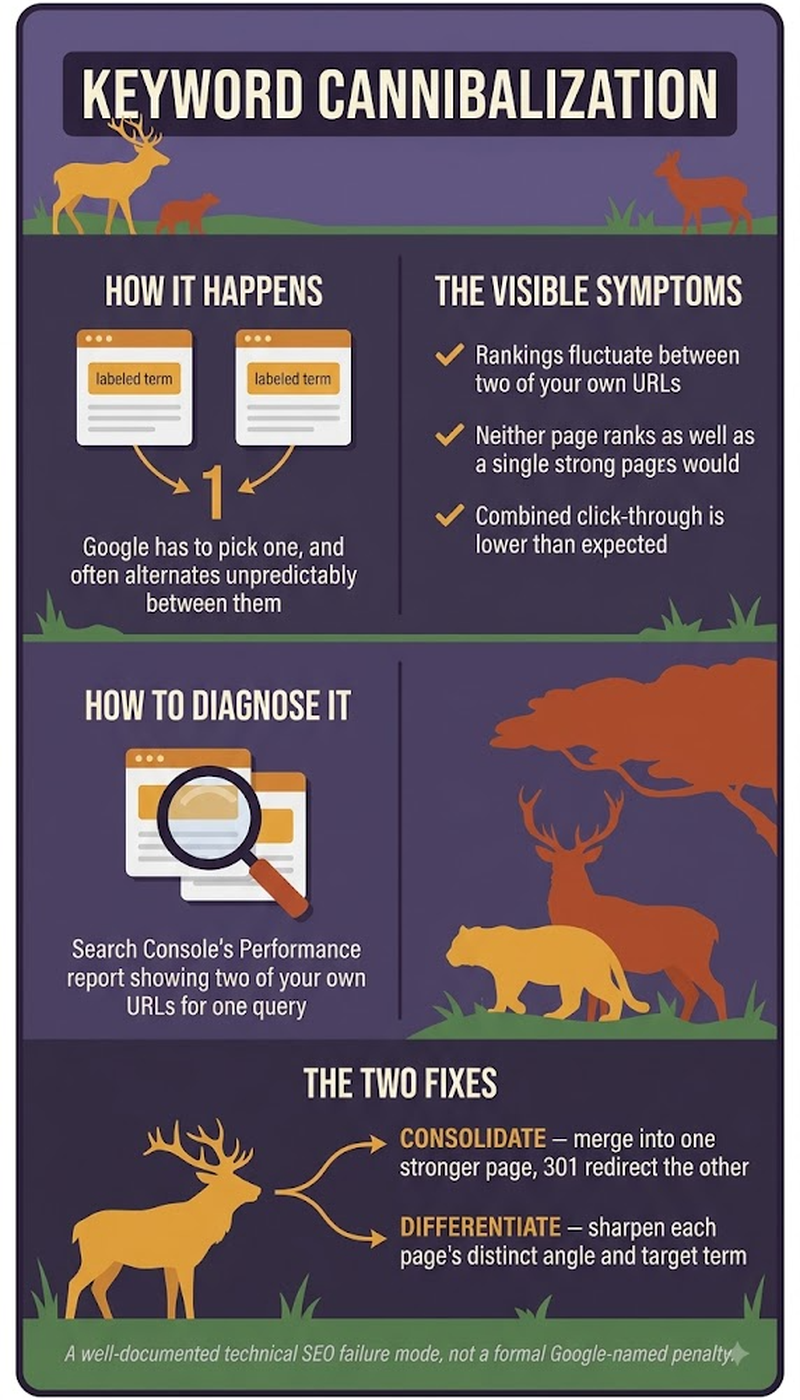
Keyword cannibalization happens when two or more pages on the same website target the same keyword and the same underlying search intent, putting them in competition with each other rather than with outside sites. Because Google generally shows only one URL per site prominently for a given query, multiple internal pages fighting for that spot split ranking authority, backlink value, and click-through data across pages instead of consolidating it onto one strong result.
Key highlights
- Google typically shows one URL per query prominently, so pages competing internally split ranking signals rather than concentrating them, diluting both instead of strengthening either.
- Backlinks lose collective value under cannibalization too. Links pointing at several competing pages carry far less combined weight than the same links concentrated on one consolidated page.
- AI engines like ChatGPT and Perplexity evaluate a domain's overall topical authority rather than ranking individual pages in isolation, so fragmented signals from competing pages make a site less likely to get cited as the definitive source, sometimes surfacing a less relevant page or a competitor instead, per AI Peekaboo's analysis.
- A common real-world version shows up in local service businesses that build near-identical pages for the same service across many neighborhoods, splitting clicks, impressions, and link equity instead of dominating one strong result, per The Ad Firm's GEO analysis.
- Detection doesn't require anything exotic: filtering Google Search Console's Performance report to a specific query and checking whether more than one URL is collecting impressions and clicks for it surfaces the problem directly.
Spotting it in Search Console
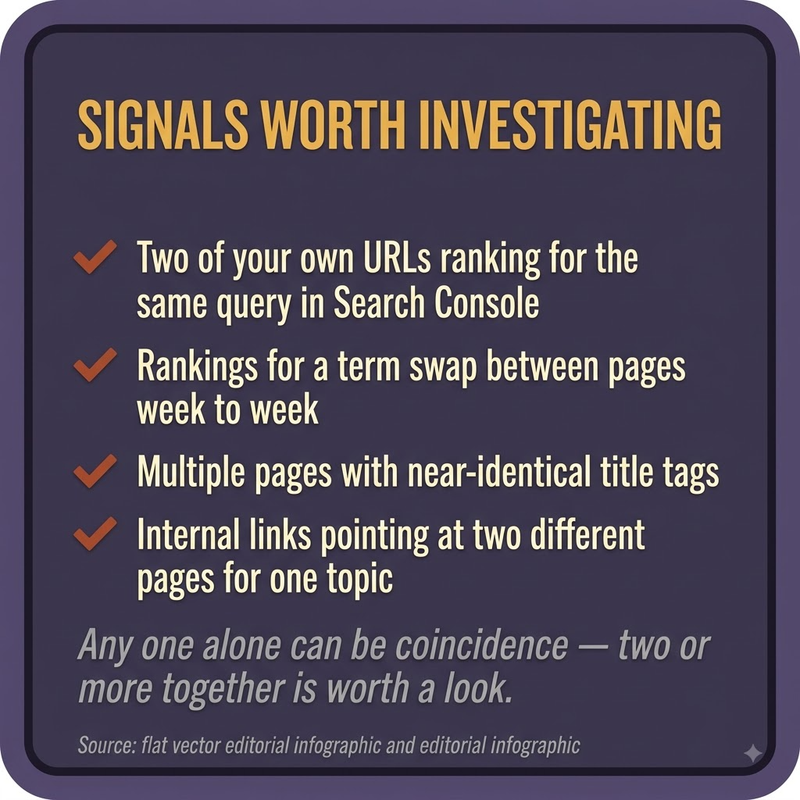
Filtering the Performance report to a specific query, then opening the Pages tab for that query, reveals whether more than one URL on the site is collecting impressions and clicks for the same search term. Multiple URLs appearing for one query, especially with positions fluctuating between them over time, is the clearest sign two or more pages are competing rather than complementing each other.
Cannibalization versus legitimately different intent
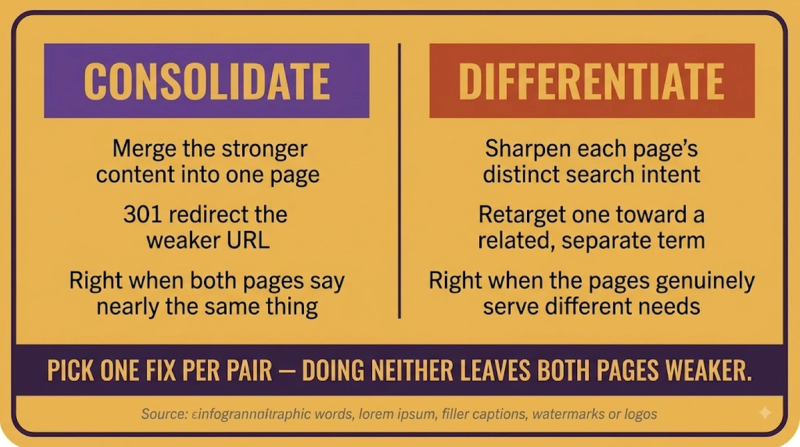
Not every pair of pages sharing a keyword is actually cannibalizing each other. Two pages using the same keyword but serving genuinely different intents, a beginner's definition next to a technical implementation guide, for instance, don't necessarily compete, since they satisfy different searchers. True cannibalization requires both the same keyword and the same underlying intent, which is why fixing a suspected case starts with confirming the pages are actually trying to satisfy the same searcher, not just sharing a word.
What it does inside AI search
Keyword cannibalization compounds under AI search because systems like ChatGPT and Perplexity assess a domain's overall authority on a topic rather than ranking individual URLs in isolation. Fragmented signals across several competing pages on the same subject make a site's expertise look less concentrated and consistent, which can push an AI system toward citing a less relevant page from the same site, or skipping it entirely in favor of a competitor with one clearly authoritative page on the topic.
Fixing it
- Confirm the competing pages genuinely share the same keyword and the same search intent before treating it as cannibalization.
- Identify the best-performing page among the competitors to serve as the single consolidated destination.
- Merge the valuable, unique content from the weaker pages into that best-performing page.
- Set up 301 redirects from the merged pages to the consolidated page, preserving their existing backlink and ranking signals.
- Update internal links across the site to point to the single consolidated page instead of the now-redirected ones.
Frequently asked questions
What is keyword cannibalization?
Keyword cannibalization is when multiple pages on the same site target the same keyword and search intent, competing against each other in search results and splitting ranking signals instead of concentrating them on one strong page.
How do I check whether my site has it?
Filter Google Search Console's Performance report to a specific query and open the Pages tab. If more than one URL collects impressions and clicks for that query, especially with rankings fluctuating between them, the site likely has cannibalization.
What's the actual fix once cannibalization is confirmed?
Identify the strongest of the competing pages, merge the unique valuable content from the others into it, set up 301 redirects from the merged pages, and update internal links so they all point to the single consolidated page.
Does sharing a keyword between two pages always count as cannibalization?
No. Pages serving genuinely different intents, a basic definition versus a technical implementation guide, for example, can coexist on the same keyword without truly competing, since they satisfy different searchers.
Does cannibalization hurt visibility in AI answers too, or just Google rankings?
It hurts AI visibility as well. AI systems evaluate a domain's overall topical authority rather than ranking pages in isolation, so fragmented signals across competing pages make a site's expertise look less concentrated, reducing the odds it gets cited as the definitive source.


